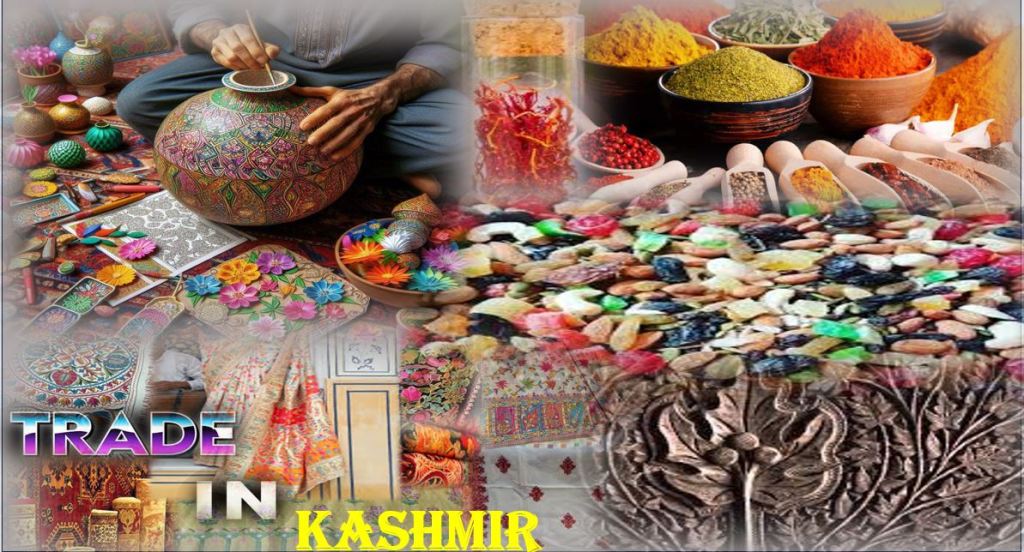
Revival of Traditional Trades Kashmir, known for its breathtaking natural beauty, rich culture and heritage has witnessed a significant resurgence in its traditional trades. The region’s unique handicrafts, exquisite textiles and flavorful spices have long been prized by locals and tourists alike. Rooted in history and shaped by influences from Central Asia and Persia, the crafts of Kashmir embody the unique blend of art and culture that has flourished in the valley for generations.
Flourishing trade in Kashmir can be traced back to the 14th century, when Sultan Zain-ul-Abidin, also known as Budshah, brought skilled artisans to Kashmir from Central Asia and Persia. The influx of this trade played a significant role in transforming local art into a thriving industry. Over time, the artisans adapted their techniques to the local culture and materials, creating a distinctive style that has remained unique to Kashmir. For centuries, the crafts have served as a source of economic sustenance for the artisans and their families.
Kashmir’s handicraft industry, which includes woodcravings, papier-mache, spices and dry fruits and silverware has seen a notable revival. The region’s skilled artisans have been perfecting their crafts for generations, creating intricate and beautiful pieces that are highly sought after. The handloom industry experienced a significant boost. The shawls made from the finest wool and silk are renowned for their warmth, softness and elegance.
Kashmir’s spice trade has been a cornerstone of its economy for centuries. The region is famous for its high-quality spices, including saffron, cinnamon, cardamom and Kashmir chillies. These spices are not only used in local cuisine but are also exported to other parts of the country and abroad. Kashmir is also known for its delicious dry fruits, including almonds, walnuts and dried apricots. These dry fruits are rich in nutrients and are a staple in Kashmiri households.
Papier-mâché is another popular trade in Kashmir, with a history that dates back to the Mughal era. This craft involves creating decorative objects from paper pulp, which are then painted and lacquered to produce vibrant, eye-catching pieces. The motifs on papier-mâché items often include floral patterns, depicting the natural beauty of the valley. Papier-mâché artisans in Kashmir use a unique combination of colours and designs, which gives the products a distinct aesthetic appeal. Common items made through papier-mâché include decorative boxes, trays, vases and Christmas ornaments.
Wood carving is a traditional craft in Kashmir that is mainly done on walnut wood, which is known for its fine texture and durability. Walnut wood carving involves the creation of intricate designs, including floral patterns, geometrical shapes and calligraphy, which are used to embellish furniture, panels and decorative items. The walnut tree holds special significance in Kashmir and wood carving is an art that requires exceptional skill. Artisans use chisels of various sizes to carve elaborate designs and the finished products reflect the craftsmanship and dedication of the carvers.
The growth of tourism in Kashmir has played a significant role in promoting the region’s traditional trades. Visitors from all over the world come to experience Kashmir’s breathtaking beauty, rich culture and warm hospitality. While here, they also get to explore the region’s unique handicrafts, textiles and spices. While Kashmir’s traditional trades are flourishing, there are still several challenges that need to be addressed. These include the following: – Improving roads, transportation and storage facilities to enable smoother and more efficient flow E-commerce.
Providing training and skill development programs for artisans and traders to enhance their productivity and competitiveness. Kashmir’s traditional trades are a vital part of the region’s economy, culture and unique products continues to grow, Kashmir’s traditional trades are well-positioned to capitalize on this trend. With the right support, infrastructure development and marketing strategies, these trades can continue to flourish, providing a brighter future for the people of Kashmir.

 Kashmir RootStock