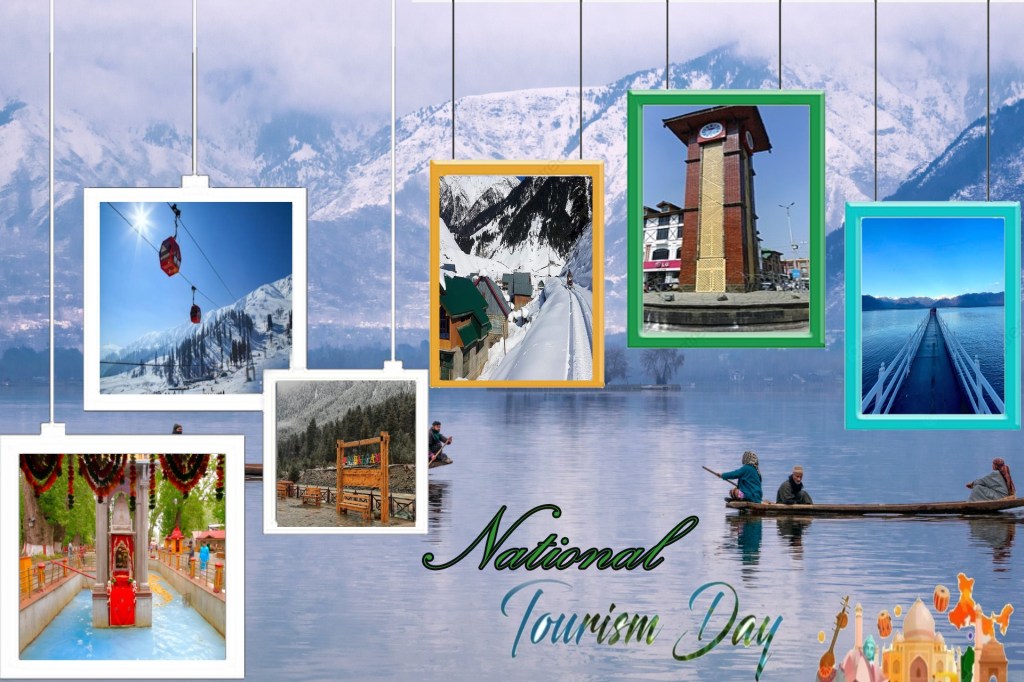
National Tourism Day, celebrated annually on January 25th, serves as a reminder of the immense potential that tourism holds for country’s economic and cultural growth. For Kashmir, often referred to as “Paradise on Earth,” this day is not just a celebration but a testament to its remarkable journey from turmoil to tranquility, with tourism playing a pivotal role in shaping its narrative. The abrogation of Article 370 in 2019 marked a watershed moment, ushering in an era of unprecedented growth in Kashmir’s tourism sector. This article delves into the significance of National Tourism Day for Kashmir, how the improved law and order situation has become a magnet for tourists, and how the people of Kashmir, reliant on tourism, are witnessing transformative changes in their livelihoods.
Kashmir’s allure lies in its breathtaking landscapes, serene valleys, snow-capped mountains, pristine rivers, and vibrant cultural heritage. For decades, its beauty attracted travelers from around the globe. However, the region’s potential remained underutilized due to the socio-political turmoil that overshadowed its charm. National Tourism Day, therefore, symbolizes hope and a commitment to leveraging Kashmir’s inherent strengths to boost its economy and cultural identity.
The abrogation of Article 370 on August 5, 2019, marked a historic shift in Jammu and Kashmir’s political landscape. The move integrated the region more closely with the rest of India, bringing it under the purview of national policies and schemes. For the tourism sector, it was nothing short of revolutionary.
The abrogation allowed direct governance from the central government, leading to quicker decision-making and efficient implementation of tourism-related projects.
Investors, previously hesitant due to the special status and security concerns, started showing interest in developing infrastructure, hotels, and resorts, further boosting the sector.
Areas like Gurez, Bungus Valley, and Sinthan Top, which were previously inaccessible or overshadowed, have gained prominence on the tourist map.
Improved road connectivity, enhanced air travel options, and the upcoming railway line connecting Kashmir with the rest of India have made travel easier for tourists.
The improved law and order situation post-abrogation has been instrumental in the tourism boom. The decline in terrorist activities and an increase in public confidence have turned Kashmir into a safer destination for travelers.
In 2023 alone, Kashmir welcomed a record-breaking 2.5 million tourists, a stark contrast to previous years marred by instability.
Iconic destinations like Gulmarg, Pahalgam and Dal Lake have regained their charm, hosting not just domestic tourists but also a growing number of international visitors.
Enhanced security has enabled initiatives like night shikara rides and cultural shows, adding new dimensions to the tourist experience.
Events such as the Tulip Festival and Kashur Riwaaj have showcased the region’s cultural vibrancy, attracting culture enthusiasts from far and wide.
Religious tourism has emerged as a significant contributor to Kashmir’s tourism boom. The region, home to numerous revered shrines and temples, offers a spiritual journey for devotees from across the country and beyond.
One of the holiest shrines for Hindus, the annual Amarnath Yatra attracts lakhs of pilgrims, providing a spiritual and adventurous experience. Improved infrastructure and security have made the pilgrimage safer and more accessible.
Situated on the banks of Dal Lake, this shrine holds immense significance for Muslims, drawing thousands of visitors during important religious events.
Perched atop a hill overlooking Srinagar, this ancient temple dedicated to Lord Shiva is a major attraction for Hindu devotees and tourists alike.
This Sufi shrine, dedicated to Sheikh Noor-ud-din Noorani, symbolizes Kashmir’s spiritual and cultural harmony, attracting devotees of all faiths.
Located in Tulmulla village, this sacred site dedicated to Goddess Ragnya Devi witnesses a large influx of devotees, particularly during the annual Mela Kheer Bhawani.
The influx of pilgrims has revitalized local economies around these religious sites. From transport operators and hoteliers to small vendors selling souvenirs and local delicacies, religious tourism has created sustainable livelihoods for thousands.
Tourism has always been a lifeline for Kashmir’s economy. With the sector now witnessing a revival, those dependent on it are reaping significant benefits. From hoteliers and houseboat owners to artisans and tour guides, every segment of society has experienced an uplift.
The houseboats on Dal and Nigeen Lakes, once a symbol of decline due to low occupancy, are now bustling with tourists year-round. Owners report full bookings during peak seasons, boosting their income and enabling better maintenance of their boats.
Kashmiri handicrafts, renowned for their intricate artistry, are finding new markets thanks to the influx of tourists. Pashmina shawls, papier-mâché items, and carpets have seen a surge in demand.
Youth have ventured into innovative tourism-related businesses, including adventure sports, eco-tourism, and homestays, capitalizing on the growing number of tourists.
Increased tourist footfall has boosted the sale of local produce like saffron, apples, and walnuts, directly benefiting farmers.
Tourism has also played a significant role in empowering local communities. Women-led self-help groups are crafting souvenirs, running cafes, and managing guesthouses, showcasing their entrepreneurial spirit. Additionally, the youth are increasingly involved in tourism-related activities, reducing unemployment and steering them away from negative influences.
While the current trajectory of Kashmir’s tourism sector is promising, challenges remain. Infrastructure development needs to keep pace with the growing tourist demand. Sustainable tourism practices must be prioritized to preserve the region’s fragile ecosystem. Additionally, consistent efforts are required to maintain law and order to ensure continued tourist confidence.
The government’s proactive measures, such as the promotion of village tourism, eco-tourism, and adventure sports, reflect its commitment to making Kashmir a global tourism hub. Projects like the restoration of heritage sites and the development of ski resorts in Gulmarg are set to further enhance the region’s appeal.
National Tourism Day is a celebration of Kashmir’s resilience and its potential to become a global tourism hotspot. The abrogation of Article 370 and the improved law and order situation have unlocked opportunities that were once deemed unattainable. As tourists from all over the world flock to this paradise, the people of Kashmir are reaping the benefits, witnessing transformative changes in their lives and livelihoods.
Kashmir’s journey from conflict to concord, with tourism as a beacon of hope, is a story worth telling. On this National Tourism Day, let us celebrate not just the beauty of Kashmir but also the spirit of its people, who continue to make it a paradise on earth.

 Kashmir RootStock