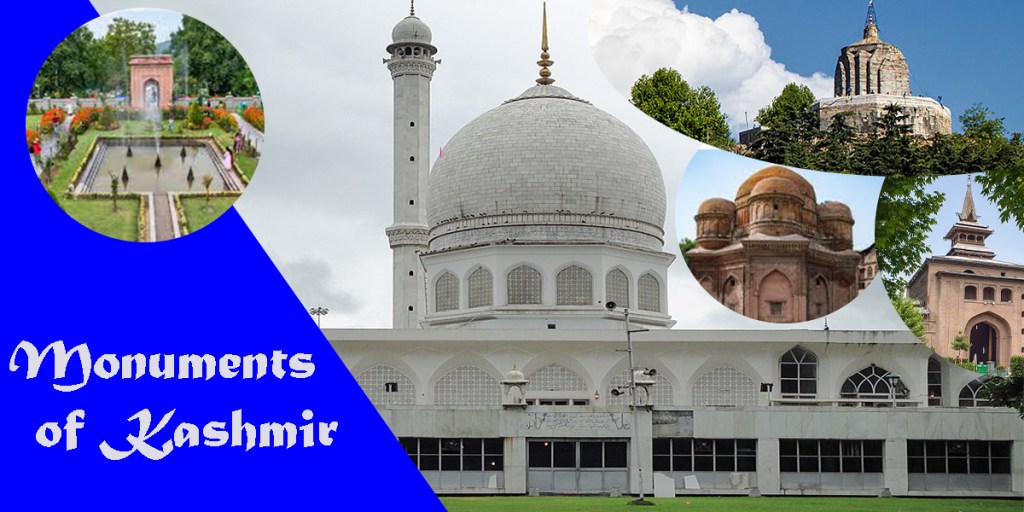
Kashmir is often hailed as “Paradise on Earth.” Beyond its natural splendour the region is a treasure trove of architectural wonders that chronicle its layered history a saga of Hindu dynasties, Buddhist monks, Mughal emperors, Afghan rulers and Sufi saints. From ancient sun temples to Mughal gardens echoing Persian poetry, Kashmir’s monuments stand as silent witnesses to its multicultural ethos and enduring spirit.
The Mughal emperors smitten by Kashmir’s beauty, transformed its landscapes into living canvases. Shalimar Bagh built by Emperor Jahangir in 1619 for his wife Nur Jahan is a masterpiece of symmetry. Its four terraces representing the Islamic concept of paradise are adorned with cascading fountains, fragrant chinar trees and pavilions where royalty once revealed. Nearby Nishat Bagh, designed by Nur Jahan’s brother Asaf Khan, slopes gently toward Dal Lake its 12 terraces symbolising the zodiac signs. The lesser-known Chashme Shahi, commissioned by Shah Jahan in 1632, is a compact yet enchanting garden. Its natural spring, believed to have medicinal properties, feeds tiered pools and flowerbeds.
Long before Islamic rule, Kashmir was a hub of Hindu and Buddhist culture. The Martand Sun Temple near Anantnag, is a staggering example. Built in the 8th century by King Lalitaditya Muktapida of the Karkota Dynasty this temple complex once spanning 220 feet boasts 84 intricately carved columns and a central shrine aligned to catch the first rays of dawn. Though ruined by Sikandar Shah Miri in the 15th century, its grandeur still awes visitors. In Srinagar, the Shankaracharya Temple originally Jyeshteshwara crowns Takht-e-Suleiman hill. Dating to 371 BCE this stone edifice dedicated to Lord Shiva is Kashmir’s oldest surviving Hindu shrine. The Awantipora Temples built by King Avantivarman in the 9th century are lesser known gems. The Avantiswami Temple dedicated to Vishnu and Avantishwar Temple for Shiva showcase the era’s advanced stonework with detailed carvings of deities, and geometric patterns.
Islam arrived in Kashmir through Sufi mystics leaving an indelible mark on its architecture. Srinagar’s Jamia Masjid completed in 1402 under Sultan Sikandar, is a marvel of Indo Saracenic design. Its 370 deodar wood pillars support a sprawling courtyard while the pagoda like roof a Kashmiri signature defies typical mosque aesthetics. Rebuilt twice after fires, it remains a symbol of communal harmony. The Khanqah-e-Moula Khanqah of Shah Hamadan built in 1395 on the Jhelum’s banks, is Kashmir’s oldest Islamic shrine. Dedicated to Mir Sayyid Ali Hamadani, the Persian Sufi who introduced Islam to the valley, its multi tiered wooden structure glows with intricate arabesques, lacquer work and calligraphy. Kashmir’s Buddhist heritage, though less visible is profound. The Harwan Monastery 3rd-4th century CE, near Srinagar reveals terracotta tiles stamped with scenes of daily life and Buddhist motifs. Scholars believe it hosted the Fourth Buddhist Council under Kanishka shaping Mahayana Buddhism.
Tucked away in the Kupwara district near the Line of Control the Kalaroos Caves are a mysterious network of rock cut chambers shrouded in myth and historical intrigue. Believed to date as far back as the 1st century CE these caves are thought to have served as meditation retreats for Buddhist monks or early monastic complexes. Local legends however intertwine them with Hindu epics some claim they are the mythical “Guffa of Kalaroos” where the Pandavas sought refuge during their exile.
In the 19th century the Dogra dynasty added to Kashmir’s architectural mosaic. The Amar Singh Palace now a hotel blending European and Rajput styles and Sher Garhi Palace a former royal residence, showcase this era. The Raghunath Temple in Jammu epitomizes Dogra devotion with its gold plated spire and walls inscribed with 300 Hindu hymns. Kashmir’s monuments face threats from neglect and climate. The 2014 floods damaged Jamia Masjid’s foundations, while political unrest has stifled tourism. Yet efforts like the INTACH-led restoration of Pari Mahal and UNESCO’s tentative listing of Mughal gardens offer hope. Meanwhile sites like the Kalaroos Caves, languishing in obscurity await urgent scholarly attention and protection.
Kashmir’s monuments are not relics of a bygone era but living narratives. They remind us that this contested land was once a melting pot of ideas where Hindu kings patronised Buddhist art, Sufis debated Vedanta and Mughals wrote love ballads to Kashmir’s beauty. To walk through Shalimar’s gardens, Martand’s ruins or Kalaroos’ shadowy chambers is to traverse a timeline of resilience where faith and artistry transcend turmoil. Preserving these stones is preserving Kashmir’s soul.

 Kashmir RootStock