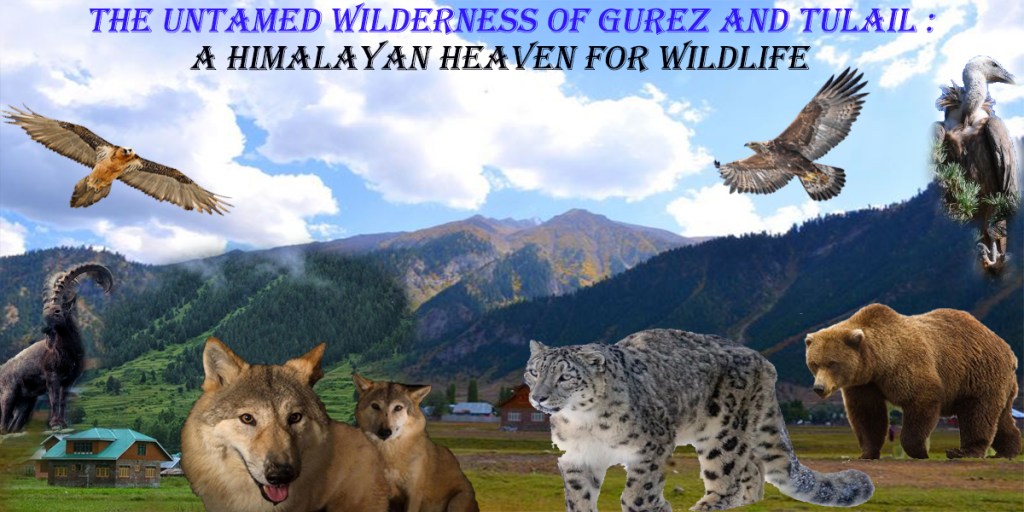
Nestled deep within the Himalayas of Jammu and Kashmir, the remote valleys of Gurez and Tulail remain one of the most pristine and undisturbed sanctuaries for a rich array of Himalayan wildlife. With their rugged landscapes, meandering rivers and expansive alpine meadows, these valleys offer a refuge for some of the world’s most iconic and endangered species. Due to their proximity to the Line of Control, this isolation has played a significant role in preserving their unique ecosystems, making them a focal point for conservation efforts and ecological research.
Gurez and Tulail stand as testaments to nature’s resilience, maintaining their ecological integrity despite modern encroachments. Their varying altitudes, ranging from river valleys to towering peaks, create diverse habitats, allowing an impressive variety of flora and fauna to thrive. The Kishanganga also known as the Neelum river carves through these valleys, supporting aquatic life and providing a crucial water source for terrestrial wildlife. The region’s ecological significance is further underscored by its status as a habitat for rare and endangered species. From apex predators like the elusive snow leopard to high-altitude herbivores such as the Himalayan ibex, Gurez and Tulail present an extraordinary natural world that remains largely unspoiled.
Among the most formidable residents of these valleys is the Himalayan brown bear. These magnificent creatures roam the alpine meadows and dense forests, playing a vital role in maintaining the region’s ecological balance. Brown bears, despite their grandeur, face significant threats from habitat destruction and occasional human-wildlife conflict. Perhaps the most enigmatic inhabitant of the Gurez-Tulail region is the snow leopard. Revered for its beauty and elusive nature, this big cat thrives in the high-altitude terrain, though sightings remain rare. The presence of snow leopards is a strong indicator of a healthy ecosystem and efforts to protect their dwindling numbers are of paramount importance.
Himalayan musk deer, known for their prized musk glands, find shelter in the dense forests of these valleys. Hunted for centuries due to the high value of musk in the perfume and traditional medicine industries, these shy and nocturnal creatures are now endangered. Conservation efforts to protect their habitat and curb illegal poaching are essential for their survival. The rugged cliffs and rocky outcrops of Gurez and Tulail are home to the Himalayan ibex, a species of wild goat known for its incredible agility. Adapted to the extreme conditions of high-altitude environments, these animals navigate steep terrains with remarkable ease. Their presence attracts predators like the snow leopard, reinforcing the delicate predator-prey dynamics of the region.
The Himalayan wolf, an apex predator adapted to the region’s harsh climate, also roams these valleys. Distinguished by its unique genetic lineage, this predator is crucial in controlling herbivore populations and maintaining ecological balance. However, the wolf faces threats from habitat fragmentation and conflict with livestock farmers.Bird enthusiasts visiting Gurez and Tulail will find an avian spectacle. The valleys serve as crucial nesting grounds for species such as the Himalayan monal the state bird of Uttarakhand, golden eagles, lammergeiers bearded vultures and Himalayan griffons. The region’s pristine environment allows these birds to flourish, offering an unparalleled experience for ornithologists and nature lovers.
Gurez and Tulail’s relative inaccessibility has safeguarded their ecosystems, allowing wildlife to thrive without significant human interference. The region’s rivers, grasslands and forests maintain an intricate ecological balance, supporting large and small species. However, the area is not immune to environmental threats despite its seclusion. Rapid climate change, habitat destruction and increasing human activity pose significant risks to the delicate ecosystems. Conservation efforts must be reinforced to protect the region’s biodiversity from these looming dangers.
The impacts of climate change are becoming more evident in high-altitude ecosystems. Melting glaciers, unpredictable weather patterns and rising temperatures threaten wildlife and the communities that depend on these fragile landscapes. Species like the snow leopard and Himalayan ibex, which rely on cold environments, are particularly vulnerable to these changes. With the expansion of human settlements and infrastructure development, instances of human-wildlife conflict have increased. Brown bears, in particular, have been known to venture into villages for food, leading to confrontations with locals. Effective mitigation strategies, such as secure waste management and community awareness programs, can help reduce these conflicts.
The Jammu and Kashmir Forest Department and various conservation organizations have initiated projects to safeguard the wildlife of Gurez and Tulail. However, more robust efforts are required, raising awareness among local communities about the importance of conservation, implementing stricter anti-poaching measures, promoting sustainable ecotourism as an alternative to exploitative practices. Gurez and Tulail have witnessed a surge in tourist activity as adventurers and nature enthusiasts seek to explore their untouched beauty. While tourism brings economic benefits, it must be cautiously approached to prevent ecological degradation.
Visitors to the region must adhere to responsible travel practices, such as maintaining a safe distance from wildlife to avoid disturbing their natural behaviour. Avoiding littering and ensuring that waste is correctly disposed of supporting local businesses that engage in environmentally friendly practices. Respecting local customs and traditions to foster harmony between conservation and culture. As interest in Gurez and Tulail grows, balancing conservation and development is essential. Community-based conservation initiatives can empower locals to protect their natural heritage while benefiting economically from sustainable practices. Adaptive conservation strategies must be developed to mitigate the impacts of climate change. Protecting existing habitats, afforestation programs and water conservation projects will be crucial in maintaining the region’s ecological health.
Long-term ecological research is critical to understanding wildlife populations and their shifting dynamics in response to environmental changes. Continued scientific studies will inform better conservation policies and management strategies Gurez and Tulail stand as a testament to the wonders of nature, offering a sanctuary for some of the Himalayas’ most extraordinary wildlife. However, their survival depends on collective efforts from conservationists, local communities and policymakers. With sustainable practices and a commitment to environmental stewardship, these valleys can remain a haven for Himalayan wildlife for generations to come. By prioritizing conservation today, we can ensure that the untamed beauty of Gurez and Tulail endures, leaving an invaluable legacy for the future.

 Kashmir RootStock