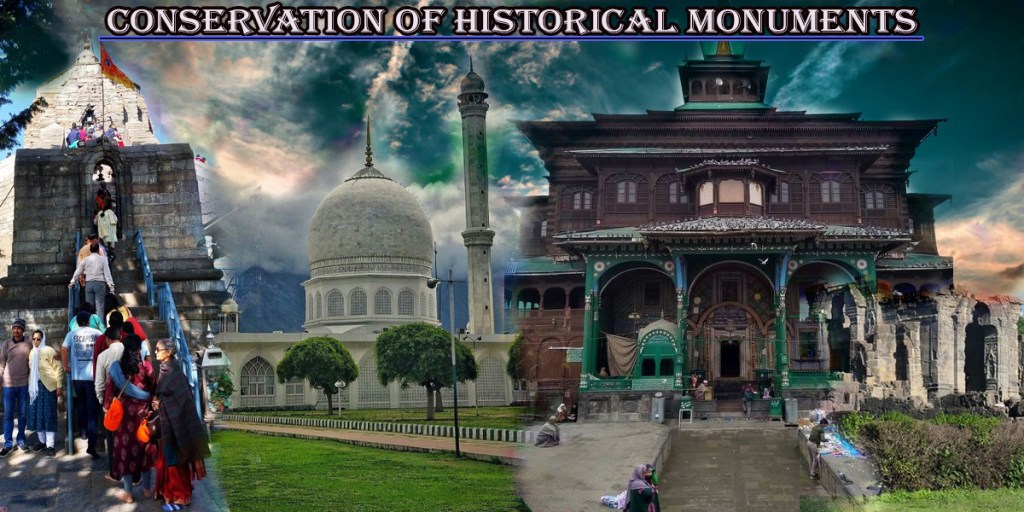
India, a land steeped in millennia of history, is a vibrant tapestry woven with rich culture, diverse traditions, and an astonishing array of heritage buildings, temples, forts and palaces. These ancient monuments stand as living testaments to golden historical eras that span thousands of years. Unfortunately, many of these invaluable structures have suffered damage and some have even been lost due to a lack of awareness and knowledge about their significance. This highlights the urgent need for comprehensive conservation efforts, particularly for archaeological sites and monuments.
A monument, by definition, is a structure explicitly created to memorialize and honour a person or event, or one that has subsequently gained significant socio-historic relevance. India is home to an unparalleled number of such monuments, estimated to be around 6,800. These architectural marvels—including temples, forts, mosques, churches and palaces—are integral to the nation’s identity, providing a tangible link to its rich past. Maharashtra alone boasts over 300 forts, more than 40 historical caves and over 160 temples, along with numerous water bodies, bridges and towers. The Archaeological Survey of India, a vital government agency, is tasked with the research, conservation and maintenance of these historical treasures. Its work, supported by various departments, aims to protect and manage these sites, though challenges persist in achieving comprehensive preservation across the vast number of unprotected monuments.
The conservation of historic buildings, areas and monuments involves a dedicated effort to connect a place’s historical background with its contemporary population. This encompasses four primary styles like Preservation, restoration, rehabilitation and reconstruction are key methods of conserving historic buildings. Preservation focuses on maintaining a structure in its original state through ongoing repair and care, while restoration aims to return it to a specific time period by repairing or replacing decayed parts and removing later modifications. Rehabilitation adapts historic buildings for contemporary use without compromising their original character, and reconstruction involves recreating missing parts based on historical interpretation. These practices are vital as ancient monuments reflect a nation’s history, cultural identity, prosperity and past conflicts, with their architectural significance often linked to important religious, social and political events.
The conservation of ancient monuments offers numerous benefits across tourism, culture and sustainability. Well-maintained landmarks attract tourists, boosting local economies by generating employment and fostering community prosperity, as seen with global icons like the Eiffel Tower or the Pyramids of Giza. Culturally, these structures provide deep insights into past civilizations, encouraging respect for historical traditions and cultural diversity while enriching our collective understanding of human heritage. Environmentally, monument conservation serves as a sustainable practice by reducing construction waste and conserving the energy required to produce and transport new materials, effectively acting as a form of architectural recycling.
The conservation of India’s historical monuments is not merely an aesthetic choice but an economic and cultural imperative. While significant efforts are underway, particularly by the Archaeological Survey of India, a considerable number of monuments remain unprotected, highlighting the need for sustained and expanded conservation initiatives. By recognizing the profound historical, cultural, economic and environmental benefits of preservation, India can ensure that its rich heritage continues to inspire future generations while contributing to national development and prosperity.

 Kashmir RootStock