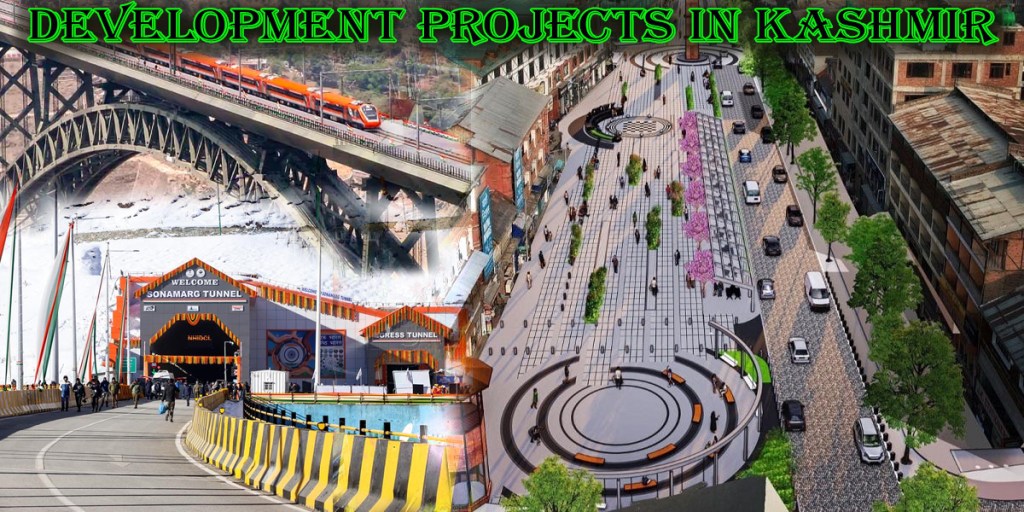
The developmental trajectory of Jammu and Kashmir, particularly in the post-August 2019 epoch, demands an exegesis that transcends the facile binaries of geopolitics and security. For a discerning intelligentsia, a rigorous comprehension necessitates a profound engagement with the intricate dialectic between overarching strategic imperatives, ambitious infrastructural undertakings and the sine qua non of sustainable and equitable accretion, all the while acknowledging the vital and variegated contributions emanating from its diverse sub-regional economies.
Since August 2019, Jammu and Kashmir constitutional and administrative changes have focused on national integration and unlocking its potential. This is evident in the critical transformation of its energy sector. Decades of power deficits are being addressed through hydroelectric projects like Kirthai-II (930 MW) and others along the Chenab River. Integration into the pan-Indian power grid, boosted by Power Grid Corporation of India infrastructure, aims for reliable electricity supply. While installed capacity has increased over the past three years (per Central Electricity Authority data), growing energy demands require continued investment and effective grid management. Unfettered connectivity is being pursued through major infrastructure projects, including national highways and rural roads under schemes like the Pradhan Mantri Gram Sadak Yojana. These efforts are significantly improving regional mobility and connecting remote communities, such as those in the difficult terrains of Gurez and Machil in northern Kashmir.
Within the educational ecosystem, a strategic impetus of considerable magnitude is being furnished through the establishment of pre-eminent institutions of higher learning. The deliberate alignment with extant national educational policy frameworks aspires to elevate prevailing pedagogical standards and to significantly augment the long-term professional prospects of Jammu and Kashmir burgeoning cohort of youthful aspirants.
Healthcare is improving significantly, with a focus on equal access and high-quality services. New medical colleges in key areas like Handwara and Udhampur, along with upgrades to major facilities like Shri Maharaja Hari Singh Hospital in Srinagar, aim to fill critical gaps in the system. Nationwide health insurance programs like Ayushman Bharat are also helping more people access essential medical care.
Jammu and Kashmir development are closely tied to the unique paths of its sub-regions. Langate is leveraging its strength in apple cultivation with targeted efforts to boost production and market access. Qaziabad is focusing on diversifying agriculture and improving rural infrastructure. Qalamabad is blending strong agricultural output with support for local crafts and emerging eco-tourism opportunities.
These discrete sub-regional engines of economic vitality, while necessitating meticulously tailored developmental strategies that adroitly address their unique constellations of strengths and challenges, are nonetheless integral to the overarching socio-economic advancement of Jammu and Kashmir. The demonstrable enhancements in agrarian productivity within the precincts of Langate and Qaziabad, the preservation and progressive promotion of indigenous crafts within Qalamabad and the concomitant augmentation of foundational infrastructure across these geographically distinct locales collectively contribute ineluctably to the Union Territory’s aggregate economic dynamism and the holistic well-being of its citizenry.
In projecting forward, the developmental paradigm for Kashmir must be predicated upon a holistic and comprehensively integrated vision that harmoniously conjoins top-down strategic imperatives with the granular realities of bottom-up exigencies. The cultivation of genuine and substantive engagement with local communities, a profound and empathetic understanding of their specific needs and aspirational vectors and the assiduous fostering of authentic stakeholder ownership are indispensable prerequisites for enduring success.
The ultimate and most veracious metric of developmental efficacy will not be solely the quantitative accrual of infrastructural assets or the numerical enumeration of implemented schemes, but rather the qualitative and enduring augmentation of the quotidian existence of all residents of Jammu and Kashmir, thereby paving the path for a future characterized by both substantive prosperity and the enduring dividends of a hard-won peace.

 Kashmir RootStock