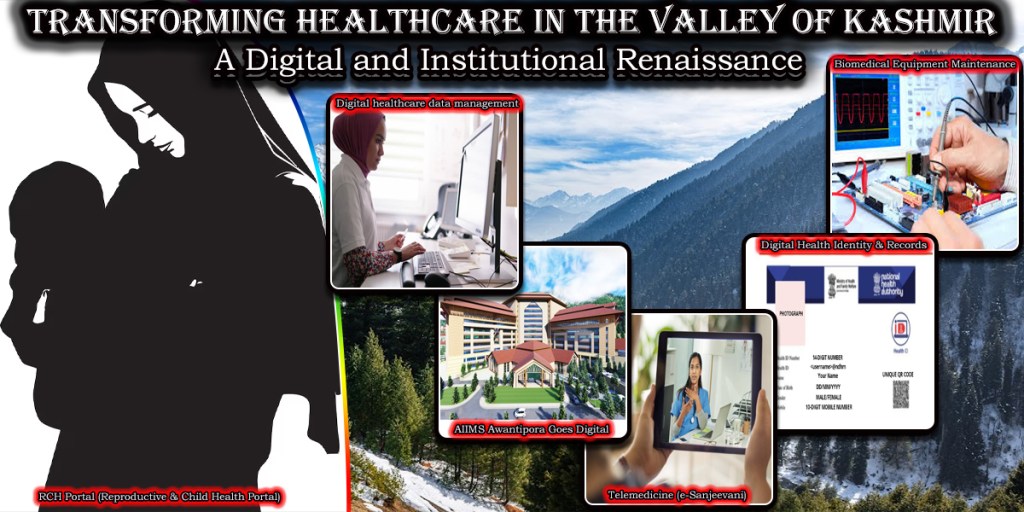
The valley of Kashmir, known for its breathtaking beauty but also marked by geographical and infrastructural hurdles has witnessed a remarkable transformation in healthcare over the past decades. From being dependent on traditional healers and having very limited government facilities in the early twentieth century, the region has steadily built a structured system of healthcare that is now embracing digital, institutional and community-centered reforms. National policies, technological platforms and persistent local efforts together form the foundation of this journey. The introduction of digital health identities, telemedicine services, community health frameworks and wellness centers has significantly improved access and delivery of medical services in urban as well as remote areas of the valley, making healthcare more inclusive and reliable for its people.
A digital health identity system has emerged as a cornerstone of this modernization drive, ensuring that medical records are portable and securely accessible across different facilities. The National Health Portal supplements this by serving as a credible source of preventive and curative information for both medical professionals and the public, fostering awareness and empowering citizens. Telemedicine through the e-Sanjeevani platform has been particularly impactful in overcoming the challenges posed by the region’s terrain and weather. By connecting village-level centers with medical colleges through real-time consultations, it has enabled specialist advice to reach even the most remote areas. Alongside this, a strong network of primary health centers, community health centers and sub-centers forms the backbone of healthcare delivery, while newly developed Health and Wellness Centers are ensuring comprehensive services including preventive, curative and promotive care. These improvements are aligned with national quality benchmarks, aiming for accreditation of most institutions in the near future, which will bring uniform standards of safety and accountability.
Maternal and child health has received special attention through the National Health Mission, with the establishment of newborn care units, nutrition rehabilitation centers and expanded immunization programs. Such steps are crucial for addressing challenges of undernutrition and seasonal hardships. To guarantee uninterrupted services, a public–private collaboration has been launched for biomedical equipment maintenance, ensuring timely repairs and functioning of critical devices across all facilities. Governance has also been decentralized with district-level oversight bodies monitoring services and coordinating programs, while an online medical council ensures ethical practice, professional licensing and continuous learning for doctors. Together, these mechanisms are shaping a healthcare system that is more organized, responsive and trustworthy.
Even with these advancements, challenges remain. The difficult terrain and severe winters often restrict access to far-flung areas. Periodic social unrest and shutdowns have at times slowed healthcare delivery and disrupted supply chains. A shortage of medical specialists, especially in rural districts, continues to limit equal access to quality care. Mental health is another pressing concern, as prolonged stress from uncertainty, unemployment and displacement has left many struggling with depression and anxiety, while trained professionals in this domain are still too few.
Looking ahead, the valley’s healthcare system must build on these gains by deepening digital literacy, expanding telemedicine services and ensuring that no corner remains disconnected. Community involvement and feedback will be vital in shaping services that reflect local needs and aspirations. Strengthening the workforce with more skilled professionals, particularly in primary care and mental health, will further bridge gaps. At the same time, resilience must be built into the system to withstand climatic disruptions and public health emergencies. If these priorities are sustained, the valley of Kashmir will not only improve health outcomes for its people but also offer a scalable model for providing high-quality and equitable healthcare in regions with difficult geographies.

 Kashmir RootStock