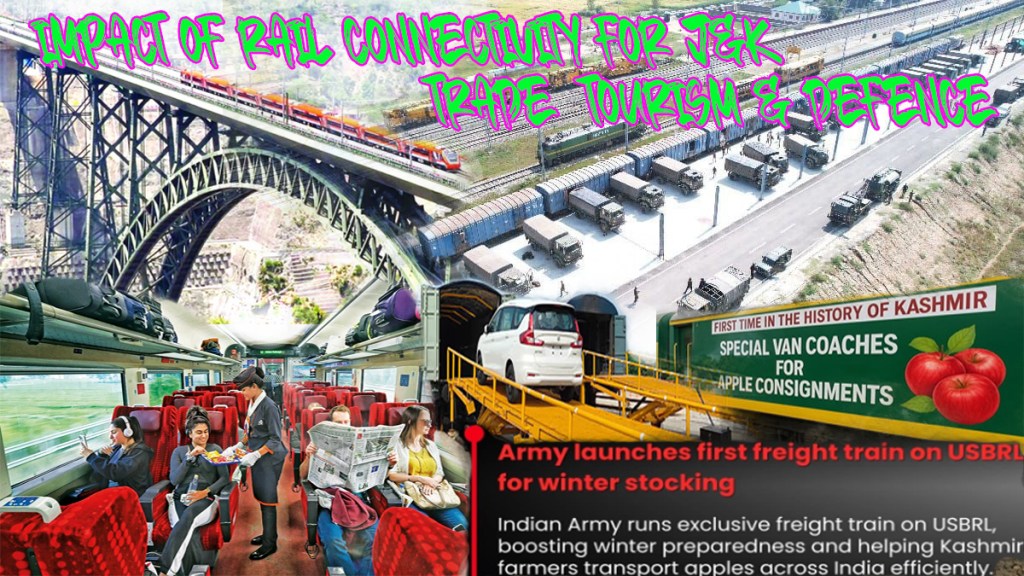
The story of Jammu and Kashmir’s rail connectivity showcase about laying steel lines across valleys and mountains and hope, unity and a collective determination to bridge distances. Every stretch of the railway that winds through the region’s challenging terrain carries with it a quiet assurance of peace, progress and protection. For decades, the dream of linking the valley with the rest of India through an all-weather railway seemed far from reality, almost like an idea too ambitious to achieve. Today, that dream come true and bringing with it the promise of transformation for the people and the land.
For many years, Jammu and Kashmir’s economy relied heavily on road transport which often depended on uncertain weather and was vulnerable to landslides and blockages. The introduction of the railway changes this dependence forever. With the completion of the Udhampur Srinagar Baramulla Rail Link, the valley will experience seamless movement of essentials and goods throughout the year. The cost of transport will come down significantly, creating immense benefits for farmers, artisans, traders and commuters alike. The saffron of Pulwama, the apples of Kashmir and the handicrafts of Srinagar will reach wider markets across India in quicker time, opening new opportunities for local producers. Small businesses that once struggled with isolation will gain access to new markets, while mountain communities will be connected like never before. The trains will carry passengers and cargo the assurance of opportunity and shared growth.
For generations, Kashmir has been described as paradise on earth, yet even paradise requires paths that make it accessible. With railways reaching the valley, people from every corner of India will be able to visit safely, comfortably and affordably while enjoying the breathtaking views along the way. Tourist destinations such as Gulmarg, Pahalgam and Sonamarg will see more visitors, creating an upsurge in homestays, hotels and handicraft markets. This will bring stable income and livelihoods to thousands of local families. The railway will also encourage winter tourism, which earlier suffered due to the closure of roadways during heavy snowfall. Now, snow will mean symbolize celebration for visitors from across the country experience the valley in its most beautiful season. More tourists will mean more jobs, more smiles and stronger bonds of friendship between people from the plains and those from the mountains.
Beyond commerce and tourism, the railway holds strategic significance as well. For the security forces posted at the northern frontiers, the railway is not only infrastructure but also a lifeline. The challenging borders, guarded by troops in freezing temperatures and difficult landscapes, will now see quicker movement of men, supplies and equipment. In times of emergencies or natural disasters, the trains will act as a fast response system, making it possible to provide timely evacuation and relief. The tunnels carved through the Pir Panjal ranges stand as silent companions to the courage of the soldiers who defend these mountains, strengthening the region and reflecting the collective will of the nation to stand united against every challenge. At the same time, the engineering marvels that make this possible have attracted global admiration. The Chenab Bridge, the highest railway bridge in the world, is not just a technical wonder but also a symbol of India has achieved with determination. It represents excellence in design while also carrying an emotional message of connection between the mountains and the plains, between vision and achievement.
Rail connectivity in Jammu and Kashmir is more than a transport project; it is a story of transformation. It is about tying hearts together, creating opportunities and building resilience. For the tourist it means joy, for the trader it means business, and for the soldier it means support. As trains from distant parts of India move steadily into the valleys and highlands of Kashmir, they will not merely transport passengers, they will carry a message that no terrain is too rugged and no dream too distant. The railway promises to redefine the destiny of Jammu and Kashmir by converting obstacles into pathways, seclusion into belonging and challenges into milestones of progress. One day when the first train travels the full stretch from Kanyakumari to Kashmir, it will mark not only the completion of a project and the triumph of India’s unity, resilience and unshakable spirit. It will be a victory for the valley and for the nation, a reminder that determination and togetherness can overcome even the most formidable ba

 Kashmir RootStock