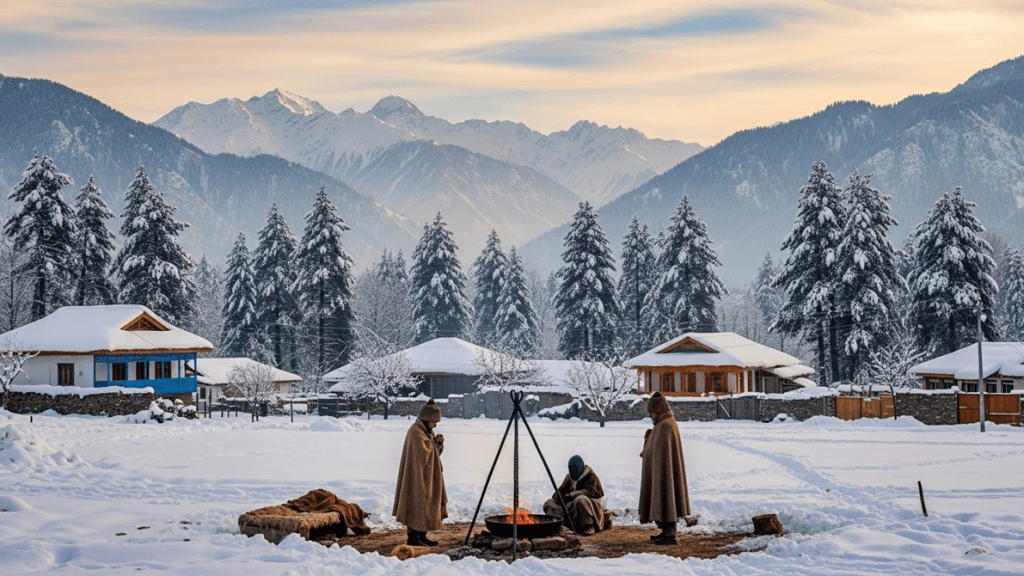
As the chilly winds of December sweep through the valleys of Kashmir, something magical and intense takes place. The region enters its harshest and most beautiful season, Chillai Kalan. From 21st December to 31st January, this period marks the peak of winter in Kashmir, a time when the valley is blanketed in thick snow and the cold penetrates to the very bones. For those of us born and raised in the Kashmir Valley, Chillai Kalan is not just a season; it’s an experience — one that defines our winters and shapes our lives.
Chillai Kalan is Kashmir’s coldest and most severe winter phase. During this time, the temperature often drops below freezing, reaching sub-zero levels in many areas, particularly in Srinagar. It’s the time when the land transforms into a winter wonderland, with snow covering everything from the rooftops to the majestic mountains that surround the valley. However, with this beauty comes a harshness that tests both nature and the people who live here.
While tourists flock to the valley to experience snow and cold, for us Kashmiris, it’s something we have learned to live with — from childhood to adulthood, Chillai Kalan shapes our daily routine. The cold becomes a part of us and we learn to navigate life in its presence.
Once Chillai Kalan begins, temperatures plummet rapidly. Srinagar, often the coldest, sees temperatures drop well below freezing, while Gulmarg and Pahalgam experience heavy snowfall, sometimes accumulating several feet. In many rural areas, you’ll see the entire landscape covered in a thick layer of snow, making it look like something out of a fairy tale.
For us Kashmiris, the severe cold is an everyday challenge. We live in homes where kangris (traditional firepots) are used to keep warm and people bundle up in layers of woolen clothing, including the iconic pheran, a thick woolen cloak that keeps us insulated from the harsh elements. Roads become slippery and simple tasks like fetching water or cooking a meal become slow and careful processes to avoid frostbite or injury.
The most iconic feature of Chillai Kalan is, undoubtedly, the snow. It’s not just a spectacle to behold but also a source of livelihood and hardship. The blanket of white that covers the entire Kashmir Valley is as beautiful as it is troublesome. The famous Dal Lake, which is a gem in every season, transforms into a breathtaking sight with snowflakes falling gently onto the water, sometimes freezing it solid. Srinagar’s Mughal gardens — once lush and green — now lie beneath a heavy layer of snow, with the shapes of trees and bushes barely visible.
The snow also brings with it a heavy burden. It affects everything — from transportation to food supplies. The roads, especially in the higher reaches like Sonamarg and Kupwara, can become impassable. The harsh weather also isolates remote areas from the rest of the region, making it difficult for people to get essentials like food and medicine. Power outages are common and the snow sometimes leads to avalanches in higher altitudes, causing further disruption.
Chillai Kalan is not just about the cold and snow; it is an integral part of the cultural fabric of Kashmir. It is a time when people come together to keep warm, share stories and celebrate the beauty of the season. While it may be challenging, Kashmiris have learned to embrace the cold with grace and resilience.
Food plays a central role during this period. Kahwa (a traditional saffron tea), Rogan Josh and Gushtaba are some of the dishes that warm us from the inside. In every Kashmiri home, the kitchen becomes a hub of activity, with families huddling together around a kangri to enjoy a warm meal. Even on the coldest of days, the Wazwan — our famous multi-course meal — becomes a celebration of our culinary heritage, enjoyed by both family and guests alike.
While humans adapt to the cold, Kashmir’s wildlife also faces its own survival challenges during Chillai Kalan. Himalayan Brown Bears, Leopards and Himalayan Wolves are some of the wild animals that are often spotted roaming the snow-covered forests. In fact, the tracks of these animals can be seen in the deep snow, providing a glimpse into the harsh realities of life in the wild during the dead of winter.
The sight of these animals in the snow reminds us of how life in Kashmir, both human and animal, adapts and survives despite the challenges. The snow, while beautiful, is also a harsh teacher for all living beings.
For many Kashmiris, Chillai Kalan is a time to slow down and reflect. With the heavy snow and cold, daily life often becomes more subdued. Work takes a backseat and family time becomes more precious. People spend hours together, sipping tea, telling stories of the past and remembering loved ones. It’s a season of patience, endurance and deep connections.
During this time, we also honour our traditions and customs. The cold, though harsh, has its own charm in Kashmir. The beauty of a snow-covered landscape, the smell of wood burning in the fireplace and the warmth of family make it a season that holds a special place in the hearts of every Kashmiri.
Chillai Kalan is more than just a season in Kashmir; it is a defining part of our identity. It tests us, teaches us resilience and connects us to the land in ways that no other season can. While the cold may be intense and the challenges many, there is a beauty in this time — a beauty that only those who have lived through it truly understand.
For the people of Kashmir, Chillai Kalan is not just a phase of cold and snow, but a time of celebration, reflection and survival. It’s the season when the valley shows its raw, untamed beauty, reminding us of the strength and resilience that run deep in the veins of Kashmir.

 Kashmir RootStock