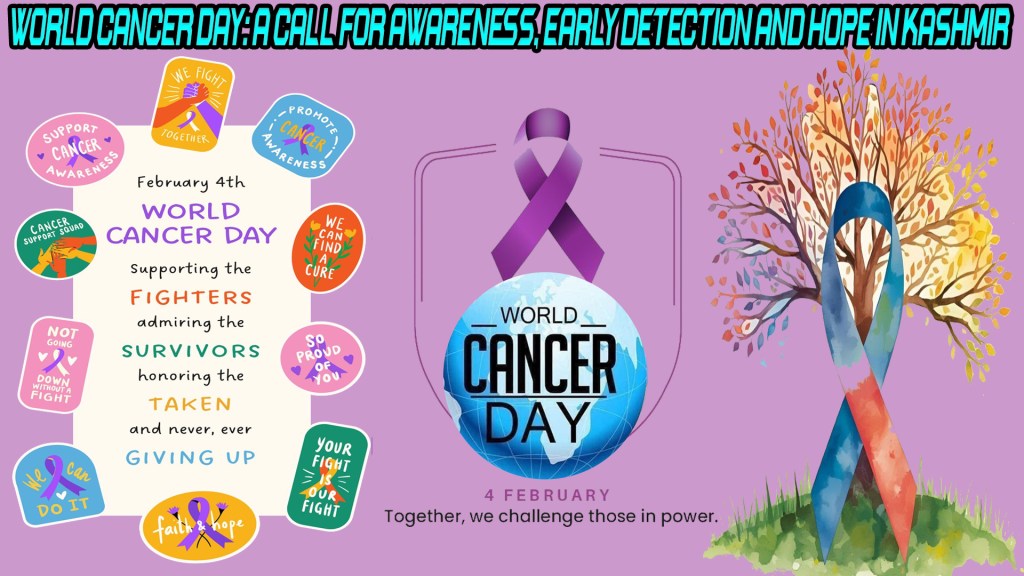
Every year on February 4, the world comes together to observe World Cancer Day, a global initiative aimed at raising awareness, promoting prevention, and encouraging timely diagnosis and treatment. In Kashmir, where healthcare challenges intersect with geographical, economic, and social realities, this day carries special importance. Cancer is no longer a distant or rare disease; it has become a growing public health concern in the Valley, demanding collective action from institutions, communities, and individuals.
Over the past decade, Kashmir has witnessed a steady increase in cancer cases. Hospitals and regional cancer centers report growing numbers of patients suffering from lung, breast, stomach, colorectal, and oral cancers. Environmental factors, lifestyle changes, tobacco use, air pollution, dietary habits, and delayed medical consultations contribute to this rising burden. In rural areas, lack of awareness and limited access to diagnostic facilities further worsen the situation.
The mountainous terrain and scattered settlements make healthcare delivery challenging. Many patients are forced to travel long distances to reach tertiary care hospitals in Srinagar or outside the Union Territory, adding financial and emotional stress to already vulnerable families.
One of the most critical messages of World Cancer Day is the power of early detection. When identified at an early stage, many cancers can be treated successfully with higher survival rates and lower treatment costs. Unfortunately, in Kashmir, many patients seek medical help only when symptoms become severe. Fear, stigma, misinformation, and reliance on unverified remedies often delay timely diagnosis.
Community-based screening programs, mobile medical units, and regular health camps can play a transformative role. Educating people about warning signs such as unexplained weight loss, persistent pain, abnormal bleeding, and long-lasting cough can save lives.
Awareness is the first line of defense against cancer. Schools, colleges, religious institutions, and local organizations must actively participate in spreading accurate information. Tobacco and substance abuse, which remain significant contributors to cancer in the region, must be addressed through strong public health campaigns.
Special focus is needed on women’s health. Breast and cervical cancer awareness programs, self-examination training, and regular screenings should be integrated into primary healthcare services across Kashmir.
While Kashmir has made progress in expanding healthcare facilities, there remains a pressing need for more specialized cancer treatment centers, modern diagnostic equipment, and trained oncologists. Tele medicine initiatives and digital health platforms can help connect remote areas with expert doctors, reducing the need for long-distance travel.
Government schemes, public-private partnerships, and community support systems must work together to ensure affordable treatment for economically weaker sections.
Despite the challenges, Kashmir has also witnessed inspiring stories of cancer survivors who have emerged stronger and more determined. Their journeys highlight the importance of mental strength, family support, and timely medical intervention. These survivors can become powerful advocates for awareness, encouraging others to seek help without fear or hesitation.
World Cancer Day is not just a symbolic event; it is a reminder of our shared responsibility. Governments must invest in healthcare infrastructure, doctors must continue to serve with dedication, media must spread accurate information, and citizens must adopt healthier lifestyles.
For Kashmir, the fight against cancer is also a fight for better healthcare access, social awareness, and dignity for every patient. By standing together, breaking stigma, and prioritizing prevention and early detection, the Valley can move toward a healthier and more hopeful future.
On this World Cancer Day, let Kashmir rise with awareness, unity, and compassion. Cancer may be a formidable challenge, but with timely action, strong healthcare systems, and informed communities, it is a battle that can be fought — and won. Hope, after all, remains the strongest medicine.

 Kashmir RootStock