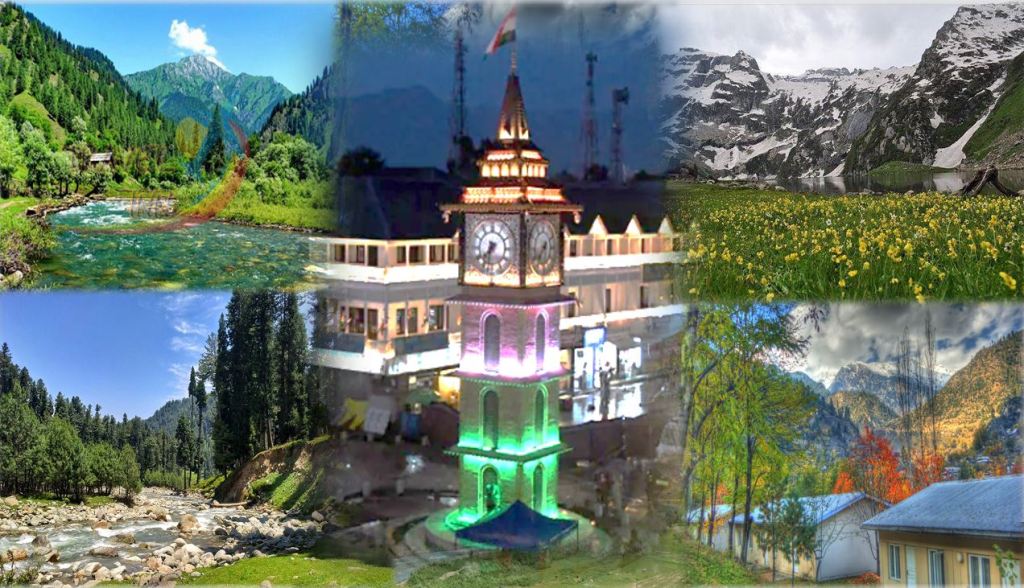
Kashmir, often referred to as “Heaven on Earth,” is a place where nature has poured its finest artistry. Nestled in the northernmost region of the Indian subcontinent, this enchanting valley is a testament to the unparalleled beauty and grandeur that the natural world can offer. With its majestic snow-capped peaks, pristine lakes, lush meadows, and a culture as rich as its landscapes, Kashmir stands as an epitome of earthly paradise. For centuries, poets and travellers have penned verses and tales, attempting to capture the essence of Kashmir’s beauty, only to find themselves humbled by its sheer magnificence
First up we have, Kokernag means ‘fowl’ and ‘nag’ means ‘serpent’. The name is derived from the spring that gushes from the base of the thickly forested hill and divides into channels. The spring looks like a hen’s claw-foot. Kokernag town is located in the district of Anantnag. The altitude of the town is approximately 2000 mts. The place is renowned for its gardens, the largest freshwater spring in Kashmir and trout streams. The surrounding towns and villages of Kokernag include Wam, Hangalgund, Sagam, Zalergam and Dacksum. The water in Kokernag satisfies hunger and thirst. It is also a medicine for indigestion.
Next charm of this pretty place is Tulail Valley which is located in Bandipora area of north Kashmir. It is surrounded by the snow-covered mountains of Himalayas and is located at 8,000 ft above sea level. It is located close to the Line of Control (LoC) and is surrounded by huge mountains and dense forest. Tulail Valley has become a well-known tourist destination after the 2021 Ceasefire. It is surrounded by several mountain streams and waterfalls and is surrounded by green lush meadows. Visitors to Tulail Valley can see a number of rare and endangered plants and animals. Tourists can do trout fishing in Tulail Valley as well as trekking in the background of Gangabal lake and the Harmukh peak.
Third up, Watlab is situated on the road between Sopore and Bandipore on the Srinagar-Jammu National Highway. As you get out of the well-travelled valley, you will slowly and steadily see the Kashmir that you have not seen before. In addition to the undisturbed beauty of the area, Watlab is also known for its hill top Muslim shrine. This shrine was built on the memory of a Muslim mystic, Baba Shahurddin. Legend has it that it has the “real Kashmir vibe” and one can also see the beautiful Wular lake overlooking the shrine.
Yusmarg which is situated in the Badgam region of western Kashmir, approximately 45 kilometres from the city of Srinagar. The name translates to “Jesus Meadow” and its picturesque green meadows are adorned with a variety of green hues, such as Mint, Apple, Lime, and Emerald. The lush green meadows are surrounded by densely forested alpine forests, reminiscent of the alpine valleys of Europe, with their snow-covered peaks. An excursion of four kilometres through the woods reveals a breath-taking landscape, as a stream meanders among the pine trees, and the tranquil lake of Nilnag lies in the background.
Next in our beautiful journey, Keran is a hidden gem in the Himalayas, tucked away in the high mountains of north Kashmir. It’s located 160 km from Srinagar, and is home to the Neelum river, which is known as the Kishanganga from the Indian side and Neelum river from the Pakistani side. For many years, villagers who live in the Valley have been living with the fear of bullets and shelling on the border, but with the February 2021 ceasefire, things have changed. It’s a great place to explore if you’re looking for a hidden spot. You can also visit the historic temple of Teetwal. In Teetwal, you can also visit the ruins of the ‘Sharda University’, which is said to have been founded in the early ‘thirteenth century’ during the ‘kushan empire’. To get to the village of Keran, you have to go through the awe-inspiring Firkiyan gali, which is situated at a height of 9, 634 ft. Keran is a picturesque village surrounded by green forests and walnut trees and meadows and streams and wood houses.
We move onto Bangus Valley which is nestled in the stunning Kupwara Range, and is home to a wide variety of flora and fauna, as well as some of the world’s most mysterious caves. You can explore the mysterious Kalaroos Caves, which are believed to be the gateway to Russia, and they even have Stone Age art on the walls. The valley is also home to a variety of animals, from antelope and brown bear to musk deer and the amazing snow leopard. The Chowkibal Mountains surround the valley on the north side, and the Shamshabari Mountains on the west. It’s one of the best places to go on a trek and take pictures of all the beautiful scenery.
Even after covering these gems, it is an undeniable truth that no matter how many journeys one embarks upon in Kashmir, it will never be enough to cover all the places this enchanting region has to offer. Furthermore, Kashmir’s rich cultural heritage, including its handicrafts, cuisine, and festivals, is an essential part of this tapestry that makes this place so special. The warmth and hospitality of the Kashmiri people, combined with their unique traditions and folklore, create an immersive experience that leaves an everlasting impression. The changing seasons bring new wonders, from fields of vibrant saffron in autumn to pristine snows-capes in winter. It’s a place where the soul can find solace, the adventurer can find excitement, and the seeker can find enlightenment. Kashmir’s allure lies not just in what we see, but in the promise of more wonders waiting to be uncovered, making it a destination that will forever inspire wanderlust and leave visitors yearning for one more journey into its enchanting embrace.

 Kashmir RootStock