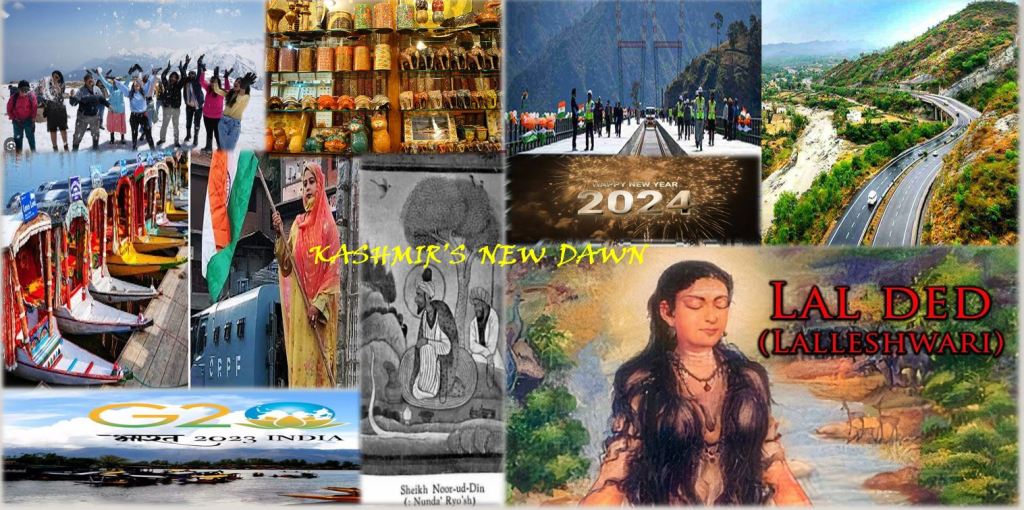
As the year draws to a close and we stand on the cusp of a new beginning, it’s time to untangle the elaborate fabric that has been crafted, in Jammu and Kashmir throughout 2023 and before. The canvas reveals a dichotomy of triumphs and tribulations, progress and challenges, and the undying spirit of Kashmiriyat echoing through the ages.
The abrogation of Article 370 in 2019 heralded a new era for Jammu and Kashmir, leading to a remarkable transformation in the economic landscape. The aftermath of this historic decision witnessed an unprecedented surge in private investments, surpassing all expectations. An astounding Rs 81,122 crore in investment proposals poured in, a stark contrast to the modest Rs 14,000 crore received since Independence.
One of the key drivers of this transformative shift was the implementation of a new Industrial Development Scheme. This initiative played a pivotal role in attracting investments and fostering a conducive environment for industrial growth. The dividends of this foresighted approach are already tangible, with the Union Territory experiencing a notable surge in industrial activity and the creation of numerous employment opportunities. Because of this success, the Supreme Court’s landmark verdict in favor of the abrogation of Article 370 resonated across the valleys of Jammu and Kashmir, instilling confidence and optimism in the region.
As Jammu and Kashmir embraces this economic resurgence, it serves as a testament to the positive impact of decisive policy changes and forward-thinking strategies. The region is poised for continued growth, with the seeds of prosperity firmly planted and the promise of a brighter future for its residents. Jammu and Kashmir, traditionally a jewel in India’s tourism crown, witnessed a revival that surpassed expectations. The region welcomed 1.88 crore tourists last year, a commendable figure in its own right. However, the administration is optimistic that this number will soar beyond two crores in the current year, underlining the resounding success of efforts to showcase the region’s cultural richness on the global stage.
The hosting of the G-20 summit in Srinagar provided a significant platform to showcase the multifaceted potential of Jammu and Kashmir. The summit not only bolstered the tourism sector but also created avenues for employment, particularly in handicrafts and tourism-related industries. The emphasis on film tourism, highlighted in an exclusive event during the summit, aimed to attract foreign film crews by streamlining approval processes and offering world-class facilities. While the positive strides are heartening, the valley has not been immune to the shadows of selective violence, radicalization of youth, or militant activities. Recent incidents, such as the tragic killing of Sanjay Sharma, remind us that the pursuit of peace, prosperity, and kashmiriyat is an ongoing journey. Even our past recognizes the term kashmiriyat and the lines below depict exactly that.
Shiv chuy thali thali Rozan;
Mo zan Hindu ta Musalman.
Truk ay chuk pan panun parzanav;
Soy chay Sahibas sati zaniy zan.
(Shiv – or Allah – lives everywhere; do not divide Hindu from Muslim. Use your senses to recognize yourself; that is the true way to find God.)
The most revered mystic poetess of Kashmir expressed herself in these verses, known as shlokas or waakhs, which have become integral to the region’s folklore. Known as Lalla Arifa among Muslims and Lalleshwari among Hindus, she continues to be cherished as Lal Ded by all Kashmiris, serving as both the embodiment and origin of Kashmiriyat, even after eight centuries.
Only in Kashmir, does the Rishi order uniquely acknowledge both Hindu and Muslim spiritual leaders. Nooruddin Shaikh, renowned as the greatest saint in Kashmir, is also referred to as Nand Rishi. His call to the people, urging them to “transform the sword into a sickle,” resonates not just with the current state of affairs in Kashmir but seems apt for the contemporary global context as well.
As we stand on the threshold of the new year, it is a hope for a better future. The forward-looking vision for the future appears to be harmonizing with the ambitions of young minds who aspire to serve Kashmir as civil servants, entrepreneurs, teachers, and doctors actively participating in the region’s growth. Drawing inspiration from Nand Rishi’s enduring call to turn swords into sickles, the approaching new year invites us to foster a collective vision that transcends divisions, working towards the shared prosperity of the valley. Let us harmonize our aspirations and dedicate our endeavors to sculpting a future where Kashmir becomes an emblem of unity, peace, and prosperity for all its residents as we triumphantly march from strength to strength in the year 2024 with hope and vigor.

 Kashmir RootStock