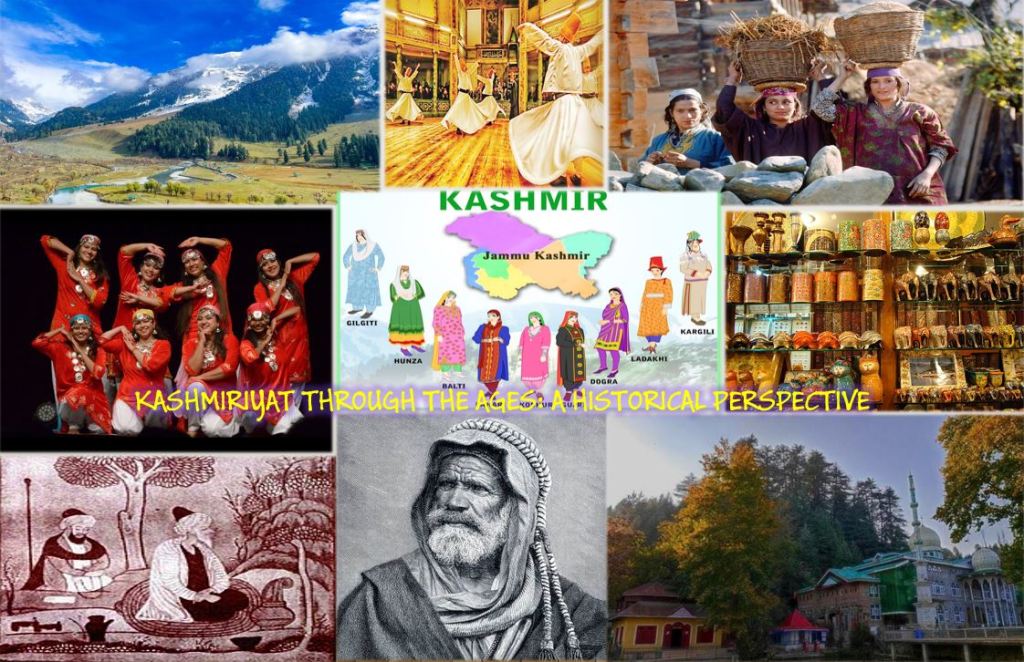
The valley of Kashmir, nestled within the majestic Himalayas, epitomizes a rich tapestry of cultures, religions, and traditions that have converged over centuries. Central to this cultural mosaic is the essence of Kashmiriyat, a unique ethos characterized by its steadfast dedication to pluralism, tolerance, and harmonious coexistence. Unravelling the history of Kashmir unveils a compelling narrative of Kashmiriyat’s evolution, marked by periods of tranquillity amidst the challenges of turmoil and adversity. Through the ages, Kashmiriyat has stood as a beacon of resilience, guiding the Kashmiri people through the ebbs and flows of history, shaping their collective identity, and underscoring the enduring importance of cultural unity and mutual respect.
In antiquity, Kashmir blossomed as a vibrant hub of cultural synthesis and peaceful coexistence, where Hinduism, Buddhism, and indigenous Kashmiri traditions converged to create a rich and distinctive cultural fabric. The historical narrative of Kashmir reflects the interplay of various spiritual and philosophical currents, shaping its societal landscape profoundly. While Hinduism found expression through temple constructions and sacred rituals, Buddhism flourished, attracting followers who embraced its teachings of compassion and enlightenment. Yet, indigenous Kashmiri traditions, rooted in reverence for nature and community bonds, played a pivotal role in shaping the region’s identity. This fusion of influences gave rise to Kashmiriyat, a unique cultural paradigm celebrating pluralism, tolerance, and syncretism. Through trade, cultural exchanges, and artistic endeavours, ancient Kashmir emerged as a symbol of cultural diversity and creativity, laying the groundwork for the enduring vibrancy of Kashmiri culture seen today.
During the medieval period, the introduction of Islamic rule in Kashmir under the Sultanate and Mughal periods left an enduring imprint on the region’s cultural landscape. Islamic rulers brought forth new architectural styles, administrative structures, and social norms that deeply influenced Kashmiri society. The construction of mosques, madrasas, and Sufi shrines became emblematic of Islamic architecture, seamlessly integrating with existing Hindu and Buddhist spiritual traditions. Despite these changes, cultural exchange and synthesis between Islamic and indigenous Kashmiri traditions flourished, giving rise to Kashmiriyat. Sufism played a pivotal role in promoting dialogue and understanding among diverse religious communities, with figures like Sheikh Noor-ud-din Noorani and Sheikh Hamza Makhdoom advocating love, tolerance, and spiritual harmony. This period witnessed the blending of cultural practices such as music, poetry, and cuisine, fostering a unique cultural synthesis. These developments laid the groundwork for the enduring legacy of Kashmiriyat, shaping the cultural identity of Kashmir to this day.
Sufism has left an enduring impact on the ethos of Kashmiri society, transcending religious divides and fostering communal harmony. Emphasizing spiritual solidarity, love, and tolerance, Sufi teachings resonated deeply with the Kashmiri people, offering a path to peace and understanding in a region marked by religious diversity. Distinguished Sufi saints like Sheikh Noor-ud-din Noorani (Nund Rishi) and Sheikh Hamza Makhdoom (Makhdoom Sahib) played instrumental roles in promoting peace and concord. Nund Rishi advocated compassion, humility, and inclusivity, while Makhdoom Sahib emphasized spiritual enlightenment and coexistence. Their teachings and exemplary lives enriched Kashmiri culture and laid the foundation for the enduring legacy of Kashmiriyat, inspiring generations of Kashmiris to embrace the values of love, tolerance, and unity.
During the periods of Mughal and Afghan rule in Kashmir, the region underwent profound cultural shifts that left lasting imprints on its artistic, literary, and architectural heritage. Under the Mughal emperors, particularly during the reigns of Akbar and Jahangir, Kashmir flourished with a cultural renaissance, marked by the patronage of art, literature, and architecture. Mughal influences blended seamlessly with indigenous Kashmiri motifs, giving rise to exquisite gardens, mosques, and palaces. Additionally, the promotion of fine arts such as Kashmiri shawls and miniature paintings contributed to the region’s cultural vibrancy. Despite Mughal dominance, Kashmir maintained its unique cultural identity, with Kashmiriyat’s elements, like Sufi traditions and syncretic religious practices, remaining central. In contrast, Afghan rule was marred by instability and conflict, hindering cultural progress. However, the enduring spirit of Kashmiriyat persisted, fostering spiritual unity, love, and tolerance. Despite external challenges, Kashmir remained a cultural melting pot, fostering harmony among diverse traditions and bolstering the resilience of Kashmiriyat.
During the periods of Sikh and Dogra rule in Kashmir, significant socio-cultural shifts occurred, impacting the region’s religious and social dynamics. Sikh rule saw tensions emerge due to attempts to enforce Sikh religious practices, while Dogra rule brought about conflicts as indigenous Kashmiris resisted external cultural influences. Despite these challenges, the enduring spirit of Kashmiriyat prevailed, with values of tolerance, mutual respect, and communal harmony upheld by the populace. The teachings of Sufi saints and the shared cultural heritage served as unifying factors amidst political upheavals. Despite efforts to impose external cultural norms, Kashmir retained its unique identity, with Kashmiriyat remaining intrinsic to societal fabric. Throughout history, Kashmiriyat has been a source of resilience, reaffirming the collective identity and cultural heritage of Kashmiris in the face of adversity.Top of Form.
In the modern era, Kashmiriyat has undergone profound changes amidst the challenges of colonialism, partition, and post-independence political developments. British colonial rule introduced new administrative structures and economic policies, shaping Kashmir’s socio-cultural landscape. The partition of India heightened tensions, leading to unresolved conflicts between India and Pakistan over the region. Kashmir’s accession to India and the subsequent special autonomous status under Article 370 marked significant milestones in its contemporary history. However, ongoing political disputes and militarization have deeply impacted Kashmiri society, leading to unrest and disillusionment among the local population and posing significant obstacles to the preservation of Kashmiriyat. Despite these challenges, endeavours to safeguard and promote Kashmiriyat persist through civil society organizations, cultural institutions, and grassroots initiatives aimed at preserving Kashmir’s cultural heritage and fostering interfaith dialogue. Artists, writers, and intellectuals continue to explore themes of identity and resilience, contributing to the preservation of Kashmiri culture. Additionally, tourism and cultural exchange programs serve to showcase the richness and diversity of Kashmiri traditions to a broader audience. Amidst the turmoil of political instability and conflict, the enduring resilience of Kashmiriyat stands as a testament to the unwavering spirit of the Kashmiri people, who remain dedicated to upholding values of pluralism, inclusivity, and mutual respect in the modern age.
In contemporary Kashmiri society, the enduring principles of Kashmiriyat remain a resilient force, transcending ongoing socio-political tensions. Despite the complexities of the region’s geopolitical landscape, Kashmiriyat serves as a guiding light, promoting values of pluralism, inclusivity, and mutual respect among its diverse communities. This ethos permeates daily interactions, where individuals from various religious and cultural backgrounds coexist harmoniously, often surpassing political divisions and external pressures. Shared cultural heritage, linguistic diversity, and communal traditions bind Kashmiris together, fostering unity and resilience in adversity. Kashmiriyat acts as a unifying force, reaffirming the collective identity and aspirations of the Kashmiri people. To nurture and fortify Kashmiriyat in contemporary times, initiatives fostering interfaith and intercultural dialogue have emerged, reflecting a shared commitment to peace and reconciliation. Led by civil society groups, religious leaders, and community activists, these efforts emphasize mutual respect and cooperation. Interfaith forums, cultural exchanges, and grassroots movements advocating non-violence contribute to building a culture of peace and reconciliation. Rooted in the principles of Kashmiriyat, these initiatives showcase the resilience and determination of Kashmiris to pursue a future of harmony and coexistence in the region. In conclusion, Kashmiriyat stands as an enduring symbol of the resilience, diversity, and inclusivity inherent in Kashmiri culture and identity. Throughout centuries of historical shifts and socio-political challenges, Kashmiriyat has remained steadfast, transcending divisions to unite the Kashmiri people. Rooted in pluralism, tolerance, and mutual respect, Kashmiriyat embodies the collective ethos of Kashmiris, fostering a sense of unity amidst the region’s complex geopolitical landscape. This enduring legacy inspires hope and resilience, reaffirming the shared identity and cultural heritage of Kashmir. Moving forward, it is vital to preserve and nurture Kashmiriyat as a cornerstone for building a peaceful society. Amidst ongoing tensions, the principles of Kashmiriyat offer a path towards reconciliation, dialogue, and understanding, fostering social cohesion and interfaith harmony. Through a steadfast commitment to Kashmiriyat, the Kashmiri people can envision a future of peace and prosperity, where the rich cultural heritage of Kashmir continues to thrive for generations to come.

 Kashmir RootStock