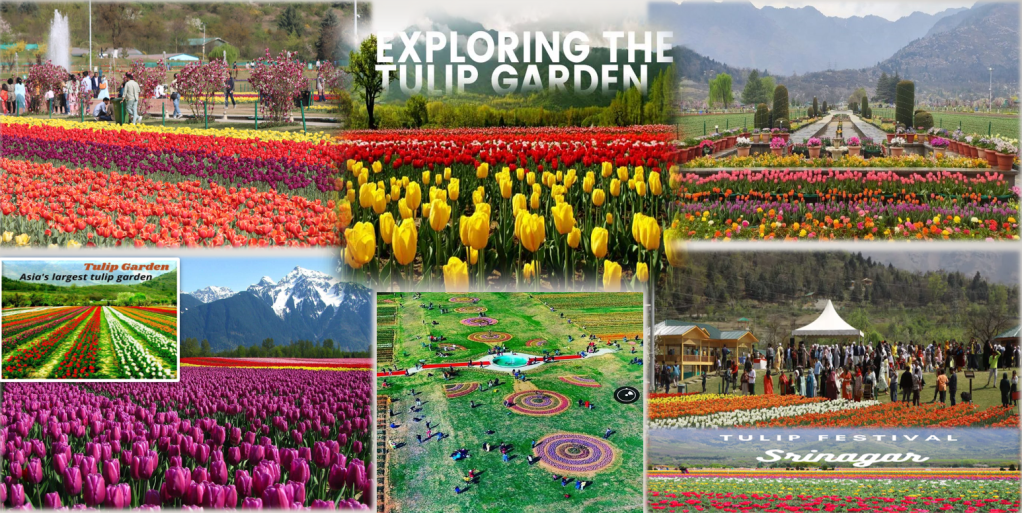
Nestled amidst the majestic mountains and verdant valleys of Kashmir, the Tulip Garden stands as a vibrant testament to the region’s natural beauty and horticultural prowess. Each year, as spring breathes new life into the landscape, the garden transforms into a kaleidoscope of colors, attracting visitors from far and wide. This article delves into the allure of the Tulip Garden in Kashmir, its history, and its significance as a symbol of hope and renewal.
Spread over an expansive area in the foothills of the Zabarwan Range, the Tulip Garden, formally known as the Indira Gandhi Memorial Tulip Garden, is one of Asia’s largest tulip gardens. With over a million tulips of various hues and varieties, the garden paints a mesmerizing canvas that captivates the senses and ignites the spirit of wonder.The Tulip Garden traces its origins to a vision aimed at promoting tourism and celebrating the beauty of spring in Kashmir. Established in 2007, the garden has since become an integral part of the region’s cultural landscape, symbolizing renewal, growth, and the enduring spirit of the Kashmiri people.
Every year, as winter loosens its grip and spring spreads its wings across the valley, the Tulip Garden bursts into bloom, heralding the arrival of a new season. From early April to mid-May, visitors flock to witness this breathtaking spectacle, as rows upon rows of tulips sway gently in the breeze, creating a symphony of colors that stretches as far as the eye can see. Beyond its aesthetic appeal, the Tulip Garden holds cultural significance in Kashmiri society. The annual Tulip Festival, held amidst the blooming splendor of the garden, serves as a celebration of life, beauty, and resilience. It is a time for locals and tourists alike to come together, revel in nature’s bounty, and cherish the moments of joy and tranquility that the garden affords.
Efforts are underway to preserve and protect the Tulip Garden and its precious flora for future generations. Sustainable practices, including water conservation measures, eco-friendly gardening techniques, and community involvement initiatives, are being implemented to ensure the long-term viability of the garden and its ecological integrity. The Tulip Garden of Kashmir stands as a testament to the region’s natural beauty, cultural richness, and spirit of resilience. As visitors stroll through its vibrant lanes, they are not only treated to a visual feast but also reminded of the enduring power of nature to inspire, uplift, and renew the human spirit. In the heart of Kashmir, amidst the mountains and meadows, the Tulip Garden blooms as a symbol of hope, reminding us that beauty can flourish even in the most unlikely of places.

 Kashmir RootStock