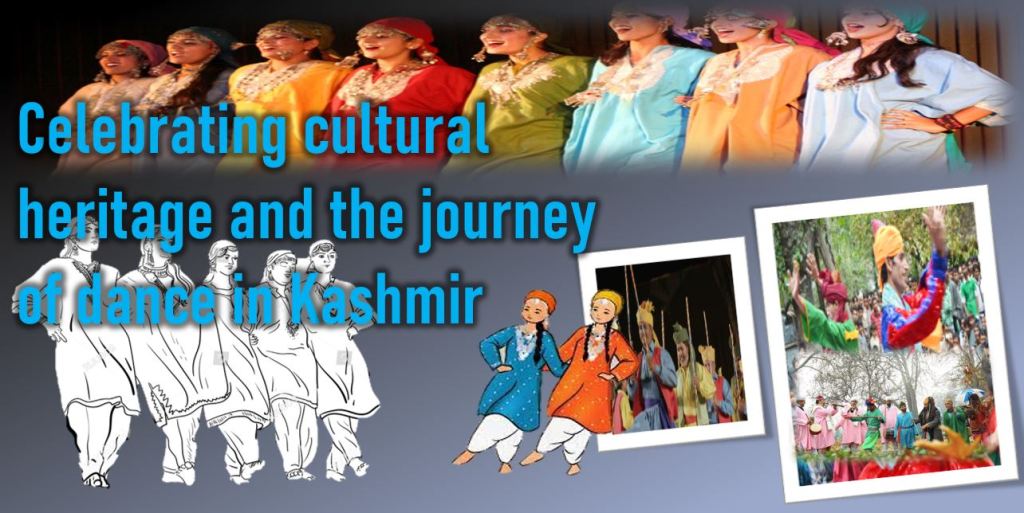
Dance, a universal language that transcends barriers of culture and time, holds a significant place in human civilization. Every year, on April 29th, the world celebrates International Dance Day, honoring the artistry, diversity, and cultural significance of dance forms across the globe. Let’s dive into the rich history of dance in Kashmir, exploring its cultural roots, evolution, and unfortunate decline over the years. Kashmir, nestled in the picturesque Himalayan region, boasts a rich cultural heritage that includes a vibrant tradition of dance. Dance in Kashmir finds its origins deeply rooted in the region’s ancient cultural practices, with influences from various civilizations and dynasties that have ruled the valley over the centuries.
The advent of Islam in Kashmir brought about significant changes in the cultural landscape, including the evolution of dance forms to align with Islamic principles and practices. Despite this transformation, dance continued to thrive in various forms, reflecting the syncretic nature of Kashmiri culture, which incorporates elements from Hinduism, Buddhism, and Sufism.Kashmir boasts a diverse range of traditional dance forms, each reflecting the unique cultural heritage and socio-religious practices of the region. Some of the prominent dance forms include:
Rouf: Rouf is the traditional folk dance of Kashmir, performed during festive occasions like Eid. Until the 1990s, women, especially young girls, would gather in courtyards after breaking the fast of Ramadan in the evening to perform Rouf, marking the happiness and joy that the holy month brought along. Rouf, a Sanskrit word meaning semi-circle, involved women forming a semi-circle by either holding each other’s waist or shoulders. It was not just a form of dance but also depicted bonding, love, and oneness. Differences and distances, if any, during the day would automatically vanish while performing Rouf. Aisha, a woman in her forties, recalls how she was called by her friends during the evening in Ramadan and on Eid. She reminisces about the footwork, the chakri, and the songs used while performing Rouf. They used to sing songs praising Almighty Allah, blessings of Ramadan, and other songs. Many in Kashmir say that the Rouf dance is inspired by the bee and its movements towards and away from the bud. Love stories of the bee and bud (boumber te yemberzal) were narrated during the onset of the spring season in Rouf. Women performing Rouf wear colorful Pherans with silver jewelry to sing and perform. Unfortunately, Rouf is now limited to marriages only, and that too, only in some families. Nowadays, singing, dancing, and celebrations are not as popular due to Pakistan-sponsored terrorism in Kashmir, which has led to incidents of banning dance, causing this cultural identity to fade.
Bhand Pather: Bhand Pather is a traditional folk theatre form of Kashmir, which incorporates elements of dance, music, and satire to depict social issues, folklore, and historical events. Dancers, known as Bhands, use exaggerated facial expressions and gestures to entertain and convey messages to the audience. During the Kings’ rule in Kashmir, Bhand Pather served as the media of those days. Bhands would deliver the king’s message to the people and raise social issues in the king’s court. The entire work of the TV was done by the Bhand Pather artists; this drama would entertain people through their actions and commentary. Apart from being the mediator between the people and the King, Bhand Pather was also performed during weddings. It is said that neither the groom would mount on a horse nor the bride enters the palanquin if Bhand Pather was not performed ahead of the procession. It was related to awareness in the past. But now, this culture has lost its glory due to conflict and modernization. According to Wali Mohd, a Bhand Pather artist, “we lost our traditional and cultural identity. Terrorism, political instability, and modernization have eroded the importance of this special culture. It was a means of livelihood for the people associated with Bhand Pather. Today you can see these artists only in the month of Ramadan, moving from house to house and village to village, reciting special prayers there and earning something.” People in Kashmir regard the special prayers of these artists and offer them financial help or needy things.
Dumhal: Dumhal is a unique dance form performed by the ethnic community of Kashmiri Dum or Wattal tribe. Dancers wear colorful attire and tall conical headgear called ‘Papier-mâché Tumbaknaer,’ while performing rhythmic steps to the beats of the drum. The performers wear long colorful robes and tall conical caps studded with beads and shells. The dance performances move in a procession carrying a banner in a very ceremonial fashion. Traditionally, people invited professional performers to exhibit ‘Dumhal’ to seek divine blessings. It was more than a dance and was connected to one’s belief. Generally, Dhumal artists were invited when somebody was ill or during droughts. Showkat Ahmad of Shangus village in South Kashmir recalls the drought year of 2011 when due to low precipitation, there was a drought in Kashmir. Since rural Kashmir was completely dependent on agriculture, it is the main source of livelihood for the people of rural Kashmir. He recalls witnessing Dumhal Dance for the first time during the prayers held for rainfall.
The artists danced on the beat of drums for a long time. Elderly people carried umbrellas with them, having full faith that along with the Dhumal artists, they would certainly bring rains on returning. Though it did not rain at that time, but after some days, it rained heavily. Ab Ahad, an artist, said that in the regional regimes of governance, none from the administration has ever tried to revive this age-old tradition of Kashmir. Now the LG administration has taken many bold steps to revive this culture. This administration has provided us a platform to showcase our rich cultural heritage. We are thankful to Sangeet Natak Akademi and the Ministry of Culture, who are helping us to arrange things related to this art again. Reacting to the question about the participation of youth in Bhand Pather, he said that today’s youth consider it disrespectful and downgrading their status if they are associated with this tradition. Once it was a pride, but unfortunately, the modern youth consider it devalued.
Baccha Nagma: Baccha Nagma is a traditional dance form performed by young boys, typically between the ages of 8 to 16, during cultural events, weddings, and festivals in Kashmir. The dance is characterized by synchronized movements, footwork, and the use of traditional musical instruments such as the dhol and tumbaknari. Baccha Nagma holds a special place in Kashmiri culture, showcasing the talent and enthusiasm of young performers. This kind of dance is performed at weddings on the Mehandi Raat. The dance is performed by a young boy wearing female clothes. In this dance, love stories, family matters, comedy, and praises of Lord songs are sung by the dancer in a melodious narration while performing the dance.
These traditional dance forms not only serve as a means of artistic expression but also play a crucial role in preserving and promoting Kashmir’s cultural identity.Despite its rich cultural heritage, dance in Kashmir has witnessed a gradual decline in recent decades due to various socio-political and economic factors. The protracted conflict in the region, coupled with socio-cultural conservatism and changing lifestyles, has posed significant challenges to the preservation and practice of traditional dance forms.
Impact of Conflict: The Pakistan-sponsored terrorism in Kashmir has had a profound impact on the region’s cultural landscape, leading to a decline in traditional art forms, including dance. Restrictions on public gatherings and dance events, and security concerns have hindered the practice and performance of traditional dances, limiting opportunities for artists to showcase their talent. In 2022, a female TV actor Amreen Bhat from Badgam district was killed by terrorists for showcasing her dancing and acting skills on Facebook and other social media platforms.
Socio-cultural Conservatism: The conservative socio-cultural norms prevalent in Kashmir have also contributed to the decline of dance, particularly among women. Traditional dance forms such as Rouf, which were once an integral part of Kashmiri cultural festivities, have faced criticism and opposition from conservative elements within the society, leading to a gradual erosion of cultural practices. Religious restrictions have also contributed to the decline of this art. Changing Lifestyles: Rapid urbanization, modernization, and changing lifestyles have also played a role in the decline of traditional dance forms in Kashmir. With the younger generation increasingly drawn to modern forms of entertainment and recreation, there has been a shift away from traditional cultural practices, including dance.
Lack of Institutional Support: Till the recent past there was no institutional support to preserve and safeguard the rich cultural heritage of Kashmir. The lack of infrastructure, and funding for the promotion and preservation of traditional dance forms has further exacerbated the decline. Limited opportunities for training, performance venues, and audience engagement have hindered the growth and sustenance of dance as an art form in Kashmir. Now the security scenario in Kashmir has improved and the administration has taken many initiatives to revive this tradition. Despite these challenges, efforts are taken by the administration, Indian Army, JK Police, cultural groups, and many other Non-Government Organizations to revitalize and preserve Kashmir’s rich cultural heritage, including its traditional dance forms. Cultural organizations, educational institutions, and grassroots initiatives are working towards creating awareness, providing training, and promoting the importance of dance in preserving Kashmiri identity and heritage.
On International Dance Day, as we celebrate the beauty and diversity of dance forms around the world, it is essential to recognize the significance of preserving and promoting traditional dances, such as those found in Kashmir. Dance not only serves as a form of artistic expression but also embodies the cultural identity, history, and values of a community. As Kashmir continues its journey towards peace and prosperity, it is imperative to safeguard its cultural heritage, including its rich tradition of dance, for future generations to cherish and celebrate. By nurturing and revitalizing traditional dance forms, we can ensure that Kashmir’s cultural legacy remains vibrant and enduring for years to come.

 Kashmir RootStock