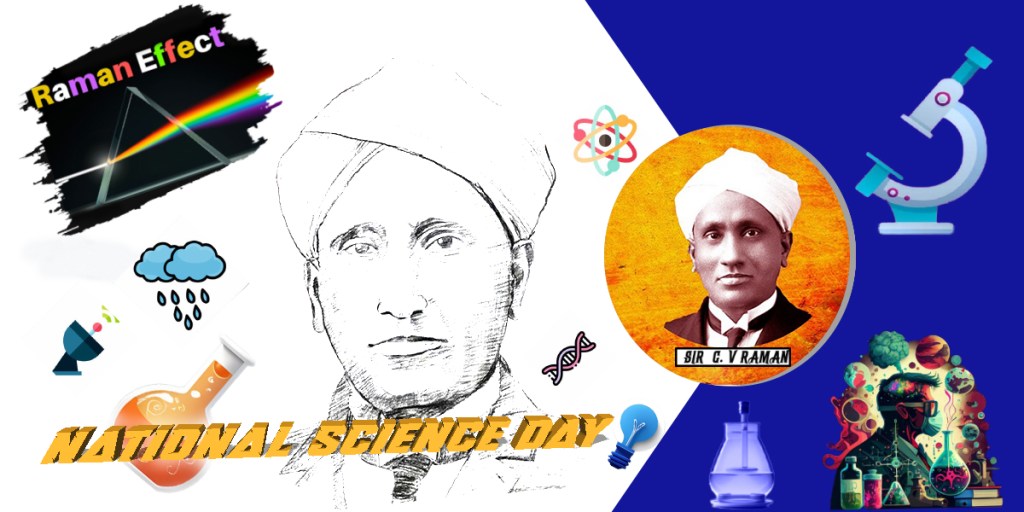
National Science Day, observed annually on February 28, honours the remarkable discovery of the Raman Effect by Sir C.V. Raman—a breakthrough in physics that earned him the Nobel Prize in 1930. This phenomenon, which explains the change in the wavelength of light when scattered by molecules, remains a cornerstone of scientific research. The day is a tribute to India’s rich scientific heritage and unwavering pursuit of innovation. While Kashmir is renowned for its breathtaking landscapes, its contributions to science and technology are equally noteworthy, playing a vital role in India’s scientific advancements.
Kashmir has witnessed notable advancements across multiple scientific disciplines, including agriculture, biotechnology, information technology, space research, and medical sciences. With its challenging topography, including high-altitude regions and harsh winters, the region has integrated contemporary technologies to bolster its economy, enhance healthcare, and fortify communication networks. These technologies have been crucial in overcoming Kashmir’s topography’s unique challenges, demonstrating the region’s resilience and innovation.
Agriculture remains the cornerstone of Kashmir’s economy, and scientific advancements have been instrumental in augmenting productivity. Sher-e-Kashmir University of Agricultural Sciences and Technology have pioneered high-yield crop varieties, organic farming methodologies, and climate-resilient agricultural practices. Research in apple cultivation, saffron farming, and walnut production has significantly amplified the region’s exports. Hydroponics and vertical farming have revolutionised traditional agricultural techniques, enabling year-round cultivation despite harsh winters. Moreover, biotechnology research on medicinal plants has gained traction, with scientists exploring Kashmir’s rich herbal biodiversity for pharmaceutical breakthroughs.
Kashmir has experienced substantial advancements in medical research and healthcare infrastructure. Prestigious institutions like Sheri-Kashmir Institute of Medical Sciences and Government Medical College Srinagar, have significantly contributed to cardiology, oncology, and pulmonology. Telemedicine services have expanded to ensure healthcare accessibility in remote regions. AI-powered diagnostic tools, robotic-assisted surgeries, and advanced imaging technologies have been introduced in select hospitals, minimising reliance on metropolitan healthcare centres. Additionally, initiatives focused on mental health awareness and research on high-altitude ailments have received national and international acclaim.
The digital revolution has profoundly reshaped Kashmir, enhancing connectivity and governance. The Digital India initiative has been pivotal in promoting e-governance, digital education, and smart infrastructure across the region, ushering in a new era of possibilities and opportunities. Kashmir’s youth have grown interested in cutting-edge fields such as artificial intelligence, machine learning, and software development. The emergence of IT startups has fostered innovation and generated employment opportunities. Government-backed incubation centres and skill development programs have incentivised young entrepreneurs, highlighting the potential of Kashmir’s youth in driving India’s digital economy forward.
Kashmir’s role in India’s space exploration endeavours has been commendable. The National Institute of Technology Srinagar has been actively engaged in various space-related projects, including satellite-based remote sensing for disaster management, flood forecasting, and climate monitoring. Scientists from Kashmir have been integral to ISRO’s missions, contributing expertise in navigation systems, cryogenic propulsion, and space-based communication technologies. The deployment of satellite imagery for agricultural monitoring and disaster response has greatly benefited the region, particularly during floods and avalanches.
Kashmir, endowed with vast hydropower reserves, stands at the forefront of India’s renewable energy sector. Major hydroelectric initiatives, such as the Baglihar, Kishanganga, and Uri power projects, have substantially contributed to the national power grid. In addition to hydropower, research into solar and small-scale wind energy projects has gained momentum. Government-led efforts promoting solar rooftops, micro-hydel projects, and bio-energy solutions have encouraged sustainable energy adoption, particularly in rural areas.
The Indian Army has played a pivotal role in fortifying scientific and technological development in Kashmir, especially in communication, infrastructure, and surveillance. Establishing secure communication networks in remote border areas has significantly enhanced connectivity. Furthermore, the Army has been instrumental in disaster management and climate research, utilising state-of-the-art weather monitoring systems and satellite-based reconnaissance to anticipate and mitigate natural calamities like avalanches and landslides. Additionally, deploying advanced defence technologies, including AI-powered surveillance systems and UAVs, has reinforced security and strategic preparedness.
The Army has also invested in educational and skill development initiatives, setting up training centres to equip Kashmiri youth with technical and engineering proficiencies. These initiatives have empowered young minds, paving the way for careers in science, technology, and defence research.
Kashmir’s journey in science and technology stands as a testament to human ingenuity, resilience, and adaptability. The region has continually leveraged innovation to uplift lives, from transformative advancements in agriculture and healthcare to pioneering contributions in space science, information technology, and defence. As India advances toward scientific excellence, Kashmir remains integral in shaping the nation’s technological future. On National Science Day, it is essential to recognise and celebrate Kashmir’s invaluable contributions to scientific progress, fostering a brighter, more advanced, and innovative future.

 Kashmir RootStock