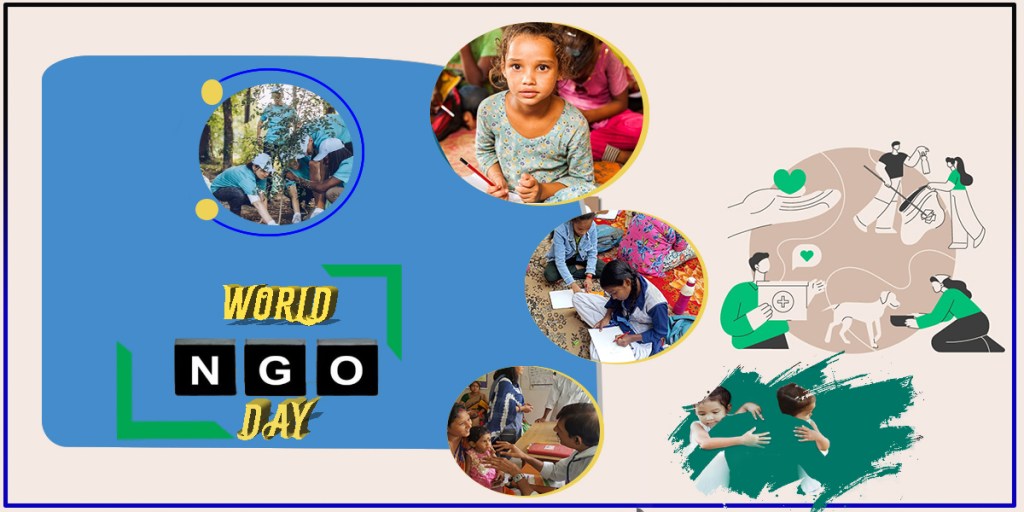
World NGO Day, observed on February 27th each year, is a special occasion dedicated to acknowledging the contribution of non-governmental organisations around the globe. NGOs, ranging from grassroots movements to large international organisations. They play a pivotal role in improving lives, raising awareness and providing solutions where governments or private sectors fall short. World NGO Day offers an opportunity to celebrate their work, raise awareness of their challenges, and promote the importance of their continued efforts in the global development landscape.
Non-governmental organisations play a crucial and irreplaceable role in society, addressing needs that are often overlooked by government and business. Their influence is extensive, reaching into virtually every part of the world. NGOs frequently serve as the primary defenders of human rights, advocating for marginalised groups and individuals whose voices are suppressed. They strive to ensure that governments adhere to international human rights standards, combat discrimination, and promote the dignity of all people. In response to the increasing urgency of climate change, NGOs have taken a leading role in promoting environmental awareness and sustainable practices. Many organizations are dedicated to protecting wildlife, reducing carbon emissions, conserving natural resources, and advocating for policy changes that prioritize environmental protection.
NGOs have significantly contributed to global health by providing access to clean water, sanitation, medical treatment, vaccines, and education. They often operate in regions with limited healthcare infrastructure, delivering essential services and resources that save lives and improve overall well-being. Furthermore, NGOs work to alleviate poverty by implementing projects that focus on providing food, shelter, and income-generating opportunities. They collaborate with communities to develop sustainable solutions that empower individuals to achieve self-sufficiency and improve their economic circumstances. NGOs operate across a wide array of sectors such as education, health, human rights, disaster relief, environmental sustainability and poverty alleviation.
In many regions, particularly in developing countries or areas affected by conflict, NGOs are often the first responders in emergency situations. They provide critical services such as food, water, medical care, and shelter. For example, in the aftermath of the 2010 Haiti earthquake, numerous international NGOs were on the ground providing relief to those in need. Also, NGOs are key players in the long-term rebuilding and development efforts in these regions. They act as advocates for the protection of human rights, environmental conservation, and gender equality. For example, organizations such as Amnesty International and Greenpeace have brought attention to critical issues and pushed for international policy changes.
The scope of NGOs is vast and their role continues to evolve in the face of new challenges. NGOs are embracing new technologies, employing data analytics, and leveraging social media to amplify their reach and effectiveness in ways never before possible. One of the primary challenges NGOs face is funding. Despite their critical role in development and humanitarian work many NGOs rely on donor funding, which can be unpredictable or politically influenced. In times of global financial uncertainty, NGOs may struggle to secure consistent funding to maintain their operations. Another challenge is the growing complexity of the issues NGOs seek to address. As global challenges become more interconnected, NGOs must collaborate more effectively with governments, businesses, and other stakeholders. Furthermore, NGOs must navigate regulatory barriers in different countries and deal with the political dynamics that may hinder their ability to work freely.
World NGO Day serves as a critical reminder of the invaluable contributions made by non-governmental organisations in building a better world. Events are held globally to highlight the achievements of NGOs and foster new collaborations, including conferences, exhibitions, award ceremonies, and community outreach initiatives. Raising awareness through social media campaigns, community events, or educational activities can also help highlight specific causes supported by NGOs. World NGO Day also provides an opportunity to advocate for policies that support the work of NGOs, ensuring that civil society organizations can continue to thrive. As we celebrate their efforts, it is important to acknowledge both their successes and the challenges they face. By fostering greater collaboration, ensuring consistent funding, and leveraging new technologies, NGOs will continue to have a significant impact on global society. On this World NGO Day, we honour their dedication to building a more just, compassionate, and sustainable future for everyone.

 Kashmir RootStock