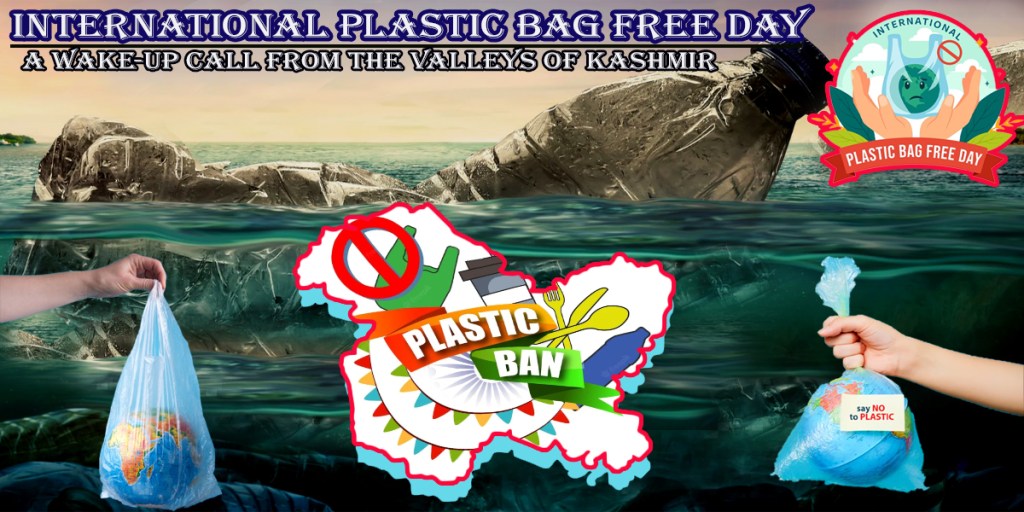
Observed annually on July 3rd, International Plastic Bag Free Day highlights the urgent global need to eliminate single-use plastic bags and adopt sustainable alternatives. While this message resonates across continents, it holds particular relevance for Kashmir—a region renowned for its natural beauty, now increasingly under threat from plastic pollution.
Cradled in the lap of the Himalayas, Kashmir is famous for its verdant valleys, serene lakes, snow-clad mountains and rich biodiversity. Yet, despite its pristine environment, the region has not remained immune to the growing crisis of plastic waste. The widespread use of plastic bags has led to alarming levels of pollution, disrupting ecosystems and diminishing the ecological integrity of this paradise.
One of the major contributors to plastic pollution in Kashmir is the unregulated use of polythene bags. Found in abundance in markets, shops and among street vendors, these bags continue to be widely used despite repeated bans by local authorities. The reasons are manifold: affordability, ease of use, limited availability of alternatives and a lack of awareness among consumers and shopkeepers alike. This unchecked usage persists largely due to weak enforcement and insufficient public outreach.
Dal Lake, the iconic waterbody at the heart of Srinagar, serves as a visible symbol of the impact of plastic pollution. Once famed for its crystal-clear waters and vibrant floating gardens, the lake now battles contamination from discarded plastic bags, bottles and wrappers. Waste dumped into the lake not only tarnishes its appearance but also severely harms aquatic life, endangering fish, water plants and migratory birds that depend on its ecosystem.
The problem is not confined to urban areas alone. In many of Kashmir’s rural communities—once characterized by their traditional, sustainable lifestyles—the shift toward plastic has taken root. Natural materials like cloth bags, leaf plates and wicker baskets have slowly been replaced by plastic packaging. This transition threatens both the environment and indigenous practices that were in harmony with nature for generations. The sight of plastic debris in forests, streams and along hiking trails has become increasingly common, especially in the wake of rising domestic tourism.
Kashmir is already experiencing the harsh effects of climate change, including receding glaciers, unpredictable weather patterns and reduced water availability. Plastic waste further compounds these issues by choking drains and waterways, leading to urban flooding and soil contamination. In a region that often grapples with political and administrative disruptions, establishing effective waste management systems remains a formidable challenge.
Despite these concerns, there are promising signs of change. In recent years, community-based initiatives and youth-led movements have begun to raise awareness about the harmful effects of plastic. Schools, colleges, NGOs and local environmental groups are organizing clean-up drives, zero-waste campaigns and public awareness programs to foster a culture of environmental responsibility. These grassroots efforts, though small in scale, play a vital role in shaping public perception and inspiring sustainable action.
The administration has also made efforts to curb plastic use. There have been periodic crackdowns on polythene, the promotion of jute and cloth bags and the imposition of fines on violators. However, these measures need to be part of a larger, more consistent policy framework. Long-term solutions could include incentivizing the production and use of biodegradable alternatives, improving waste segregation systems and supporting local artisans in reviving traditional packaging materials.
Tourism, while being a vital economic contributor in Kashmir, also adds to the plastic problem. Visitors to popular destinations like Gulmarg, Pahalgam and Sonamarg often leave behind significant amounts of plastic waste. A more sustainable approach to tourism is urgently needed—one that includes strict waste disposal guidelines, eco-friendly hospitality practices and awareness campaigns targeting tourists. Encouraging zero-waste travel and promoting eco-tourism models could help reduce the environmental footprint of visitors.
Public education remains a key tool in this fight. Integrating environmental topics into school curricula, running targeted awareness campaigns in local languages and promoting community workshops on waste reduction can bridge the knowledge gap. When individuals understand how plastic pollution affects their health, water, soil and overall well-being, they are more likely to adopt responsible behaviors.
There is also much to learn from successful global examples. Countries like Rwanda and regions in Europe have effectively reduced plastic bag usage through a combination of public policy, civic engagement and innovation. Similar approaches, adapted to the cultural and economic context of Kashmir, could prove equally effective in building long-term change.
International Plastic Bag Free Day is more than a symbolic gesture—it is a reminder that collective action can drive meaningful environmental transformation. For Kashmir, this observance serves as an important moment of reflection and recommitment to protecting its fragile ecology. Each plastic bag avoided, every reusable item embraced and each clean-up campaign initiated contributes to preserving the natural legacy of the region.
The stakes are high and the urgency is real. Kashmir’s natural beauty is not just an asset—it is a lifeline for its people, culture and economy. Addressing plastic pollution must become a daily commitment rather than an annual observance. Through a combination of policy reform, public participation and community leadership, Kashmir can chart a sustainable path forward.
The hope for a plastic-free Kashmir lies not in sweeping declarations but in everyday choices made by individuals, communities and institutions. As we mark International Plastic Bag Free Day, let it serve as a catalyst for change—one that transforms awareness into action and preserves the Valley’s pristine charm for generations to come.

 Kashmir RootStock