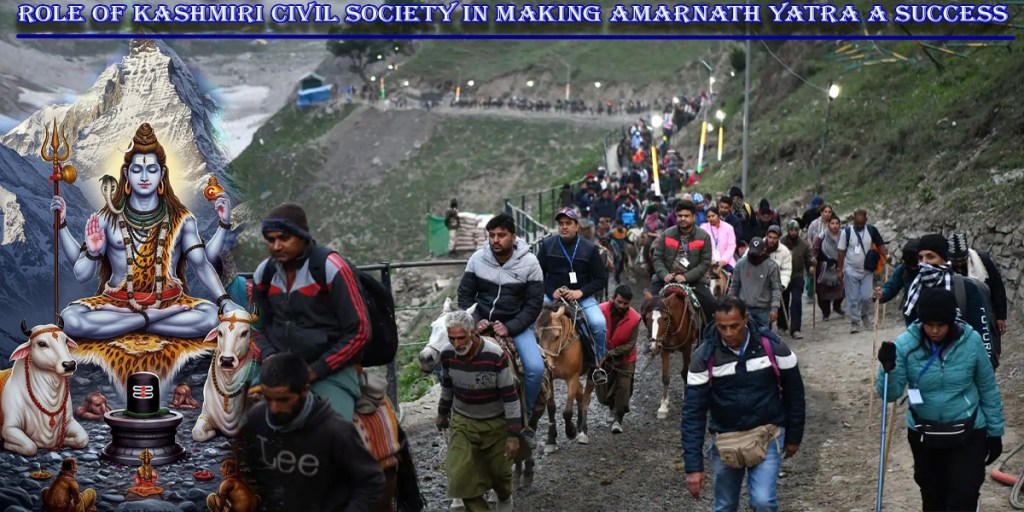
This year, the Amarnath Yatra was not just a pilgrimage; it was a powerful testament to the indomitable spirit of human faith, unity and resilience. This annual journey to the sacred Amarnath cave shrine has long been a symbol of devotion for millions of Hindus seeking darshan of the naturally formed ice Shivling. But this year, the Yatra unfolded under the shadow of a horrific tragedy, a terrorist attack in Pahalgam, the major Yatra route, that claimed 26 lives in one of the deadliest assaults on civilians in India since the 2008 Mumbai attacks. The attack claimed by The Resistance Front, a proxy for the Pakistan backed Lashkar-e-Taiba, sent shockwaves through the region, threatening to derail the pilgrimage and deepen the scars of conflict in the Kashmir Valley. Yet, against all odds, this year’s Amarnath Yatra emerged as a resounding success, with over 4.14 lakh pilgrims completing the journey, undeterred by fear or threats. This triumph was not merely a logistical feat by the administration or a display of devotion by the Yatris, it was a profound demonstration of Kashmiriyat, the ethos of communal harmony and hospitality, led by the Kashmiri civil society.
The Pahalgam attack casted a long shadow over the Yatra, which serves as a vital economic and cultural lifeline for the region. The Baisaran meadow, just 5 kilometres from the Nunwan base camp, became a site of mourning rather than celebration, with images of grieving families haunting the collective psyche. Tourism, a cornerstone of Kashmir’s economy, faced an immediate setback, with local vendors reporting deserted roads and closed stalls in the wake of the attack. The fear was palpable, with concerns that the Yatra, scheduled to begin just days after the attack, might see reduced participation or even cancellations, as had happened in the past. The attack’s timing, just weeks before registrations seemed calculated to disrupt the pilgrimage and sow discord.
However, the Kashmiri civil society rose to the occasion, transforming this moment of crisis into one of unity and resilience. From the outset, local communities, including Muslims who form the majority in the Valley, embraced their role as hosts, embodying the spirit of ‘Mehman Nawazi’ that has long defined Kashmiriyat. As the first batch of 5,892 pilgrims departed from Jammu’s Bhagwati Nagar base camp on July 2, they were greeted with flowers and warm welcomes by Kashmiri locals. The locals declared that let’s walk together in the spirit of peace, unity and brotherhood, setting the tone for a pilgrimage that would defy terror with togetherness.
The role of Kashmiri civil society was multifaceted, encompassing logistical support, emotional reassurance and a reaffirmation of the region’s pluralistic identity. Hundreds of local Muslims, served as horse service providers, palanquin carriers and labourers, ensuring pilgrims could navigate the arduous 48-km Nunwan-Pahalgam or 14-km Baltal routes. Local service providers expressed pride in serving the Yatris, assuring them of safety and comfort during their stay. This practical support was critical, especially given the heightened security measures, including facial recognition systems, no fly zones and additional paramilitary companies deployed to secure the routes. Yet, beyond logistics, it was the emotional and cultural embrace by Kashmiris that truly set this year’s Yatra apart.
The Kashmiri civil society’s response was rooted in a deep understanding of the Yatra’s significance, not just as a religious event but as a symbol of communal harmony and economic revival. As Shikara owners on Dal Lake, lamented the emptiness of their houseboats post attack, they saw the Yatra as a chance to restore Kashmir’s image as a welcoming destination. Local leaders, Non-Governmental Organization and community groups organized interfaith initiatives, peace marches and cultural showcases to highlight Kashmir’s legacy of religious diversity. These efforts were not new; decades ago, Kashmiri locals were the sole facilitators of the Yatra, assisting pilgrims without modern infrastructure or security. This year, this historical legacy was revived, with civil society groups ensuring that pilgrims felt safe and valued, countering the narrative of fear propagated by the attack.
The Yatra’s success, with over 4 lakh pilgrims visiting, was a direct rebuke to the terrorists’ attempt to disrupt normalcy. Pilgrims expressed confidence in the security arrangements and gratitude for the warmth of Kashmiri locals. This trust was not misplaced. The Jammu and Kashmir administration, led by Lieutenant Governor Manoj Sinha and Chief Minister Omar Abdullah, worked closely with civil society to ensure seamless coordination. Meetings with stakeholders facilitated the exchange of ideas, reinforcing the Yatra as a “living embodiment of Kashmiriyat, brotherhood and national unity”. The administration’s efforts, such as widening routes to 12 feet and setting up 100-bed hospitals at Chandanwari and Baltal, were complemented by the grassroots hospitality of Kashmiris, creating a holistic support system for the Yatris.
This year’s Yatra also carried a deeper message: it was a reclaiming of Kashmir’s identity from the clutches of violence. The attack had sparked fears of a tourism slump, with local businesses bracing for losses. Yet, the massive pilgrim turnout and the active participation of Kashmiris sent a clear signal that the region would not be defined by terror. The Yatra became a platform to showcase Kashmir’s cultural richness, with locals ensuring that pilgrims experienced the Valley’s beauty and hospitality firsthand, unmarred by the tragedy. This was particularly significant given the post attack backlash faced by Kashmiri students in other parts of India, highlighting the need to counter divisive narratives with acts of unity.
The success of the Yatra was not without challenges. The psychological scars of the Pahalgam attack lingered, with survivors recounting the horror of terrorists targeting Hindu men and demanding religious declarations. Yet, the Kashmiri civil society’s unwavering commitment to the Yatra ensured that these challenges did not overshadow the pilgrimage. Their efforts transformed the Yatra into a movement of resilience, proving that Kashmir’s heart beats for peace and pluralism.
As the Yatra concluded, it left behind a legacy of hope. The 4.14 lakh pilgrims who had darshan were not just devotees of Lord Shiva but ambassadors of a renewed Kashmir; one that stood united against terror. The Kashmiri civil society’s role was pivotal, weaving a tapestry of hospitality, security and interfaith harmony that made the 2025 Amarnath Yatra a historic success. By garlanding pilgrims, providing services and fostering a sense of safety, Kashmiris reaffirmed their identity as custodians of a land where diversity thrives. This year’s Yatra was not just a pilgrimage; it was a victory of Kashmiriyat over chaos and a beacon of light in a valley too often shrouded in darkness.

 Kashmir RootStock