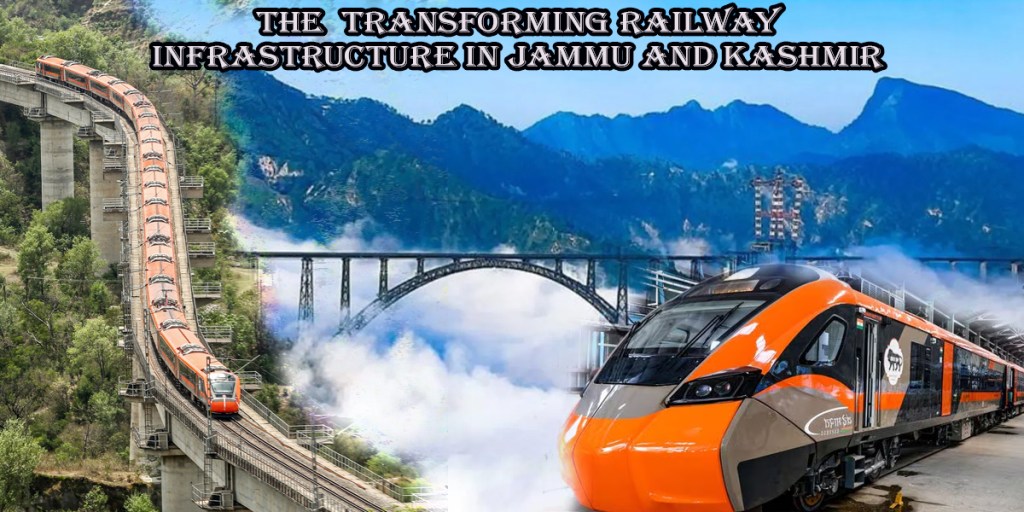
In recent years, Jammu and Kashmir have experienced a profound shift in railway development, marking a significant step toward regional connectivity and integration with the rest of India. This transformation is largely driven by focused policy interventions and a broader vision of national unity. These developments are not just about improving transportation but also about boosting economic potential and deepening the symbolic and physical link between the Union Territory and the rest of the country. Prior to the constitutional changes in 2019, which included the abrogation of Article 370, the region’s railway infrastructure was severely limited, with only about 304 kilometers of track in operation. The combination of harsh mountainous terrain and recurring security challenges had slowed expansion efforts for decades, resulting in prolonged travel times, weak trade links and widespread disconnection from national development initiatives.
Following 2019, there has been a significant acceleration in railway-related projects throughout the region. One of the most ambitious undertakings is the Udhampur-Srinagar-Baramulla Rail Link, a 111-kilometer corridor that is set to connect the Kashmir Valley more seamlessly with the Indian railway grid. Scheduled for completion by 2025, this project includes some of the country’s most challenging engineering feats long tunnels cutting through mountains and bridges spanning deep gorges. A key component of this network is the Banihal-Qazigund Tunnel, which, at 17.6 kilometers, has drastically improved year-round connectivity by bypassing weather-prone routes. Meanwhile, the already operational Jammu Udhampur line has eased everyday travel for residents in the southern part of the Union Territory, allowing for quicker, safer and more affordable transportation.
Perhaps the most iconic symbol of this railway revolution is the Chenab Bridge. Soaring 359 meters above the Chenab River, it holds the distinction of being the world’s highest railway arch bridge. Beyond its engineering significance, it represents a triumph of human ingenuity and the nation’s resolve to overcome geographical and political barriers. Its completion is not just a milestone in infrastructure but a testament to the ambition to unify the region in both spirit and function.
The expansion of rail connectivity in Jammu and Kashmir is already bearing fruit in multiple areas. For residents, the introduction of reliable train services means improved access to essential services like education, healthcare and employment, which were previously difficult to reach due to poor road conditions or travel disruptions. For the local economy, particularly agriculture and horticulture, the new rail lines offer faster and more efficient transport to distant markets. Apple farmers, for instance, can now send their produce across the country without relying exclusively on road transport or expensive air cargo, resulting in fresher deliveries, reduced spoilage and increased profitability.
These projects are also contributing significantly to employment generation. Thousands of skilled and unskilled laborers have found jobs during the construction phase and ongoing rail operations are expected to sustain many more. The multiplier effect of such development is already visible in the form of growing demand for services like logistics, hospitality, retail and construction, creating a more vibrant local economy.
However, this rapid development is not without its drawbacks. A key concern lies in the ecological impact of building massive infrastructure in fragile mountainous and forested zones. The clearing of vegetation, alteration of natural watercourses and noise from construction activities could disrupt local wildlife and degrade the environment. Additionally, some rail routes may require the acquisition of land and the relocation of households, sparking concerns over displacement, loss of livelihood and cultural disintegration. Careful planning, fair compensation and community engagement are essential to ensure that such transitions are humane and inclusive.
Security remains a concern due to the region’s sensitivity, requiring constant vigilance and tech-based monitoring. Still, railway growth has boosted the economy passenger traffic rose by 20% and freight by 15% from 2019 to 2022. It’s helping businesses, tourism and especially farmers with cheaper, faster market access.
This growth is also reflected in concrete figures. The total railway track length increased from 304 kilometers in 2019 to approximately 408 kilometers by 2022, representing a 34% jump. Over 1.5 million people used the train network in 2022, reinforcing the importance of railways in facilitating regional development. The continued rise in both passenger and freight traffic points toward a promising future for rail-based connectivity and commerce in the region.
The unfolding railway transformation in Jammu and Kashmir goes far beyond steel tracks and concrete bridges it signals a deeper transition toward inclusion, opportunity and progress. While it is vital to address the environmental, social and security-related concerns that accompany such rapid infrastructure development, the overarching impact remains profoundly positive. Railways are becoming the lifeblood of a region long constrained by geography and conflict, opening new doors for growth, unity, and shared prosperity. They are not only connecting places but also empowering people, fostering aspirations and charting a new course for the Union Territory in the national mainstream.

 Kashmir RootStock