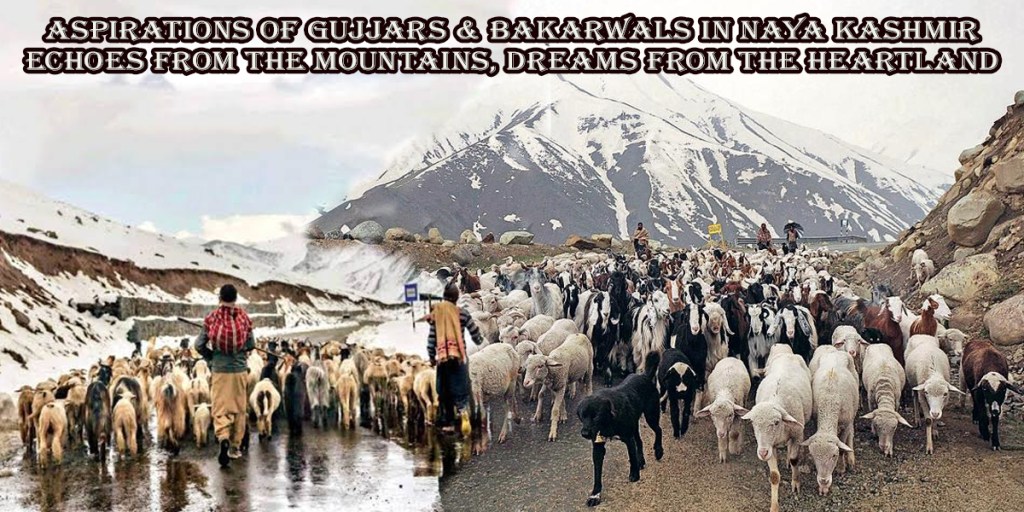
In the heart of the Himalayas, where clouds drift lazily across snow-kissed peaks and time seems to pause in the morning mist, live the resilient Gujjars and Bakarwals, proud pastoralist communities whose roots run deep in the land of Jammu and Kashmir. For generations, they have journeyed along ancient migratory routes, guiding their herds through valleys and alpine meadows, sustaining a way of life that harmonizes with nature’s rhythm. These traditions, however, often remained far from the mainstream, with roads seldom reaching their tents and policies rarely acknowledging their unique needs. Education was once a distant dream, barely flickering beyond the forest lines. Yet, despite these silences of neglect, their spirit remained unbroken. They carried their culture with pride, preserving their stories, songs, and customs, while holding onto aspirations that, though rarely spoken aloud, glowed steadily within their hearts. Today, in the evolving vision of Naya Kashmir, these aspirations are no longer whispered. The younger generation of Gujjars and Bakarwals dares to dream beyond the limits of their forebears, without letting go of their heritage. For children who once spent their days herding livestock by the riverside, classrooms have become spaces of new possibilities. Mobile schools now follow their seasonal migrations, and hostel facilities have begun to extend education to the remotest corners. Stories like that of Zohra from Rajouri, a young girl once confined to the dhok, who now aspires to become a doctor or teacher, symbolise the transformation taking place. Such journeys are no longer rare exceptions but part of a growing wave of determination, where both boys and girls are finding ways to blend tradition with ambition, ensuring that cultural identity and progress walk side by side.
The call from this new generation is clear: they seek genuine inclusion, not symbolic gestures; opportunities, not sympathy; representation, not dependency. A younger Gujjar may now speak both Gojri and English with ease, spend mornings tending to cattle and evenings learning computer coding, and take pride in conserving ancestral customs while embracing modern avenues. Whether through government service, competitive exams, scholarships, or entrepreneurial ventures, their voices echo with confidence. In this atmosphere of change, the Indian Army has emerged as an unexpected yet steady partner. In places like the Kandi belt, once known more for its isolation and unrest, initiatives under Operation Sadbhavana, along with cultural programmes, youth treks, and medical and wet camps, have built channels of trust. The Army’s approach has gone beyond ensuring calm—it has helped create stepping stones for progress. This trust has nurtured a unique bond between the community and the security forces. The Gujjar and Bakarwal youth, once cautious about engaging with official structures, now actively participate in safeguarding their own aspirations. Their knowledge of mountain trails, seasonal grazing grounds, and forest routes has become a valuable asset.
ensure that disruptive elements find no foothold in their settlements or grazing lands. By walking the same paths their ancestors took, they have become not only custodians of their culture but also guardians of a shared peace. Strengthening this relationship further could include sustained civic engagement, involving respected tribal elders in dialogue, promoting awareness among youth in local languages, encouraging recognition for community contributions, and employing local guides to assist in outreach and operations.
The road ahead is illuminated by these aspirations. The essence of Naya Kashmir will not be measured merely in new infrastructure but in the confidence of a Gujjar girl who no longer must walk barefoot for miles to attend school, in the joy of Bakarwal children discovering books and sports, and in the dignity of a shepherd who can speak about the Constitution with the same ease as he sings his folk songs. Aspirations are a quiet yet powerful force, capable of keeping harmful ideologies at bay and weaving bonds of stability across valleys and highlands. Gujjars and Bakarwals, once seen as distant from the state’s core vision, are now emerging as vital threads in its fabric. Their tents may still sway in the mountain winds, but their resolve stands firm, anchored like the ancient oaks that have weathered countless seasons. When the meadows of Kashmir bloom with hope and the mountains echo with ambition, it will be through their stories that the true renaissance of the region will be told.

 Kashmir RootStock