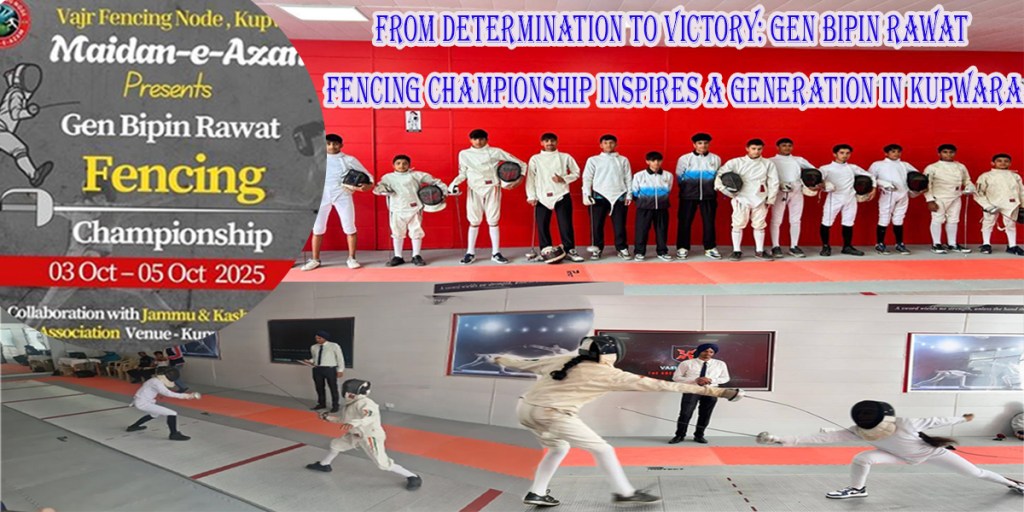
The quiet, picturesque town of Kupwara, nestled in the majestic valleys of North Kashmir, recently transformed into a vibrant epicenter of youth energy, discipline, and national spirit. Over the course of three electrifying days — from October 3 to 5 — the Gen Bipin Rawat Fencing Championship unfolded at the Vajr Fencing Node, Maidan-e-Azam, capturing the attention of the region and igniting the dreams of young athletes across Jammu & Kashmir.
Organized under the visionary umbrella of Operation Sadbhavana by the Army, in collaboration with the Jammu and Kashmir Fencing Association, the championship was not just a sports event. It was a celebration of unity, opportunity and resilience — a reflection of the changing aspirations of the region’s youth and the institutions committed to supporting them.
This championship bears a deeply symbolic name — that of Late General Bipin Rawat, India’s first Chief of Defence Staff, a leader revered for his integrity, bravery and relentless commitment to national unity. The event was a tribute to his values of discipline, leadership and patriotism, values that continue to resonate deeply with the Indian Armed Forces and the youth of Jammu and Kashmir.
The memory of Gen Rawat was woven into the very fabric of the tournament. From the opening ceremony to the final bout, his legacy served as a reminder of what it means to lead with purpose and stand tall in the face of adversity — a fitting inspiration for every young athlete who stepped onto the fencing piste.
The championship brought together 136 fencers from eight districts across Jammu and Kashmir, including 26 young women, competing in 22 events across both individual and team categories. It was a significant moment for many participants — not just as a competitive milestone, but as their first experience on a regional stage.
For some, it was their debut in formal fencing gear; for others, it was a continuation of their journey toward excellence. The passion and determination displayed on the field reflected a wider story: sports as a catalyst for change, empowerment, and national integration.
Each bout was fiercely contested, echoing not only technical mastery but also the perseverance of youth who have overcome societal and logistical challenges to represent their districts. The fencing pistes became battlegrounds of focus and finesse, where every touch was earned through hours of training, self-discipline, and community support.
As the championship reached its crescendo, Team Udhampur emerged as the undisputed Champion, displaying clinical precision, coordination, and an indomitable team spirit that won them top honors.
However, it was Team Kupwara — the local favorites — that drew thunderous applause from the home crowd, not just for clinching the Runner-Up position but for the way they represented the hosting district. Competing on home turf, these young athletes fought valiantly, their swords reflecting not just steel but also pride, promise and the growing potential of local talent.
The medal tally aside, what stood out was the mutual respect among competitors, the camaraderie that transcended district lines and the sheer joy of participation — traits that echo the Olympic spirit and strengthen the social fabric.
The closing ceremony was a moment of pride and celebration. Presiding over the event was the Commander of local Army establishment, who served as the Chief Guest, and lauded the athletes for their performance and discipline. His words acknowledged not only the winners but every participant who displayed the courage to step into the arena.
Also, in attendance were Ms. Supriya Singh Chauhan, Secretary General of the Jammu and Kashmir Fencing Association and Mr. Rashid Ahmed, an international fencer and referee, whose presence added immense value to the championship. Both dignitaries commended the world-class infrastructure at the Vajr Fencing Node and emphasized the importance of consistent training, exposure and mentorship for the youth of Jammu and Kashmir.
“Fencing teaches more than just sport — it instills strategy, focus and honor,” said Mr. Rashid Ahmed. “These young fencers are not just future champions, they are future leaders.”
The success of the championship would not have been possible without the Vajr Fencing Node, a dedicated training facility envisioned by the Commander of the local Army establishment. Developed under the Khelo India movement with support from CSR India, this facility is rapidly transforming into North Kashmir’s premier hub for fencing and youth development.
From hosting district-level competitions to now conducting a successful regional championship, the Vajr Fencing Node has become a symbol of what targeted investment in sports infrastructure can achieve — even in the most remote corners of the country. The efforts of the Vajra Division extend far beyond the boundaries of military operations. Through initiatives like these, they are actively involved in community engagement, confidence-building, and nation-building — a true embodiment of Operation Sadbhavana’s mission.
The Gen Bipin Rawat Fencing Championship is more than just a sporting event; it is part of a broader movement to engage the youth of Jammu and Kashmir in constructive, character-building activities. Sports like fencing — which demand mental agility, physical strength and strategic thinking — are particularly effective tools for nurturing leadership and self-belief.
This championship marks a pivotal moment — where young athletes from once-isolated districts now dream of representing India on the world stage. It signals a shift in narrative: from marginalization to mainstream, from despair to determination, from silence to the sound of applause. As one young fencer from Baramulla put it, “When I hold a sword in my hand, I feel powerful, not fearful. I feel like I belong.”
In a time when the world is rediscovering the power of sport to heal, unite and uplift, the Gen Bipin Rawat Fencing Championship stands as a powerful beacon of hope and transformation in Jammu and Kashmir. From the resounding cheers at Maidan-e-Azam to the quiet confidence in the eyes of each fencer, the event reaffirmed what India’s youth are capable of — when given the right support and the right stage.
With more such events planned in the future and with the unwavering support of the Army, local administration, and sports federations, the day is not far when these young swords will shine on national and global podiums. Because in Kupwara, they are not just fencing for medals.
They are fencing for a future.

 Kashmir RootStock