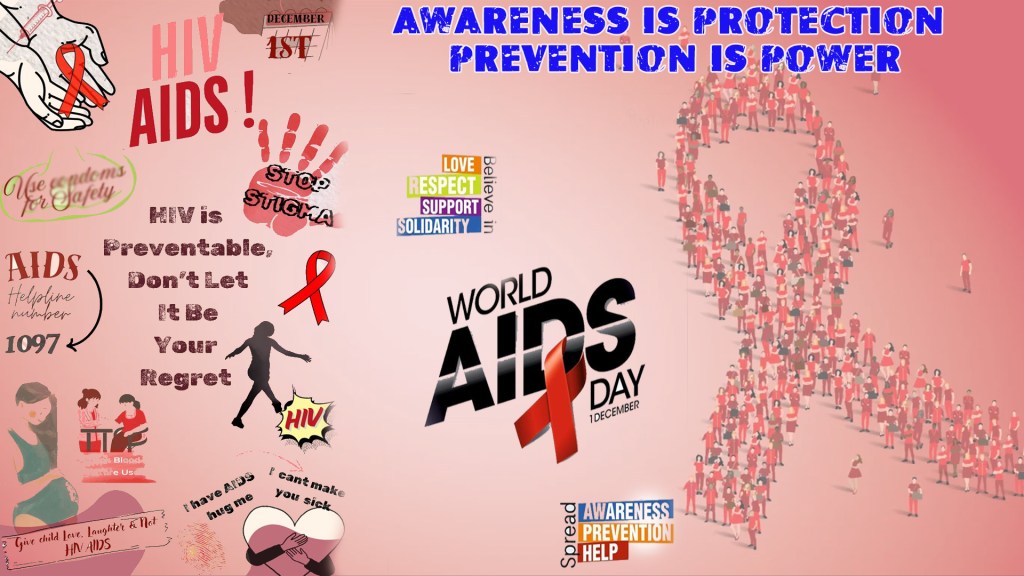
As I write this on a cold December morning, with the light winter sun touching the snow-dusted roofs of my neighbour hood and the aroma of nun chai filling the room, my thoughts quietly drift toward World AIDS Day. In our valley, where life often moves between silence and storms, some conversations still stay hidden behind closed doors. HIV/AIDS is one of those topics that we Kashmiris rarely speak about openly, though it needs our attention, understanding and compassion more than ever.
When HIV first reached Kashmir in the late 80s and early 90s, it came almost unnoticed, quietly slipping into a society that had never heard of such a thing. People would whisper about it in corner shops and late-night gatherings, unsure of what it really meant. There were myths, fear, shame and a sense of distance — as if this illness belonged to some other world, not ours. Slowly, with time, our valley began to understand. Hospitals started reporting cases, NGOs stepped in, awareness campaigns reached a few local schools and doctors took it upon themselves to educate. It was not easy. Here, reputation matters, neighbours talk and society can be judging. Many people struggled silently — not because of the disease, but because of the fear of being seen differently.
Yet Kashmir is also a place of unbelievable warmth. When someone falls sick, the entire mohalla becomes a family. When someone’s house burns, strangers come with whatever they can offer. When winter hits hard, we share kangris, blankets and food without hesitation. This same spirit is needed today when we talk about HIV. The illness is not a curse. It is not a punishment. It is a medical condition — manageable, treatable and far less scary than the stigma surrounding it.
Even now, many misunderstandings still exist in our society. Some people think HIV spreads through touching, sharing a cup of tea, sitting together or giving someone a hug. Nothing could be farther from the truth. In our valley, these myths can isolate a person more quickly than the illness itself. And that is why awareness is not just important — it is urgent.
Precaution begins with responsibility. Safe behaviour, honest conversations with partners and awareness about how HIV actually spreads are essential. In Kashmir, where many still shy away from discussing such topics, silence can become dangerous. Even simple medical practices like insisting on sterilised needles or confirming proper blood screening before transfusion can save lives. Getting tested is not something to be ashamed of. It is a sign of maturity, courage and care for oneself and others.
The future of Kashmir depends on how openly we approach these conversations. Our young generation is bright, curious and far more aware of the world. They deserve correct information, not whispered warnings filled with fear. Schools and colleges should become safe spaces where health is discussed without embarrassment. Imams, teachers and community elders can play a powerful role by speaking about awareness with kindness rather than judgement. The more knowledge we spread, the less room there will be for rumours and stigma.
Kashmir has always held strength in unity. When floods came, we carried people on our backs. When snowstorms blocked entire roads, we dug out paths together. Our compassion has saved lives before and it can save lives again. A person living with HIV in Kashmir should not feel alone. They should not feel unwanted or unloved. What they need is support, warmth and dignity — the very qualities that define who we are as Kashmiris.
Whenever I walk along the Jhelum or watch the Chinar leaves turning red in autumn, I am reminded of how fragile yet resilient life is. And I feel hopeful. If we talk, if we learn, if we listen with open hearts, we can create a valley where no one hides their pain, no one fears judgement and no one feels less human because of an illness.
On this World AIDS Day, I hope we Kashmiris take a small step: to replace silence with conversation, fear with understanding and stigma with compassion. This valley has seen enough suffering. Let us not add more to it through ignorance. Instead, let us protect each other the way we always have — with love, with knowledge and with humanity.
Because a healthier Kashmir is not just a dream. It is a responsibility. And it begins with each one of us.

 Kashmir RootStock