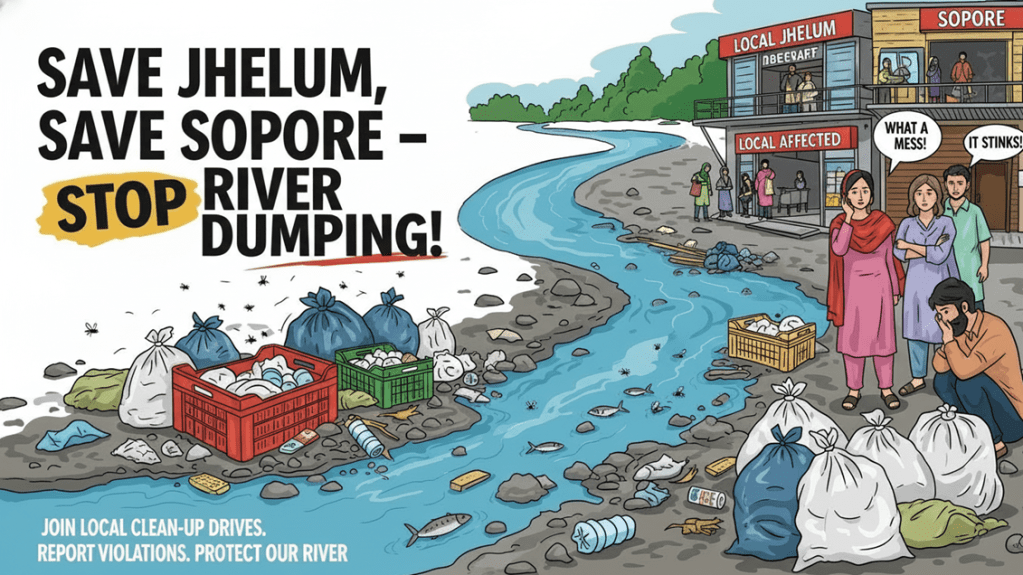
In Sopore, North Kashmir, the River Jhelum, which has long been the pride and lifeline of the town, is facing a growing environmental challenge. Sections of the riverbed, drying in recent months, have become dumping grounds for plastic crates, polythene bags and leftover fish waste. The sight is distressing for residents who worry about the health hazards and ecological damage caused by this unchecked pollution. The situation has prompted community concern with locals urging collective action to protect the river that has shaped their lives for generations.
Many residents have expressed alarm at the increasing heaps of waste. “It is painful to see our river covered with garbage. We used to take pride in Jhelum and now it seems forgotten”. Fishermen and local traders sometimes leave fish by-products and packaging material in the dried riverbed which has contributed to the build-up of refuse. While the volume of waste may appear small daily, over weeks it forms large, unhygienic piles. Studies show that improper disposal of organic and plastic waste near rivers can increase the risk of waterborne diseases by up to 35%, highlighting the potential public health threat in Sopore.
Residents emphasize that the responsibility lies not only with authorities but also with the community. Simple steps, like using designated waste bins, reporting improper dumping and participating in clean-up drives, can significantly reduce pollution and protect public health.
The waste accumulation has begun affecting nearby businesses. Shopkeepers and vendors report a decline in customers due to the unpleasant smell and unsanitary environment. “People avoid this area because of the smell. It is hurting our livelihood,” shared a local shop owner. In a town like Sopore, where local markets rely on daily footfall, maintaining a clean environment is crucial for economic activity. Studies indicate that pollution in public spaces can reduce consumer visits by 20–30%, which directly affects small businesses. Keeping the river clean is not only an environmental concern but also a matter of sustaining local livelihoods and the town’s economy.
The pollution poses serious public health risks. Organic waste and plastics attract flies, rodents and other pests, which can spread diseases such as gastroenteritis, dysentery and skin infections. Contaminants from the riverbed can also seep into surrounding soil and water sources during rainfall, further increasing health hazards. From an environmental perspective, the accumulation of waste disrupts the river ecosystem. Polluted water and riverbanks threaten fish populations and reduce biodiversity. Studies on river pollution in Himalayan regions indicate that improper waste management can reduce fish density by up to 40%, affecting both ecology and livelihoods dependent on fishing.
Residents and local youth groups are stepping forward to address the problem. They encourage clean-up drives, educational campaigns and responsible waste disposal practices. “We all have a role to play. The river is our lifeline; we cannot allow it to turn into a dumping ground,” said a youth activist. Simple measures, such as using designated waste bins, avoiding disposal in riverbeds and organizing community awareness programs, can make a significant difference. Collective participation can restore the health, beauty and utility of the Jhelum River.
The pollution in Sopore’s Jhelum serves as a reminder that environmental responsibility is a shared duty. Protecting the river safeguards public health, local economy and biodiversity. The people of Sopore understand that small daily actions, combined with community engagement, can prevent the river from losing its charm and ecological function. The message is clear: a clean Jhelum is a healthy Sopore. Through awareness, responsible practices and collective effort, the town can ensure that the river continues to be a source of pride, sustenance and natural beauty for generations to come.

 Kashmir RootStock