Eid-ul-Fitr marks the end of Ramadan, a month defined by fasting, prayer, discipline and reflection. Across the Muslim world, the festival is associated with celebration and gratitude. In Kashmir, Eid-ul-Fitr carries these meanings, but expresses them in a way shaped by the valley’s social temperament—measured, inward and deeply rooted in community ethics. Here, Eid is less about public display and more about completion: of restraint, of patience and of a shared moral journey.
To understand Eid in Kashmir, one must begin with Ramadan itself. The month is not treated as an individual spiritual exercise alone, but as a collective rhythm that reshapes daily life. Markets adjust their timings, neighbourhoods fall into shared routines of sehri and iftar and social behaviour becomes visibly restrained. Fasting in Kashmir has traditionally been understood not as performance, but as discipline—an act meant to cultivate patience, empathy and self-control.
Historical Roots of Eid in Kashmir
Islam arrived in Kashmir gradually, interacting with existing cultural practices rather than replacing them abruptly. Over centuries, Islamic rituals, including Eid-ul-Fitr, were absorbed into local life and adapted to Kashmiri social norms. Mosques, shrines and community spaces became centres not only of worship, but of social cohesion.Eid-ul-Fitr, in this historical context, evolved as a community institution. It marked the conclusion of a collective effort rather than an individual achievement. The emphasis was on gratitude and equality—values reinforced through shared prayer and charity.
The Kashmiri Ramadan Experience
Ramadan in Kashmir carries a distinct atmosphere. The long daylight hours of summer fasts or the biting cold of winter Ramadans test endurance, yet they also strengthen collective resolve. Families gather quietly at iftar, often beginning with dates and water, followed by simple local dishes. Mosques fill for evening prayers and streets remain calmer than usual.
Chand Raat: Anticipation Without Noise
The sighting of the moon—Chand Raat—marks the emotional transition from fasting to celebration. In Kashmir, this moment is awaited with quiet anticipation. There are no large public festivities or late-night street celebrations. Instead, homes are cleaned, clothes prepared and food arrangements made with care. For children, the excitement is unmistakable, though contained. For elders, it is a moment of gratitude—another Ramadan completed. The joy is present, but it remains grounded.
Eid Morning: Prayer as a Social Equaliser
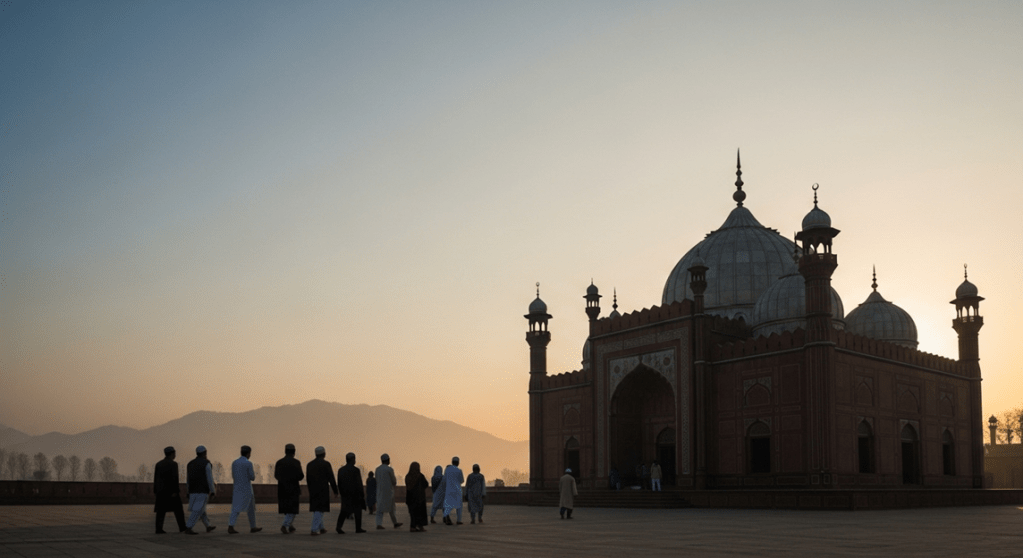
Eid morning begins early. Men, women and children dress in clean clothes and head towards mosques or Eidgahs for the special prayer. This collective prayer is one of the most powerful expressions of equality in Kashmiri society. Social distinctions momentarily dissolve as people stand shoulder to shoulder.
Before the prayer, Zakat-ul-Fitr is given—a compulsory charity meant to ensure that no one is excluded from the joy of Eid. This act reinforces the ethical core of the festival: celebration is incomplete without social responsibility. After prayers, people greet one another with warmth, exchanging Eid Mubarak—a greeting that carries both joy and humility.
Eid Traditions in Kashmiri Homes
Back home, Eid unfolds within family spaces. Traditional foods form an important part of the day. Sheer chai, kulcha, vermicelli preparations and simple meat dishes are prepared and shared. The emphasis is on hospitality rather than extravagance. Elders are visited and respected, relatives reconnect and children receive Eidi. These exchanges are not rushed; they are unhurried, reflecting the Kashmiri preference for intimacy over scale. Eid is experienced most fully in living rooms and courtyards, not in public squares.
Social Temperament and Celebration
Kashmir’s approach to Eid reflects its broader cultural character. Celebration here is warm but restrained. Public spaces do not erupt into spectacle; instead, joy circulates quietly through visits, conversations and shared meals. Importantly, Eid in Kashmir has also been a moment of social coexistence. Non-Muslim neighbours often exchange greetings and mutual respect is maintained. Participation is not demanded, but acknowledgment is freely given. This understated interaction reinforces the valley’s long tradition of living alongside difference without friction.
Eid Through Years of Uncertainty
Decades of conflict have inevitably altered how Eid is experienced. Restrictions, security concerns and personal losses have sometimes muted celebration. Many families have marked Eid in the absence of loved ones. Yet even during the most difficult years, the core rituals—fasting, prayer, charity—continued. For many Kashmiris, faith became an anchor during uncertainty. Eid, in this context, was not about forgetting hardship, but about finding meaning beyond it. The act of gathering for prayer, however quietly, affirmed continuity.
Contemporary Eid in Kashmir
Today, Eid in Kashmir reflects both continuity and change. Urban areas show some influence of commercialisation and social media, while rural regions remain closer to traditional patterns. Younger generations navigate between inherited customs and modern expressions, yet the fundamental ethics of Eid remain intact. Unlike elsewhere, Eid has not transformed into a spectacle-driven event. Its meaning continues to rest on restraint, reflection and responsibility.
Eid-ul-Fitr and Kashmiriyat
Eid-ul-Fitr aligns closely with the ethical idea often described as Kashmiriyat—a balance of faith, dignity and coexistence. It demonstrates how religious identity can be lived deeply without becoming exclusionary or assertive. The festival teaches that joy follows discipline and celebration follows responsibility. In a region often discussed through extremes, Eid offers a language of balance.
Conclusion: Celebration After Restraint
Eid-ul-Fitr in Kashmir is not defined by loudness or scale. It is defined by completion—of fasting, of patience, of inner discipline. It is a day when gratitude takes precedence over excess and community over display. As the day unfolds quietly across the valley, Eid reminds Kashmiris that joy does not need spectacle to be real. Sometimes, the most meaningful celebrations are those that speak softly, grounded in faith, humility and shared humanity.
Hero of Kashmir, Heroes of Kashmir, Gems of Kashmir

 Kashmir RootStock