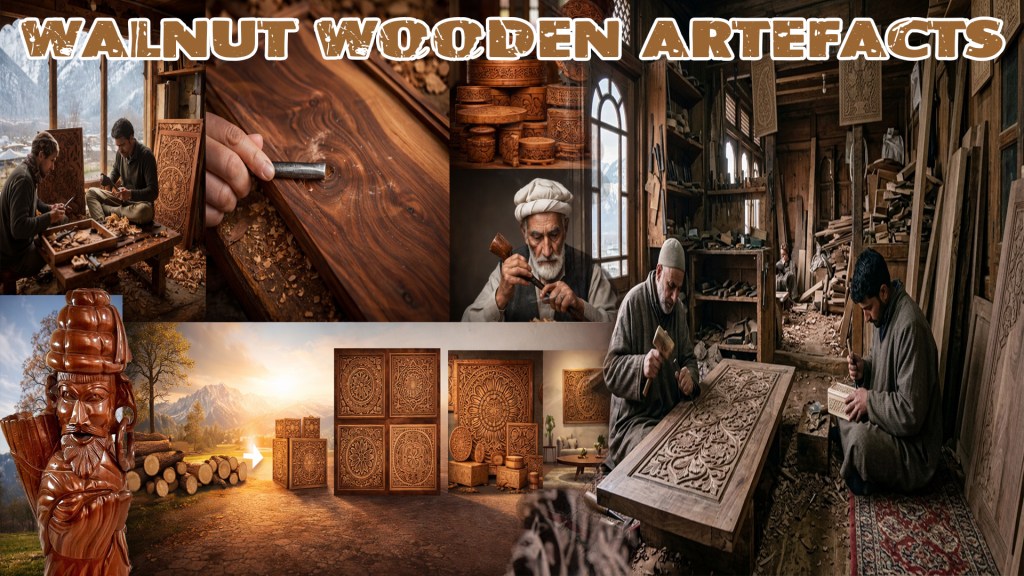
Walnut wooden artefacts have long been prized for their elegance, strength and timelessness. Across cultures and eras, artisans have chosen walnut wood to marry durability with refined aesthetics. Walnut’s grain, beauty and malleability make it ideal for creating artefacts that stand as enduring symbols of craftsmanship, tradition and artistic prowess.
Walnut wood is defined by its rich, dark brown tones, often streaked with chocolate, grey or purple nuances. Its straight grain can also show striking curls and waves, lending visual depth and distinctiveness to each piece. This organic variability guarantees that every walnut artefact is unique, increasing their exclusivity and worth. The wood offers exceptional traits for fine crafting. With a density of 600-700 kg/m³ and moderate hardness, walnut is durable without being overly heavy. Its flexural strength of 1140 kg/cm² and compressive strength of 610 kg/cm² assure structural soundness. Over time, walnut acquires a rich patina as light deepens its tone, further enhancing its allure and making aged pieces especially coveted.
In Kashmir, walnut is called ‘Doon Kul’ and grows at elevations of 5,500 to 7,500 feet. These trees mature over roughly 300 years, developing the dense grain and consistent texture ideal for intricate carving. This gradual growth imparts superior quality and decay resistance to the wood. Historically, walnut has signified fine woodworking and luxury. In Europe, it was widely used during the Renaissance for furniture, panels and intricate carvings. In Asia and the Middle East, walnut wood was favoured for religious objects, storage chests, weapon handles and detailed household artefacts.
In Kashmir and parts of Central Asia, walnut wood carving became a highly specialized craft. The skills passed down through generations. Kashmiri walnut wood carving began in the 15th century under Sultan Zain-ul-Abideen. He introduced the craft through Sheikh Hamza Makhdoom to help the local economy. The craft blended Persian techniques, brought by 14th-century settlers with local traditions.
Kashmir’s unique status as India’s only region with walnut orchards makes it the exclusive domestic source of this valuable wood. Traditions endure, preserving cultural identity while evolving to suit modern tastes and Kashmiri walnut goods are now exported internationally. Crafting walnut artefacts demands skill and patience. Proper wood seasoning is essential to securing stability and preventing warping or cracking. Artisans closely study the grain, using natural lines to shape each design.
Traditional hand tools are often preferred for better control and material integrity. Key tools include the chisel and mallet. Experienced craftsmen may work directly from memory, skipping pencil markings and visualizing designs mentally. Final steps feature meticulous sanding and polishing. Artisans buff the surface using semi-precious stone pullets on kalam holders, then apply 5-6 layers of wax polish with cotton cloths, letting each coat cure for 3-24 hours. This highlights the wood’s colour and texture without masking its grain. Walnut’s workability extends to modern techniques, it machines cleanly, adheres well, finishes beautifully and resists shock, enabling steam-bending.
Walnut artefacts span a broad spectrum of forms and uses. Decorative items like sculptures, panels, frames and figurines spotlight the wood’s artistic potential. Functional pieces, bowls, trays, boxes, pens and furniture details prove walnut’s durability and longevity. In many traditions, walnut artefacts hold ceremonial or symbolic value, signifying prosperity, stability and refinement. In Kashmir, both utilitarian items and purely ornamental works exemplify functional artistry. In modern décor, walnut artefacts hold a special place. They suit classic and contemporary interiors alike, providing natural warmth and character. Minimalist rooms benefit from walnut’s discreet richness while traditional spaces are elevated by its deep elegance. Both designers and collectors cherish walnut artefacts for instilling authenticity and fostering a connection to nature amid increasing industrialization. Sustainability has become important in walnut artefact production. Responsible sourcing includes regulated harvesting and using reclaimed or fallen trees. These steps help preserve this valuable resource for the future.
Black walnut trees promote sustainability through carbon sequestration, locking carbon within products long-term. The species enhances agroforestry and wood waste is converted to biomass energy, lowering greenhouse emissions. Walnut veneer maximizes timber efficiency while retaining visual quality. Today, many workshops prioritize eco-friendly practices, merging traditional skill with modern environmental ethics. This sustains the craft while preserving essential resources.
Beyond physical attributes, walnut artefacts hold deep emotional and cultural meaning. They are often passed as heirlooms, acquiring history and character while maintaining beauty and function. Each piece narrates a story of the originating tree, the shaping artisan and the owners who cherished, it evoking lasting ties to heritage and identity. Walnut wooden artefacts embody a unique fusion of nature, craftsmanship and heritage. Their lasting appeal comes from visual beauty, durability and the tradition they encapsulate. Amid mass production, they exemplify patience, skill and reverence for natural materials. Whether admired or used daily, walnut artefacts retain a timeless and distinguished role in culture.

 Kashmir RootStock