In an age where information is abundant but attention is increasingly fragmented, the simple habit of reading remains one of the most powerful drivers of learning and personal growth. Reading is not just a classroom exercise; it is the foundation upon which curiosity, confidence and critical thinking are built. In regions like Pulwama, where educational transformation is steadily gaining momentum, initiatives that promote reading are both timely and essential. If learning today is to shape leadership tomorrow, then books are undoubtedly the tools building those future minds.
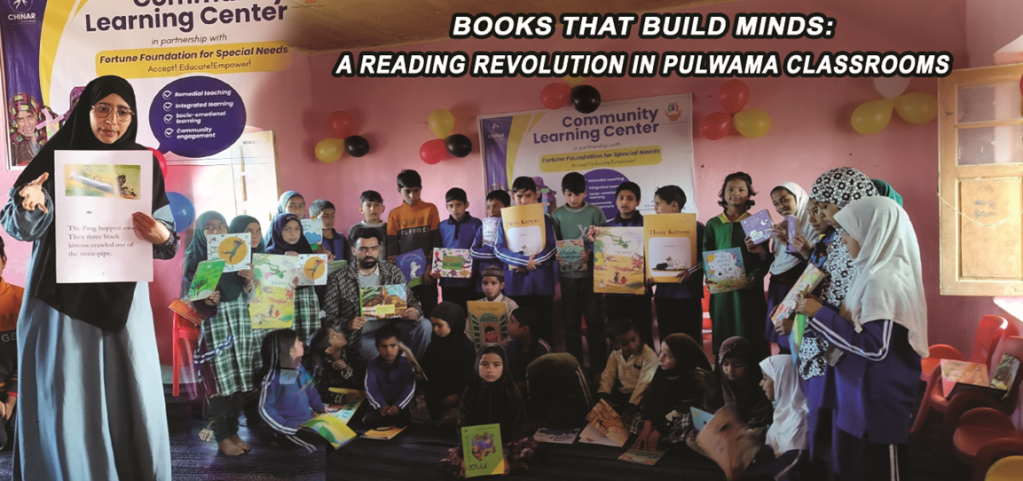
A recent reading session held at Government Middle School, Bagh Sangerwani in Pulwama, brought this vision to life in a meaningful and impactful way. The initiative was designed to nurture reading habits among students while creating an engaging, inclusive and student-centered learning environment. Moving away from traditional rote methods, the session emphasized active participation, interaction and experiential learning. It was not just about reading words on a page—it was about bringing those words to life.
The session featured a range of structured reading activities, each contributing to different aspects of literacy development. Shared reading allowed students to collectively engage with a text, strengthening comprehension and encouraging group learning. Pair reading created opportunities for collaboration, where students supported each other, corrected mistakes and built confidence together. Choral reading, where students read aloud in unison, improved fluency, rhythm and pronunciation while reducing hesitation and fear.
One of the most impactful elements of the session was independent reading. Students were encouraged to select books based on their interests, giving them a sense of ownership over their learning. This freedom sparked genuine curiosity and enthusiasm, as children explored stories and ideas at their own pace. When students read by choice rather than compulsion, learning becomes deeper, more meaningful and more lasting.
The level of engagement observed during the session was particularly noteworthy. Students actively participated, volunteered to read aloud and interacted confidently with their peers. Even those who are usually reserved showed a willingness to engage. The classroom environment transformed into a dynamic space of collaboration and expression. Reading was no longer perceived as a routine task but as an enjoyable and empowering activity.
At the heart of this initiative lies a powerful idea: books build minds. Through consistent reading, children expand their vocabulary, enhance comprehension and develop the ability to think critically. Beyond academics, books nurture imagination and empathy, enabling students to understand diverse perspectives. In a rapidly evolving world that values innovation and problem-solving, these skills are essential for long-term success.
For communities like Pulwama, such initiatives carry even greater importance. Access to varied learning resources may not always be consistent, making school-led efforts crucial in bridging educational gaps. Reading sessions like this serve as equalizers, ensuring that every child has the opportunity to develop strong literacy skills. They create an environment where learning is not limited by circumstance but driven by curiosity and opportunity.
Teachers and facilitators play a vital role in making such initiatives successful. Their guidance, encouragement and ability to create a supportive atmosphere help student overcome hesitation and build confidence. By fostering a culture of reading and making learning enjoyable, educators become catalysts for change, shaping not just academic outcomes but overall personality development.
This initiative also aligns with broader educational priorities, including the focus on foundational literacy and the shift toward experiential and competency-based learning. It reflects a modern approach to education, where understanding, communication and collaboration are valued as much as content knowledge. Reading, in this context, becomes a lifelong skill that empowers students far beyond the classroom.
As the session came to a close, its impact was clearly visible in the enthusiasm and confidence of the students. Moments like these highlight the fact that meaningful change in education does not always require large-scale reforms. Sometimes, it begins with a simple step—a book in a child’s hand, a supportive environment and the freedom to explore.
In the larger journey of education, such initiatives serve as reminders that the seeds of leadership are sown early. A child who reads today is a thinker in the making, a communicator in development and a leader in the future. By nurturing reading habits and encouraging active learning, we are not just educating children—we are shaping the leaders of tomorrow.

 Kashmir RootStock