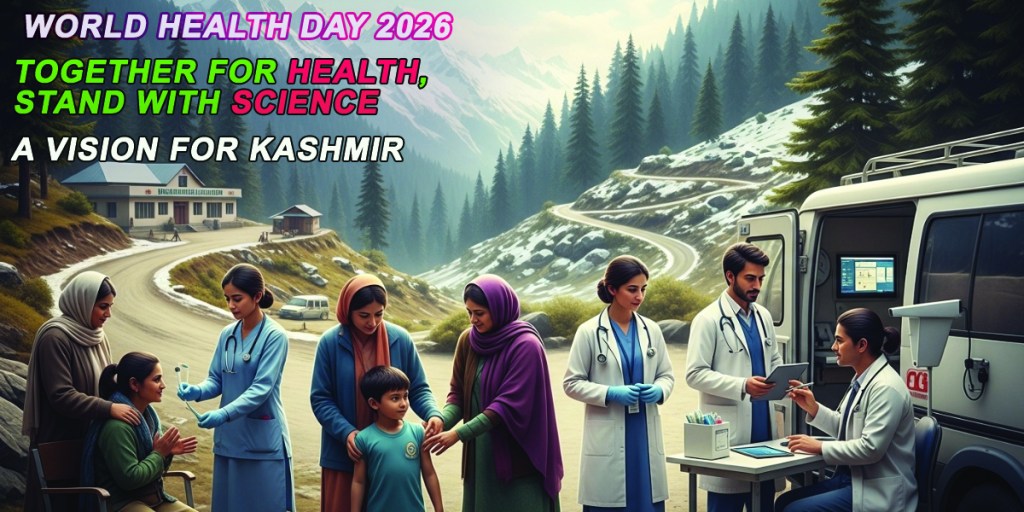
Every year, World Health Organization observes World Health Day to highlight pressing global health priorities and mobilize action. In 2026, the theme “Together for Health: Stand with Science” delivers a powerful message—healthcare must be built on scientific evidence, collective effort and inclusive access. For a region like Kashmir, this theme resonates deeply, reflecting both the challenges faced and the opportunities ahead in strengthening its healthcare system.
Kashmir’s healthcare landscape is defined by its unique geography and socio-economic conditions. Remote villages, mountainous terrain and harsh winters often limit access to timely medical care. In many areas, primary health centres remain the first point of contact, yet they face challenges such as staff shortages, limited diagnostic facilities and logistical constraints. During winter months, when roads are blocked by snow, access to emergency healthcare becomes even more difficult. These realities underline the need for a healthcare system that is not only accessible but also resilient and adaptive.
The theme “Together for Health” emphasizes the importance of collective responsibility. Healthcare is not solely the responsibility of governments or medical professionals; it is a shared commitment involving communities, institutions and individuals. In Kashmir, this collective approach is crucial. Community participation can play a transformative role in spreading awareness about preventive healthcare, hygiene and early diagnosis. When people are informed and engaged, health outcomes improve significantly.
Equally important is the call to “Stand with Science.” In an era where misinformation can spread rapidly, trust in science becomes essential. Scientific evidence must guide healthcare decisions, policies and practices. From vaccination drives to disease prevention strategies, science provides the foundation for effective action. In Kashmir, strengthening trust in scientific healthcare is particularly important in addressing issues such as vaccine hesitancy, mental health stigma and misconceptions about modern medicine.
Recent years have witnessed positive developments in Kashmir’s healthcare sector. Government initiatives, infrastructure expansion and digital health services are gradually improving access and quality of care. Schemes such as Ayushman Bharat have expanded financial coverage, allowing families to seek treatment without the burden of high costs. Telemedicine has emerged as a vital tool, connecting remote populations with specialists in urban centres. These advancements reflect the role of science and technology in bridging healthcare gaps.
However, one of the most pressing yet often overlooked challenges in Kashmir is mental health. Years of stress, uncertainty and socio-political factors have contributed to a growing burden of anxiety, depression and trauma-related conditions, particularly among the youth. Despite increasing awareness, mental health services remain limited and stigma continues to discourage individuals from seeking help. Addressing this issue requires a scientific and compassionate approach—integrating mental health into primary care, promoting counseling services in schools and encouraging open conversations within communities.
Maternal and child health is another critical area requiring sustained attention. While institutional deliveries have improved, access to consistent prenatal and postnatal care in remote regions remains uneven. Nutritional deficiencies and gaps in awareness can affect both mothers and children. Strengthening grassroots healthcare systems, improving immunization coverage and ensuring the availability of trained healthcare workers are essential steps toward safeguarding the health of future generations.
The rise of non-communicable diseases such as diabetes, hypertension and cardiovascular conditions is an emerging concern in Kashmir. Changing lifestyles, reduced physical activity and dietary shifts have contributed to this trend. Preventive healthcare, therefore, becomes a priority. Scientific awareness campaigns promoting healthy lifestyles, regular screenings and early intervention can help curb the spread of these diseases. Schools and community organizations can play a vital role in embedding healthy habits from an early age.
The COVID-19 pandemic demonstrated the critical importance of science-based decision-making and collective action. It highlighted how coordinated efforts between governments, healthcare workers and communities can effectively manage crises. In Kashmir, healthcare workers showed remarkable dedication, often working under challenging conditions to ensure continuity of care. Their efforts underscore the importance of investing in human resources, training and healthcare infrastructure to build a resilient system capable of handling future challenges.
Education and health literacy are key pillars of long-term progress. When individuals understand the importance of vaccination, hygiene, nutrition and timely medical care, they are better equipped to make informed decisions. In Kashmir, targeted awareness campaigns can significantly improve public health outcomes. Schools, colleges and local institutions must integrate health education into their frameworks, ensuring that knowledge translates into action.
Youth engagement is another powerful force for change. Young people can act as catalysts in promoting health awareness, challenging misinformation and encouraging positive behaviours within their communities. By leveraging digital platforms and peer networks, they can amplify the message of “Together for Health” and contribute to building a more informed and proactive society.
At the heart of this year’s theme lies a simple yet profound idea: health is a shared responsibility and science is our strongest ally. For Kashmir, this means embracing collaboration at every level—between policymakers and practitioners, between communities and institutions, and between tradition and modern science. It requires building trust, ensuring inclusivity and prioritizing the well-being of every individual, regardless of location or socio-economic status.
As Kashmir continues its journey toward development, healthcare must remain a central focus. A healthy population is the foundation of a prosperous society. By aligning with the principles of “Together for Health: Stand with Science,” Kashmir has the opportunity to strengthen its healthcare system, bridge existing gaps and create a future where quality healthcare is accessible to all.
World Health Day 2026 is not just a symbolic occasion—it is a call to action. It reminds us that progress in health is possible only when we work together and trust in science. For Kashmir, this is both a challenge and an opportunity—to transform its healthcare landscape and ensure that every individual can lead a healthy, dignified life.

 Kashmir RootStock