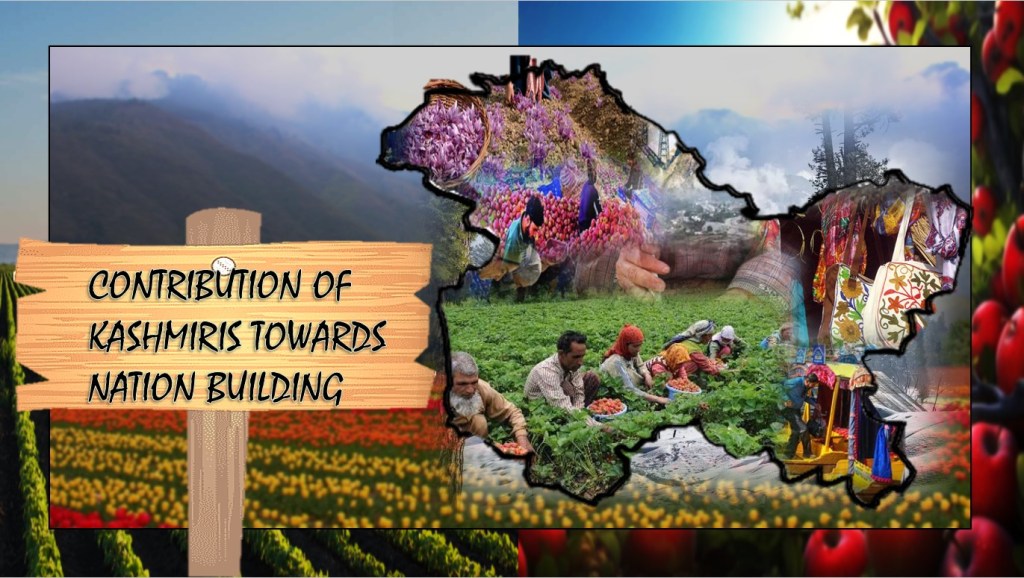
Kashmir, often referred to as “Paradise on Earth”, is not only known for its breathtaking landscapes and rich cultural heritage but also plays a vital role in the nation-building process of India. Its strategic location, abundant natural resources and diverse population contribute significantly to the country’s economy and social fabric. This essay explores Kashmir’s contributions in various sectors, including its role in the economy, tourism, manufacturing, GDP, opportunities for growth and the way ahead. Kashmir’s economy is primarily agrarian, with agriculture employing a significant portion of the population.
The region is known for its production of saffron, apples, walnuts and rice, which are not only essential for local sustenance but also contribute to national food security. The horticultural sector has been tremendous growth, with apple from Kashmir being highly sought after in national and international markets. The region’s unique handicraft, such as Pashmina shawls and carpets, contribute to both local livelihoods and the national economy through exports.Tourism is one of the most significant contributors to Kashmir’s economy. The region attracts millions of domestic and international tourist each year, drawn by its stunning landscapes, serene lakes and vibrant culture.
This influx generates substantial revenue, creating jobs in hospitality, transportation and various service sectors. The tourism industry not only enhances the economic status of the region but also fosters cultural exchange and promotes national unity by showcasing India’s diverse heritage. The handicraft industry, which includes textiles, woodwork and metal craft, plays a crucial role in providing employment and preserving traditional skills. Furthermore, initiatives aimed at promoting small-scale industries have the potential to diversify the economic base of the region. Investing in manufacturing capabilities, Kashmir can reduce dependency on agriculture and tourism while enhancing its contribution to the national economy. Although Kashmir’s contribution to India’s GDP may seem modest compared to larger states, its potential for growth is immense.
The region’s unique products – such as saffron and high-quality fruits – alongwith burgeoning tourism and manufacturing sectors can significantly enhance its GDP. Proper investment in infrastructure and technology, Kashmir can transform into a hub for economic activity that not only benefits local residents but also bolsters India’s overall economic performance. Kashmir presents numerous opportunities for nation-building. The region’s rich natural resources offer prospects for renewable energy project, such as hydropower generation, which can meet local energy needs while contributing to national energy security. Initiative focused on skill development can empower the youth of Kashmir, enabling them to participate actively in the economy. The promotion of eco-tourism and sustainable practices can further enhance the region’s appeal while preserving its natural beauty. The contribution of Kashmir towards nation-building is multifaceted and profound, encompassing cultural, economic and geopolitical dimensions. The region’s rich heritage, characterized by a blend of diverse traditions, languages and philosophies has significantly enriched India’s cultural tapestry. Kashmir’s natural beauty and resources have also played a crucial role in tourism and agriculture, contributing to the national economy. The strategic location of Kashmir has implications for national security and regional stability, emphasizing its importance in fostering unity and peace within the country. The resilience and spirit of the Kashmiri people, despite facing numerous challenges, exemplify the strength of diversity in nation-building.

 Kashmir RootStock