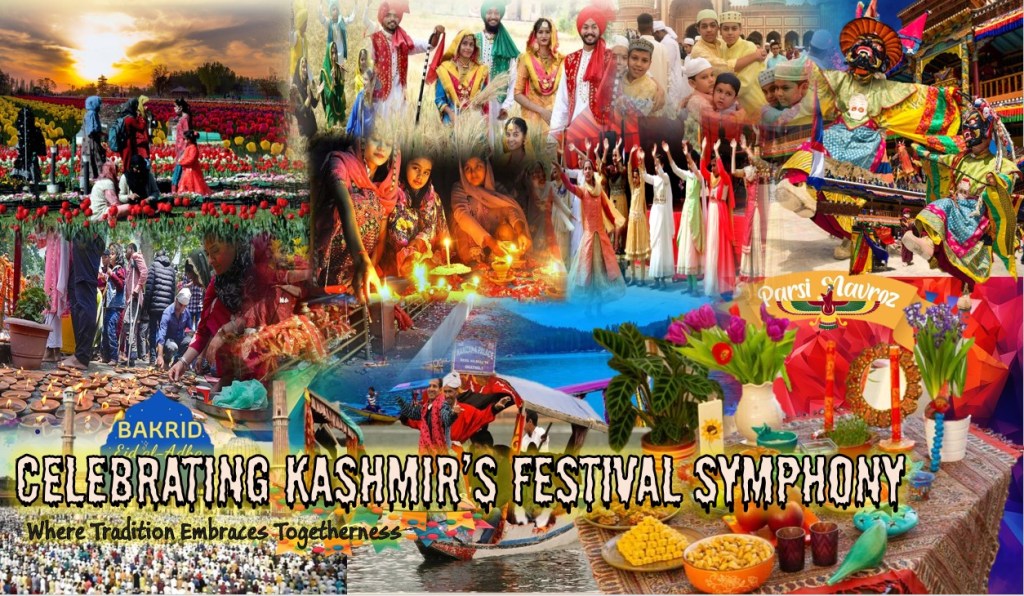
Nestled in the northernmost part of India, the enchanting valley of Kashmir is a sight to behold, with its breathtaking landscapes, lush meadows, and serene lakes. However, beyond its natural beauty, Kashmir is a land where a rich tapestry of festivals and cultural celebrations unfold throughout the year, offering a glimpse into the region’s vibrant heritage and communal harmony. The festivals of Kashmir are not merely events on a calendar; they are a symphony of tradition, spirituality, and social cohesion that bind the diverse communities of the valley. Kashmir’s festivals go beyond religious rituals; they are woven into the very fabric of its culture and heritage. These celebrations transcend individual communities, fostering unity and reinforcing shared identity among its people.
Among the most significant festivals celebrated in Kashmir are Eid-ul-Fitr and Eid-ul-Adha. Eid-ul-Fitr marks the end of Ramadan, the Islamic holy month of fasting. The festival is characterised by communal prayers, feasting, and exchanging gifts and sweets. Traditional delicacies like sheer khurma (a sweet dish made with milk and vermicelli) are prepared in every household, and the streets come alive with people dressed in their finest attire, visiting friends and relatives. Eid-ul-Adha, also known as the Festival of Sacrifice, commemorates the willingness of Prophet Ibrahim to sacrifice his son in obedience to God. The day is marked by the sacrifice of animals, distributed among family, friends, and the needy, underscoring the spirit of charity and community that defines this festival.
Navroz, the Parsi New Year, is greatly celebrated by the Zoroastrian community in Kashmir—the festival, which usually falls in March and signifies spring’s arrival and life’s renewal. Houses are cleaned and decorated, and prayers are offered at fire temples. Families gather for festive meals, including traditional Parsi dishes such as dhansak and patra ni Macchi. Navroz is a time of joy and gratitude, bringing together the Parsi community, friends, and neighbours from diverse backgrounds and reflecting the region’s communal harmony.
In the serene landscapes of Ladakh, the Hemis Festival stands out as a spectacular celebration of Buddhist culture. Held at the Hemis Monastery, the festival commemorates the birth of Guru Padmasambhava, the founder of Tibetan Buddhism. The two-day event is marked by vibrant mask dances, known as Cham, performed by monks in elaborate costumes. These dances depict the triumph of good over evil and are accompanied by the rhythmic beats of traditional instruments. The Hemis Festival attracts tourists and pilgrims from across the globe, turning the monastery into a bustling hub of cultural exchange. The festival offers a window into the rich Buddhist traditions and the region’s peaceful coexistence.
Dal Lake, often called the “Jewel in the Crown of Kashmir,” is the centrepiece of the Shikara Festival. Celebrated annually in Srinagar, this festival showcases the unique culture and lifestyle of those living on the lake. Shikara races, where intricately decorated boats compete on the serene waters, are the festival’s highlight, symbolising the local boatmen’s agility and skill. Traditional Kashmiri music, dance performances, and cuisine add to the festival’s cultural vibrancy, while the houseboat tours offer visitors a chance to experience Kashmir’s floating homes.
Every spring, the Indira Gandhi Memorial Tulip Garden in Srinagar transforms into a vibrant sea of colours during the Tulip Festival. As Asia’s most extensive tulip garden, it boasts over a million tulips in a riot of colours and varieties. The festival, which typically lasts for two weeks, attracts tourists and photographers who flock to capture the blooming flowers against the backdrop of the Zabarwan Range. Cultural programs, handicraft stalls, traditional Kashmiri music and dance performances enhance the festive atmosphere. This event highlights Kashmir’s horticultural heritage and contributes significantly to the region’s tourism economy.
Mela Kheer Bhawani is a significant festival for Kashmiri Pandits, dedicated to the Hindu goddess Ragnya Devi. Held at the Kheer Bhawani temple in the village of Tulmulla, the festival draws thousands of devotees who offer prayers and seek the goddess’s blessings. Pilgrims offer milk and kheer (a rice pudding) to the deity, creating an atmosphere of profound spiritual devotion. The temple complex resonates with hymns and chants, making the festival a testament to the enduring faith and cultural identity of the Kashmiri Pandit community.
In addition to religious festivals, Kashmir’s rich cultural heritage plays a crucial role in fostering unity among its diverse communities. From the intricate Kashmiri handicrafts to the vibrant traditional music and dance forms, these artistic expressions transcend religious lines and bind people together. Festivals such as the Tulip Festival and the Shikara Festival not only showcase the region’s cultural diversity but also promote communal harmony, contributing to the region’s economic growth. Kashmir’s festivals symbolise its inclusive spirit, where people of different faiths participate in each other’s celebrations. Interfaith participation in festivals like Eid, Diwali, Navroz, and Baisakhi has been a longstanding tradition in the valley. Even during conflict, these festivals have served as a beacon of hope, bringing people together and promoting peace and understanding. The deep-rooted Sufi tradition in Kashmir further fosters this sense of unity, with the annual Urs celebrations at shrines like Hazratbal drawing devotees from all religious backgrounds. Kashmir’s cultural festivals, such as the Tulip Festival and the Shikara Festival, are not just about celebration and cultural exchange. They also play a significant role in the region’s tourism industry, attracting thousands of tourists yearly and boosting local economies. In recent years, there has been a concerted effort to promote sustainable tourism in the valley, with initiatives aimed at preserving Kashmir’s natural beauty while promoting its cultural heritage. According to the Jammu and Kashmir Tourism Department, festival tourism has steadily risen, with the Tulip Festival alone attracting over 2.3 lakh visitors in 2022, contributing to the region’s overall economic growth.
The festivals of Kashmir are a vivid mosaic of unity and diversity. They reflect the region’s rich cultural heritage and ability to embrace different traditions with equal enthusiasm. These celebrations transcend religious and social boundaries, fostering a sense of communal harmony and mutual respect. In the valley of Kashmir, where the beauty of nature is matched only by the warmth of its people, festivals serve as a reminder of the enduring spirit of celebration and togetherness. They are a testament to a land’s resilience and cultural richness that continues to enchant and inspire all who experience its myriad hues.

 Kashmir RootStock