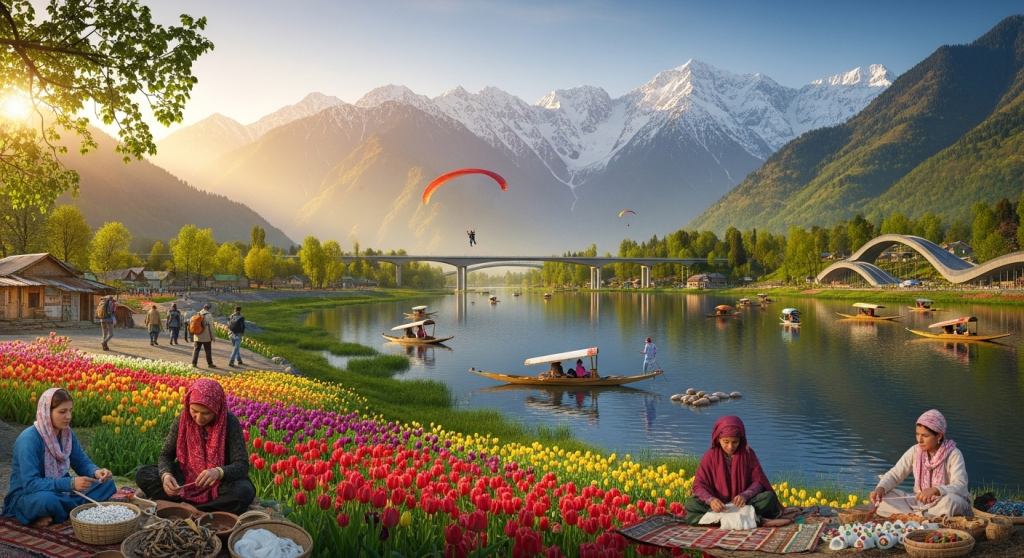
Kashmir, often called “Paradise on Earth,” is a land of breathtaking landscapes, rich cultural heritage and immense economic potential. Nestled in the northernmost part of India, this region has long been synonymous with its mesmerising natural beauty, vibrant traditions and a resilient population. In recent years, Kashmir’s economy and tourism sector have witnessed significant growth, setting the stage for a promising future. This article explores the factors driving this growth, the challenges faced and the role of key stakeholders in unlocking the region’s full potential.
Kashmir’s economy has traditionally been rooted in agriculture, horticulture, handicrafts and tourism. However, a gradual shift towards diversification and modernisation is evident, driven by policy reforms, improved infrastructure and increased investment. Agriculture remains the backbone of Kashmir’s economy, with a significant portion of the population relying on it for livelihood. The region is renowned for its high-quality saffron, apples, walnuts and almonds, which are exported to various parts of India and abroad. The government has introduced several initiatives to boost the agricultural sector, including high-yield crop varieties, modern irrigation techniques and financial support for farmers. Additionally, the Kashmiri saffron industry received a boost with the introduction of the Geographic Indication tag, enhancing its global reputation and market value.
Kashmir’s handicrafts, such as Pashmina shawls, carpets, wood carvings and papier-mâché products, have been globally acclaimed for their craftsmanship. The sector not only preserves the region’s cultural heritage but also provides employment to thousands of artisans. Efforts to promote Kashmiri handicrafts through e-commerce platforms, exhibitions and financial aid are helping sustain and expand this industry. Kashmir is witnessing growth in non-traditional sectors like floriculture, renewable energy and information technology. Floriculture, fuelled by the region’s favourable climate, has gained momentum as demand for flowers in domestic and international markets has increased. The IT sector, though in its nascent stage, has seen investments in tech parks and skill development programs to attract businesses and generate employment.
Kashmir’s economic growth is closely tied to improvements in infrastructure. The region has seen substantial investments in road networks, rail connectivity and telecommunications. The completion of significant projects, such as the Chenab Bridge and the Banihal-Qazigund rail link, has enhanced connectivity, boosting trade and tourism. Tourism has always served as a foundation of Kashmir’s economy, thanks to its unrivalled natural beauty—snow-clad mountains, verdant valleys and pristine waterways. Despite obstacles, the tourism sector is experiencing a strong resurgence, energised by targeted initiatives and the region’s enduring appeal.
Traditional tourist destinations like Gulmarg, Pahalgam and Dal Lake have regained their allure. Gulmarg, famous for its skiing resorts, attracts adventure enthusiasts from around the world. Pahalgam, with its serene landscapes, remains a favourite among trekkers and nature lovers. Dal Lake, with its iconic houseboats and Shikara rides, remains a symbol of Kashmir’s hospitality. In an effort to diversify tourism offerings, lesser-known destinations such as Doodhpathri, Yusmarg and Gurez Valley are being developed and promoted. These areas offer unique experiences, from tranquil meadows and alpine treks to cultural immersion in remote villages.
Kashmir is increasingly becoming a hub for adventure tourism. Activities such as trekking, skiing, river rafting and paragliding attract thrill-seekers. Eco-tourism initiatives are also gaining traction, focusing on sustainable travel and conservation of natural resources. Homestays and eco-lodges offer tourists authentic experiences while supporting local communities. The region’s traditional music, dance, cuisine and festivals offer visitors an unparalleled cultural encounter. Events like the Tulip Festival and Saffron Festival not only highlight Kashmir’s natural splendor but also honour its cultural wealth. The government and private stakeholders are playing a crucial role in revitalizing Kashmir’s tourism sector. Efforts include improving infrastructure at tourist sites, ensuring visitor safety and security and leveraging digital marketing to promote the region globally. Initiatives like the introduction of helicopter services to remote destinations and the creation of tourism circuits have further enhanced accessibility and convenience for travelers.
Although Kashmir’s economy and tourism sector are advancing, several obstacles must be overcome to sustain this progress: – Ensuring a stable and secure environment is critical for fostering investor confidence and attracting tourists. The efforts of the Indian Army and local authorities in maintaining peace and facilitating development have been commendable. While significant progress has been made, further investment in infrastructure, especially in rural and remote areas, is essential to fully unlock the region’s potential. Sustainable practices must be prioritized to preserve Kashmir’s fragile ecosystem. Over-tourism, deforestation and pollution pose immediate threats. The local workforce through targeted training and education is essential to meet the needs of growing sectors and enhance employability. Agricultural and handicraft products can boost incomes for farmers and artisans. Steps like developing cold storage facilities and digital marketplaces are moving in the right direction.
Kashmir stands at the cusp of a new era of economic growth and tourism revival. With its abundant natural resources, rich cultural heritage and strategic location, the region has the potential to become a global economic and tourist hub. The collective efforts of the government, private sector and local communities will be instrumental in realizing this vision. As the world rediscovered, Kashmir’s beauty is rediscovered. Growth must remain inclusive, sustainable and respectful of its identity. With strong policies and a long-term focus, Kashmir can reclaim its “Paradise on Earth” title and stand as a symbol of peace and prosperity.

 Kashmir RootStock