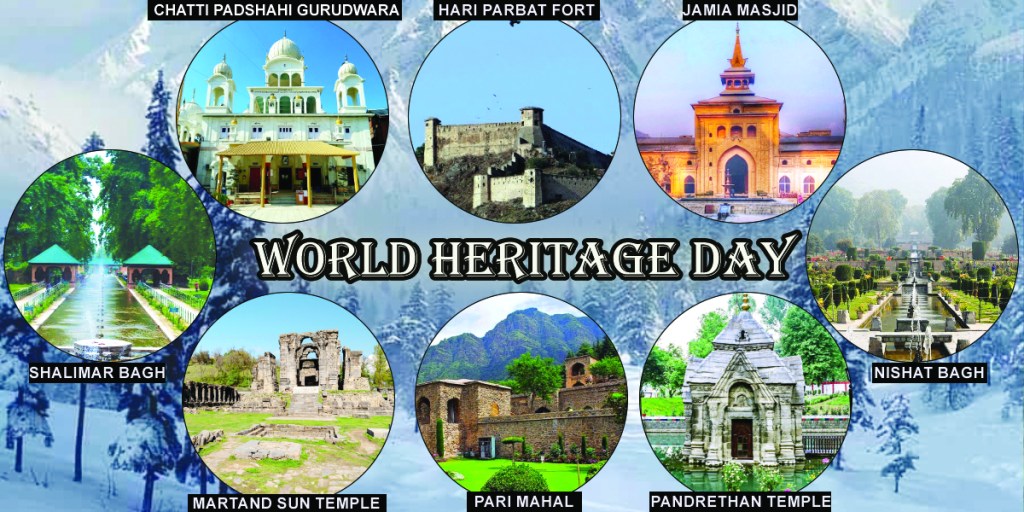
On 18 April each year, the world pauses to reflect on the importance of protecting its shared cultural and natural legacy through World Heritage Day, an initiative supported by UNESCO. While the observance is global in scope, its meaning becomes deeply personal in places where heritage is not only visible in monuments but also embedded in everyday life. Kashmir is one such place. Often described as “Paradise on Earth,” the region is celebrated for its breathtaking landscapes, yet its true richness lies in a layered heritage that combines architecture, spirituality, craftsmanship and collective memory. On this day, Kashmir does not merely represent beauty; it stands as a reminder of a fragile legacy that demands both recognition and preservation.
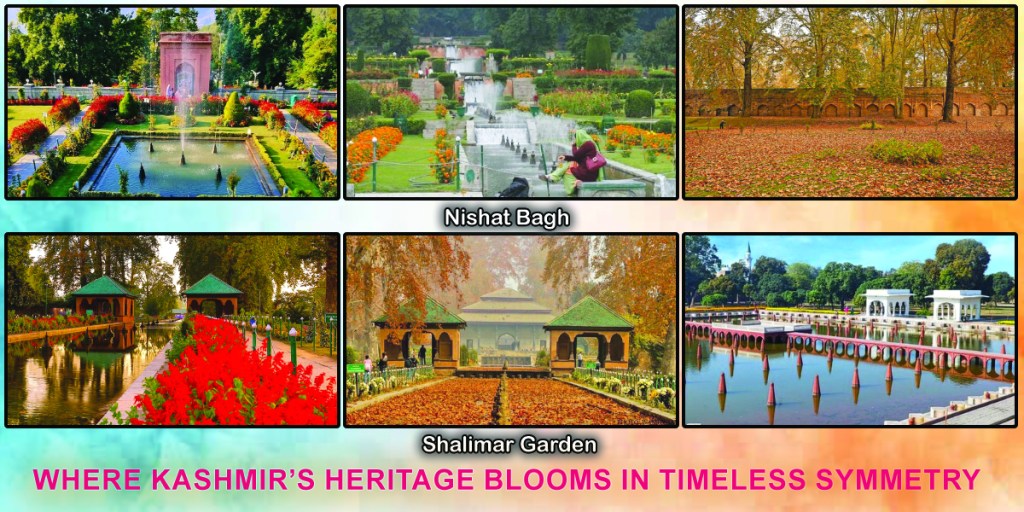
Kashmir’s heritage unfolds like a living narrative shaped by centuries of cultural exchange and artistic refinement. The Mughal era, in particular, left an indelible imprint on the valley’s landscape. Gardens such as Shalimar Bagh and Nishat Bagh are more than scenic retreats; they are expressions of a philosophy that sought harmony between human design and natural beauty. Carefully laid terraces, flowing water channels and the iconic chinar trees together create an environment that mirrors the Persian concept of paradise. These spaces were not only designed for leisure but also to evoke a sense of order, tranquility and reflection, making them timeless embodiments of aesthetic and intellectual thought.
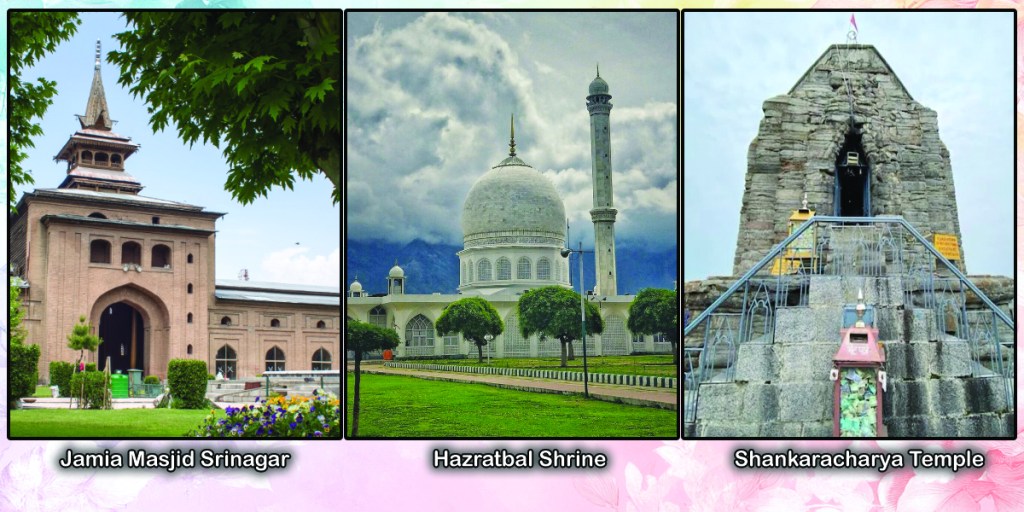
Equally significant is Kashmir’s spiritual heritage, which reflects a long tradition of coexistence and mutual respect among different faiths. The region’s cultural ethos, often described as Kashmiriyat, is rooted in this pluralism. Structures like the Hazratbal Shrine, the Jamia Masjid Srinagar and the Shankaracharya Temple stand not only as places of worship but also as symbols of a shared cultural identity. The architectural elegance of these sites, from intricately carved wooden pillars to serene hilltop sanctuaries, tells stories of devotion, artistry and continuity. They serve as reminders that heritage is as much about intangible values—beliefs, traditions and communal harmony—as it is about physical structures.
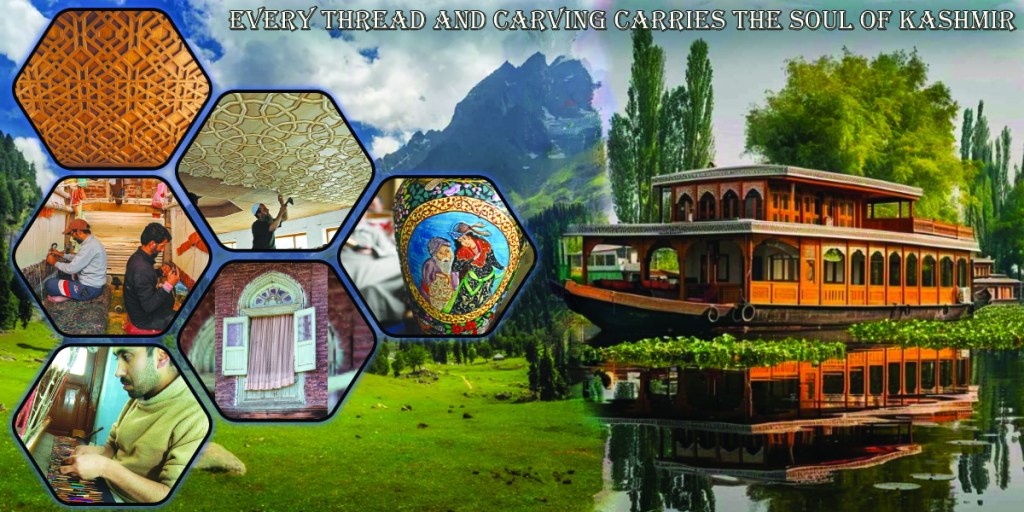
Beyond its monumental and spiritual landmarks, Kashmir’s heritage is deeply embedded in its traditional architecture and crafts. The old quarters of Srinagar reveal a distinctive architectural style characterized by wooden houses, lattice windows known as pinjrakari and elaborately designed khatamband ceilings. These structures are not only visually striking but also environmentally responsive, designed to withstand the region’s climatic conditions. Alongside architecture, the valley’s craftsmanship continues to define its cultural identity. The delicate art of papier-mâché, the precision of hand-knotted carpets, the softness of Pashmina shawls and the richness of walnut wood carving represent generations of skill and dedication. Each artifact carries within it the imprint of history, making these crafts living expressions of heritage rather than mere commodities.
Despite its extraordinary richness, Kashmir’s heritage today faces a range of challenges that threaten its survival. Rapid urbanization has led to the replacement of traditional structures with modern constructions, often without consideration for historical value or architectural continuity. This transformation is not merely physical; it disrupts the cultural fabric that these spaces sustain. Environmental changes further compound the problem, as shifting climate patterns impact the delicate ecosystems that support heritage sites, particularly gardens and water bodies. Decades of socio-political instability have also hindered consistent conservation efforts, leaving many sites vulnerable to neglect and deterioration. Perhaps most concerning, however, is the gradual erosion of awareness among communities themselves. When heritage is no longer seen as integral to identity, its preservation becomes secondary, increasing the risk of irreversible loss.
In this context, the role of society, especially the youth, becomes critically important. Kashmir’s younger generation possesses the energy and creativity needed to redefine how heritage is perceived and protected. Through education, digital media and community engagement, they can transform heritage conservation into a collective responsibility rather than a specialized task. Initiatives that encourage storytelling, documentation and cultural exploration can help bridge the gap between past and present. By reconnecting with their roots, young people can ensure that heritage remains a living, evolving entity rather than a static relic of history.
At the global level, Kashmir’s heritage holds immense potential for recognition and appreciation. While many of its sites possess the characteristics of world-class heritage, they remain underrepresented on international platforms. Recognition by UNESCO could significantly enhance conservation efforts while also promoting sustainable tourism. The success of globally recognized landmarks such as the Taj Mahal illustrates how heritage can serve as both a cultural symbol and an economic asset. For Kashmir, such recognition could open new avenues for development while ensuring that preservation remains at the forefront.
Preserving Kashmir’s heritage requires a comprehensive and collaborative approach that balances development with conservation. Strong policy frameworks, supported by effective implementation, are essential to protect historical sites from unchecked urban expansion. At the same time, sustainable tourism practices must be encouraged to prevent overexploitation while still allowing people to experience the region’s cultural richness. The use of technology, including digital documentation and advanced mapping techniques, offers promising tools for safeguarding heritage against both natural and human-induced threats. Equally important is the involvement of local communities, whose knowledge and connection to these traditions make them indispensable partners in any preservation effort. Education, too, plays a vital role, as it fosters a sense of ownership and responsibility among future generations.
As World Heritage Day is observed each year on 18 April, it serves as a powerful reminder that heritage is not an abstract concept but a living reality that shapes identity and belonging. In Kashmir, this reality is particularly vivid. The gardens that reflect centuries-old philosophies, the shrines that embody spiritual harmony, the homes that echo traditional wisdom and the crafts that carry forward artistic legacies all form a collective narrative that defines the region. Preserving this narrative is not simply about maintaining physical structures; it is about safeguarding the essence of a people and their history.
Ultimately, Kashmir’s heritage stands at a critical juncture. It is both a treasure of immense cultural value and a fragile entity vulnerable to change. The responsibility to protect it extends beyond governments and institutions to every individual who recognizes its significance. World Heritage Day, therefore, is not just a celebration but a call to action—a reminder that the legacy of the past must be preserved with care, commitment and vision. If this responsibility is embraced with sincerity, Kashmir can continue to inspire not only as a place of natural beauty but also as a beacon of cultural resilience and enduring heritage.


