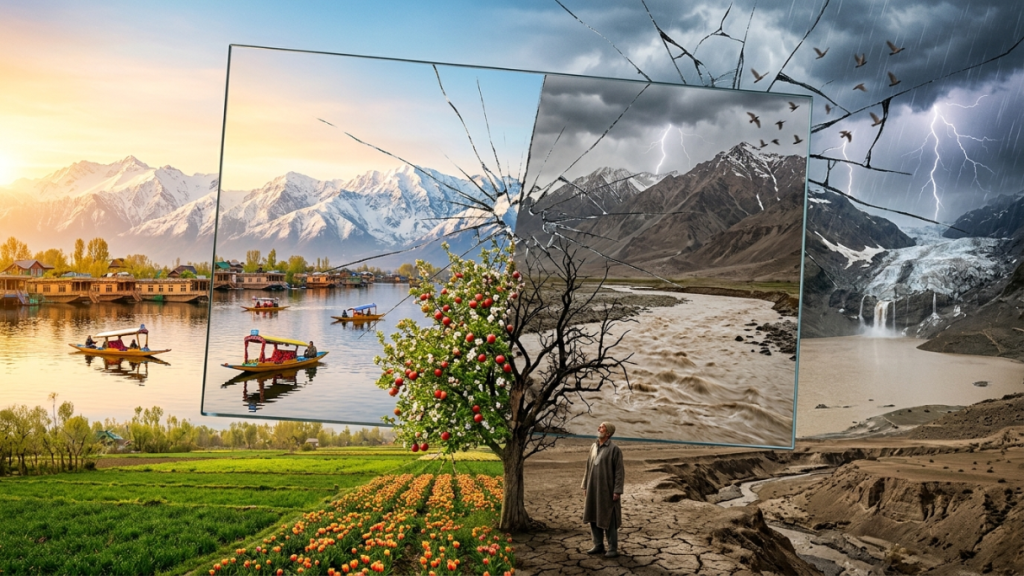
Kashmir, often called “Paradise on Earth,” has long been defined by its cool summers, snowy winters and distinct seasons. For centuries, the valley’s climate shaped its agriculture, water resources and traditions. Now, the region faces a dramatic transformation: warmer winters, irregular snowfall, shifting rainfall patterns and increasingly frequent extreme weather events. These changes are not happening by chance—they are tightly linked to global climate change and regional pressures. Understanding these shifts is urgent, as they threaten livelihoods, ecosystems and Kashmir’s very future.
One of the most significant and urgent changes in Kashmir’s weather is the relentless rise in temperatures. Studies and meteorological data underscore a stark reality: average temperatures in Jammu and Kashmir have increased by roughly 1–1.5°C over the past century, with a much sharper rise since the 1980s.
In Kashmir, snowfall has historically been crucial to the natural water cycle. Snow accumulating in the mountains acts as a reservoir, gradually melting in spring and summer to feed rivers, lakes and streams. Recently, snowfall in the western Himalayas, including Kashmir, has been declining. Some experts warn that this decline is leading to “snow droughts,” periods with significantly less snow than usual, even though winter precipitation may still fall as rain rather than snow. This trend is important because the overall reduction in snowpack decreases spring and summer water availability, affecting natural water storage and downstream flows.
With rising temperatures, rainfall in Kashmir is also changing. Traditionally, winter precipitation was brought by Western Disturbances from the Mediterranean, resulting in reliable snow and rain. Recent research shows these systems are shifting in timing and intensity, with more rainfall instead of snow and more precipitation arriving during the pre-monsoon period. This leads to two main issues: reduced winter snowfall lowers water storage in mountain snowpacks, and sudden heavy rainfall events trigger floods, landslides and soil erosion, problems that are becoming more frequent.
Kashmir traditionally had four distinct seasons: spring, summer, autumn and winter. In recent decades, climate change has gradually blurred these boundaries. Springs are arriving earlier, summers are hotter and winters are shortening. Meteorological data over the past decade show increasing unseasonal warmth and earlier plant blooming, which can harm agriculture. Crops and fruit trees that bloom too early become vulnerable to late frosts or sudden weather shifts, potentially damaging yields and threatening farmers’ livelihoods. This unified seasonal shift highlights mounting challenges for the region.
Kashmir’s economy stands at the brink, tightly bound with agriculture and horticulture especially apples, rice and saffron. The impact of climate change is immediate and severe. Irregular rainfall, reduced snowmelt and turbulent temperature shifts threaten soil moisture and water supplies. Alarmingly, studies show that most residents already feel the consequences: declining rainfall, shrinking snowfall and lower stream flows, all of which directly undermine agricultural productivity.
An urgent threat looms as the Himalayan glaciers melt at accelerating rates not only causing dangerous glacier retreat but also spawning huge, unstable glacial lakes. Scientists warn that these lakes could burst without warning, causing catastrophic Glacial Lake Outburst Floods that would obliterate settlements, infrastructure and precious farmland downstream. With so many communities living near vulnerable rivers, the risk to lives and livelihoods is grave and growing.
Kashmir’s changing weather is not just an environmental issue; it is an urgent social and economic emergency. The valley’s delicate natural systems are intertwined, so climate shifts can trigger water security losses, agricultural breakdowns, a faltering tourism sector and major health crises. For example: Reduced snowfall threatens water supply and hydroelectric power generation. Heatwaves and irregular rainfall can damage crops and orchards. Changing ecosystems may affect wildlife and forests. Extreme weather events such as floods or landslides can damage infrastructure and communities.
While these challenges are daunting, grasping the urgency of Kashmir’s changing climate is essential for adaptation. Governments, scientists and communities must act decisively, recognizing the need for climate-resilient policies now. Only through measures such as improved water management, resilient agriculture, forest preservation and robust disaster planning can risks be contained in time. Kashmir’s evolving climate mirrors a global emergency climate change is rapidly altering landscapes and lives worldwide. In a fragile Himalayan ecosystem, these effects are glaring and the call for immediate action cannot be ignored.

 Kashmir RootStock