“Learning gives creativity, creativity leads to thinking,
thinking provides knowledge, and knowledge makes you great.”
Dr APJ Abdul Kalam
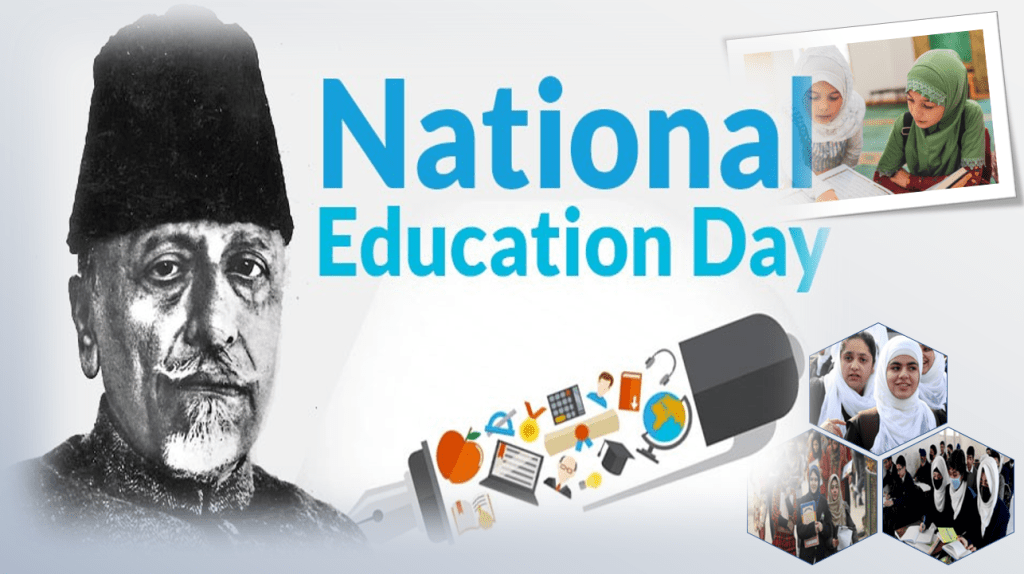
National Education Day, observed on November 11, commemorates the birth anniversary of Maulana Abul Kalam Azad, India’s first Education Minister. Azad, a visionary leader, played a pivotal role in shaping India’s educational landscape, recognising that education is the foundation of an autonomous and progressive society. National Education Day is uniquely significant in Kashmir as the region strives to make educational advancements despite its challenging socio-political history. Today, as India pushes for inclusive, equitable, and quality education, Kashmir is on a transformative path to bridge gaps, raise literacy rates, and unlock the region’s intellectual and socio-economic potential. This article explores the state of education in Kashmir, its challenges, achievements, and the way forward for a better, empowered future. Historically, Kashmir has held a prominent position in education, with its learning institutions dating back centuries. Persian, Arabic, and Sanskrit manuscripts, along with celebrated scholars, poets, and artists, have profoundly influenced the region’s academic and cultural heritage. However, political instability over the past few decades created hurdles in educational growth, affecting infrastructure, resources, and overall accessibility. Yet, despite these obstacles, the people of Kashmir, including parents, community leaders, and local businesses, hold education in high regard, and academic aspirations remain strong among the youth. The region’s educators, policymakers, and government bodies continue to strive for an educational system that provides opportunities for all.
When comparing Kashmir’s educational status with other Indian states, several indicators reveal both progress and areas needing improvement. According to recent data, Jammu and Kashmir’s literacy rate stands at around 77%, which, although above the national average, still trails states like Kerala and Himachal Pradesh, which exceed 90%. The gender disparity in education is another critical factor, with male literacy rates in Kashmir higher than female rates, though this gap has been narrowing over the years. The education system in Kashmir is undergoing a period of transformation, focusing on improving access, quality, and outcomes. However, unique challenges such as political instability, geographical isolation, and the impact of conflict on the mental health of students and teachers, make the journey towards a robust education system more arduous. Primary and secondary education is improving with increased enrollment, but challenges remain in infrastructure, teacher-student ratios, and consistent school attendance, especially in rural areas. Higher education institutions, including the University of Kashmir and the National Institute of Technology, Srinagar, attract talented students, yet more research funding and resources still need to be improved. Private institutions are helping fill some gaps, but affordability remains a challenge for lower-income families, highlighting the need for scholarship programs and government support.
One promising development in Kashmir’s education landscape is the growing role of technology. During the COVID-19 pandemic, online education emerged as a critical alternative, though inconsistent internet connectivity posed challenges. With recent improvements in digital infrastructure and high-speed internet access, remote learning and digital classrooms are becoming viable options. Technology integration allows students to access diverse learning materials, participate in global educational platforms, and improve their digital literacy. Schools and colleges across Kashmir are now adopting innovative classes and online courses, equipping students with the skills necessary for a globalised world. National Education Day is a timely reminder of the importance of technological integration, urging educators and policymakers to support digital initiatives further and reduce the digital divide in Kashmir.
The government has undertaken numerous initiatives to revitalise Kashmir’s educational sector. For example, the Right to Education (RTE) Act mandates free and compulsory education for children up to age 14, ensuring that every child in Kashmir has access to primary education. Various scholarship programs also support students from economically weaker backgrounds, and the National Scheme of Incentives to Girls for Secondary Education (NSIGSE) aims to bridge the gender gap by supporting female students in their pursuit of higher education. In 2021, the New Education Policy (NEP) was rolled out across the country, aiming to foster a flexible, skill-based education system that meets the demands of the 21st century. For Kashmir, NEP holds the potential to transform traditional teaching approaches, emphasising vocational training, multilingualism, and holistic development. The government has also prioritised constructing new schools and colleges in rural regions and providing teacher training to enhance instructional quality. The establishment of Kendriya Vidyalayas, Army Goodwill Schools and Jawahar Navodaya Vidyalayas has also increased the number of high-quality institutions accessible to Kashmiri students, especially in underserved areas. These government measures, aligned with the goals of National Education Day, offer a strong foundation for the educational advancement of Kashmir.
Kashmir needs to focus on academic education and skill development to achieve sustainable growth. In an era where employability depends on specialised skills, providing vocational training for the youth of Kashmir has become paramount. Programs in computer science, hospitality, tourism, and traditional arts are helping students prepare for meaningful careers within and beyond the region. The Pradhan Mantri Kaushal Vikas Yojana (PMKVY) is actively working to provide skill-based training to Kashmiri youth, thereby reducing unemployment rates and helping to foster a robust workforce. National Education Day calls for further enhancement of skill development initiatives in Kashmir, ensuring that students possess both academic knowledge and practical skills. Such programs also align well with Kashmir’s traditional industries, such as handicrafts, agriculture, and tourism, by enabling youth to add value through innovation and technology.
One of Kashmir’s most promising infrastructural projects is the Udhampur-Srinagar-Baramulla Rail Link which is set to connect the region with the rest of India. Currently, the final 17 km stretch of the Katra-Reasi section is under construction, and once completed, this link will significantly transform education and employment prospects in Kashmir. By improving connectivity, students from Kashmir will find it easier to pursue educational opportunities across India, and teachers and academic resources will be more accessible to remote areas within Kashmir. The rail link will also support the tourism and hospitality industry, further opening job opportunities for local youth and contributing to the region’s economic growth. National Education Day underscores the importance of such infrastructural projects, which bridge gaps in education and economic potential, and offers a promising future for the youth of Kashmir.
As Kashmir moves forward, building a sustainable, inclusive, quality education ecosystem is crucial for the region’s prosperity. National Education Day is a reminder of the need to continually support and improve the education sector, emphasising equity, accessibility, and skill development. Developing partnerships between educational institutions, local communities, and industry leaders can foster an ecosystem where education is a vehicle for personal and community growth. Improving school infrastructure, especially in rural areas, is a priority. Schools need better classrooms, libraries, and laboratories to provide students with a conducive learning environment. Teachers are the backbone of this development, and continuous professional development programs should be emphasised to keep them equipped with modern teaching techniques. Additionally, encouraging the younger generation to pursue higher education and professional courses will help close the skills gap and build a capable workforce that meets local and national needs. Financial aid and scholarships play a significant role here, ensuring financial constraints do not hinder educational pursuits. As we celebrate National Education Day, we honour the vision of Maulana Abul Kalam Azad and recognise the importance of education as a transformative force. In Kashmir, the observance of this day is significant as it emphasises the journey towards an inclusive, quality education system. Through continued government support, technological advancements, infrastructure development, and skill-building initiatives, Kashmir can achieve educational and socio-economic integration with the rest of India. By investing in education today, Kashmir lays the foundation for a brighter, self-sustained future for generations to come, fostering a well-equipped society to navigate tomorrow’s challenges and opportunities.


