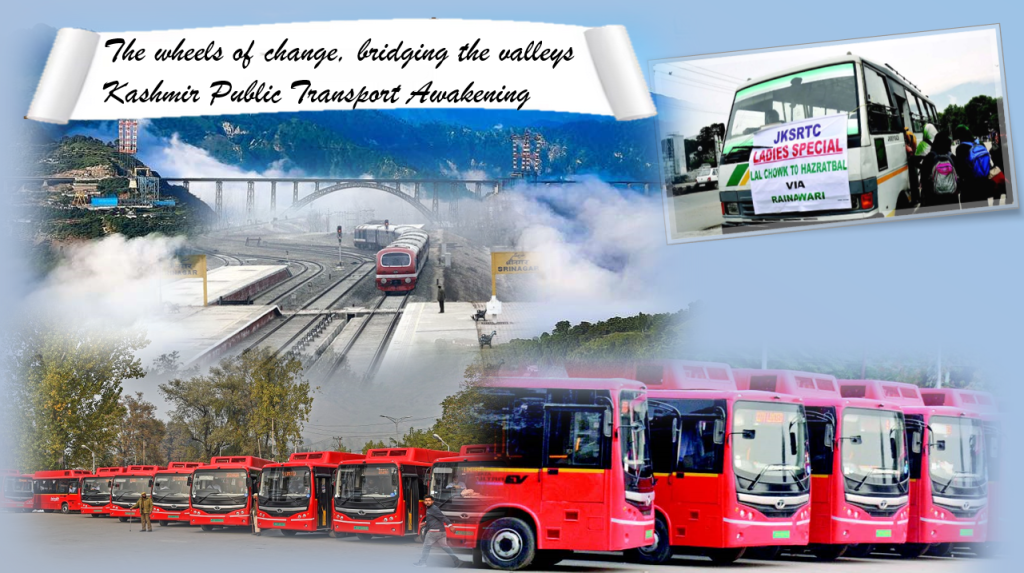
Public transport is the lifeblood of urban development, enhancing economic growth and social connectivity. World Public Transport Day, celebrated globally, highlights the pivotal role that efficient, accessible, and sustainable public transportation systems play in shaping societies. For regions like Kashmir, nestled in the northernmost part of India, the significance of public transport goes beyond just a daily commute. It represents a gateway to economic progress, social inclusivity, and cultural connectivity. The push for modernised transport infrastructure has grown substantially in recent years, bringing hope for a more interconnected and prosperous future for Jammu and Kashmir. This article delves into the potential impact of improved public transport systems, especially in light of projects like the Udhampur-Srinagar-Baramulla Rail Link and its promising future for the region.
Kashmir’s unique geographical position and mountainous terrain make access to efficient public transport crucial for its development. As the Union Territory of Jammu and Kashmir continues to grapple with socio-economic challenges, public transportation is essential in overcoming many of these hurdles. Reliable and accessible public transport reduces travel costs, connects people to jobs, enhances tourism, and opens new avenues for trade and commerce. In Kashmir, where public transportation heavily depends on road networks, introducing modern transport infrastructure, such as rail links, could revolutionise daily life. Buses, taxis, and shared vehicles dominate the roads, often leading to congestion, delays, and pollution. With the local economy primarily agriculture and tourism-driven, efficient public transport systems can connect rural producers with urban markets, attract tourists more effectively, and improve access to health care and educational services. World Public Transport Day serves as a reminder of the benefits of robust public transportation networks. In Kashmir, where transport infrastructure has historically lagged, the global push for sustainable public transport aligns perfectly with the local needs of the region. Investments in public transport would improve mobility and act as a catalyst for development, reducing economic inequalities and enhancing regional integration.
The ongoing Udhampur-Srinagar-Baramulla Rail Link project is a beacon of hope in Kashmir’s quest for connectivity. This ambitious railway line aims to link the Kashmir Valley with the rest of India, providing a direct and reliable transport link to the region’s key towns and cities. The project, nearing completion after several years of construction, with the final 17 km stretch between Katra and Reasi currently being built, holds the promise of a more connected future. Once completed, the USBRL will span over 272 km, connecting the town of Baramulla in northern Kashmir to Udhampur in Jammu via Srinagar, the region’s capital. The USBRL project is more than just a railway link; it symbolises integration. The project will transform the region’s public transport landscape forever by providing a year-round, all-weather connection between Kashmir and the rest of India. The rail link will enhance the movement of people and goods, making transportation faster, cheaper, and more reliable. One of the key beneficiaries of this project will be the tourism sector, which is the backbone of Kashmir’s economy. The rail link will make it easier for tourists from across India and beyond to visit the region, bolstering local businesses and the broader economy. The breathtaking landscapes of Kashmir, including its pristine lakes, meadows, and snow-clad mountains, will become more accessible, significantly boosting local hospitality, handicrafts, and other related industries. Moreover, the economic impact of this project will extend far beyond tourism. Farmers and traders in the region will gain better access to national markets, increasing revenue and reducing wastage of perishable goods like fruits, vegetables, and saffron. The rail link will reduce the dependence on road transport, which is often unreliable during harsh winters, thus improving overall economic resilience in the region.
The introduction of efficient public transport systems is known to have profound impacts on local economies. A robust public transport network can bridge the gap between isolated communities and financial opportunities in Kashmir, where connectivity issues have often hampered economic growth. By improving access to markets, jobs, and services, public transport can help alleviate poverty, especially in rural areas where employment opportunities are limited. Public transport is also a key driver of social inclusion. In Kashmir, where geographical isolation and socio-political instability have often resulted in social disparities, improved transport systems can help create a more connected and inclusive society. Access to affordable and efficient transport can enable students to pursue education, improve healthcare access, and foster stronger social ties among different communities. Public transport can be transformative for women in particular. In regions where women may face barriers to mobility due to safety concerns or cultural constraints, public transportation offers them the freedom to access education, employment, and healthcare services, thus promoting gender equality and empowerment. World Public Transport Day also underscores the environmental benefits of public transport. Sustainable public transport systems are critical in a region like Kashmir, blessed with immense natural beauty but vulnerable to ecological degradation. The shift towards eco-friendly transport modes like electric buses, clean-energy rail systems, and improved traffic management can reduce carbon emissions, limit deforestation, and mitigate the impact of air pollution. The USBRL project, in particular, promises to reduce the environmental impact of road-based transportation. By shifting freight and passenger traffic from road to rail, the project will help reduce the carbon footprint of the region’s transport sector. Rail transport is more energy-efficient and less polluting than road transport, making it a sustainable option for an area that relies heavily on tourism, which is inextricably linked to its natural environment.
As Kashmir gears up for a transport revolution, the way ahead presents opportunities and challenges. Completing the USBRL project will be a significant milestone, but complementary developments in other public transport areas must support it. Upgrading local bus services, investing in electric vehicles, and developing last-mile connectivity is essential to ensure that the benefits of public transport are felt across the entire region. Addressing the remaining infrastructural challenges is also necessary. Road maintenance, traffic management, and expanding transport services to remote areas must be prioritised. The government, both at the central and regional levels, should continue to invest in public transport projects that align with the region’s unique needs, ensuring that rural and urban areas are equally well-served. Furthermore, public awareness campaigns should be initiated to promote public transport over private vehicles, highlighting the cost, convenience, and environmental benefits. Encouraging public participation in the planning and execution of transport projects will also ensure that these developments are inclusive and cater to the needs of the local population. World Public Transport Day offers a moment to reflect on the transformative power of public transportation, particularly in a region like Kashmir, where connectivity is crucial to socio-economic progress. The nearing completion of the USBRL project marks a new chapter in Kashmir’s development, opening up opportunities for growth, tourism, and enhanced social connectivity. With sustained investment in public transport infrastructure, Kashmir stands on the brink of a new era where reliable and sustainable transport links will play a pivotal role in shaping the region’s future.


