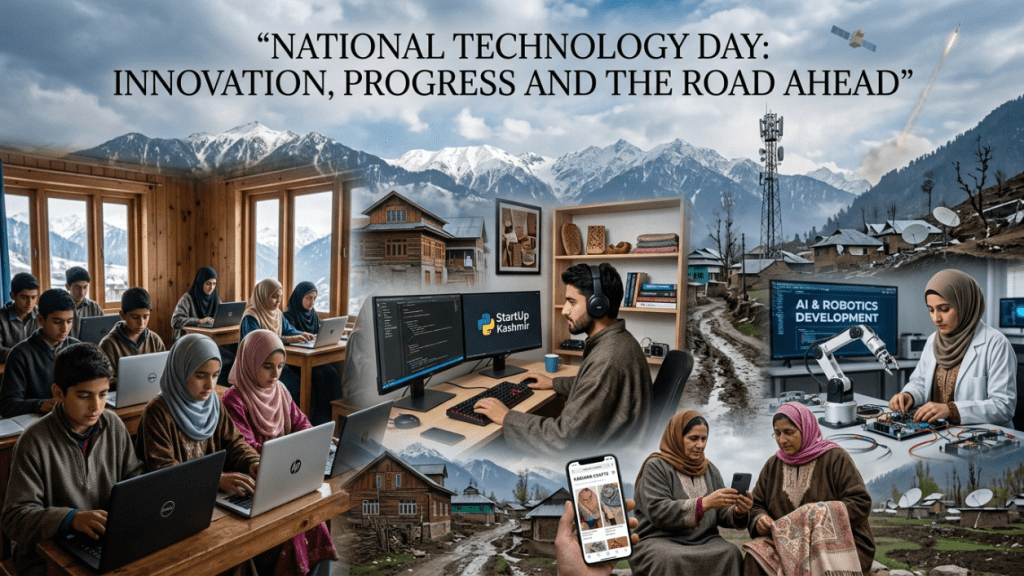
Every year on 11 May, India celebrates National Technology Day, a day that marks not just a historic scientific milestone but the country’s broader journey toward technological self-reliance and innovation. The significance of this date is rooted in the successful nuclear tests conducted in 1998 known as Pokhran-II, which demonstrated India’s growing capabilities in science and technology on the global stage. However, National Technology Day is not merely about remembering a single event. It is about recognizing the role technology plays in shaping a nation’s future—driving economic growth, improving quality of life and creating opportunities for millions. It is also a moment to reflect on how far India has come and how far it still needs to go, especially in ensuring that technological progress reaches every corner of society.
India’s path in science and technology has been one of steady determination. From limited resources in the early years after independence to becoming a global hub for information technology and space research, the transformation has been remarkable. Institutions like the Indian Space Research Organisation have placed India among the leading space-faring nations. Landmark achievements such as satellite launches, lunar missions and cost-effective space exploration have earned international recognition. Similarly, India’s IT sector has grown into a powerhouse, contributing significantly to the global digital economy. This journey reflects not only scientific excellence but also a spirit of innovation that continues to evolve. It highlights how investment in education, research and infrastructure can transform a nation’s capabilities over time.
Today, technology is deeply woven into the fabric of everyday life in India. From smartphones and high-speed internet to digital payments and online services, technological advancements have reshaped how people communicate, work and access essential services. Government initiatives aimed at digital transformation have played a crucial role in this shift. Access to online education, telemedicine and e-governance platforms has made services more accessible, efficient and transparent. For millions, technology has become a tool of empowerment—bridging gaps that once seemed insurmountable. Yet, this transformation is not uniform. While urban centres experience rapid technological integration, many rural and remote areas still struggle with limited access, highlighting an ongoing challenge.
One of the most promising aspects of India’s technological growth is the role of its youth. With a large and dynamic population, the country has become a fertile ground for startups, innovation and entrepreneurship. Young innovators are leveraging technology to solve real-world problems—developing apps, launching startups and creating solutions tailored to local needs. From fintech platforms to health-tech innovations, their contributions are reshaping industries and generating employment. Educational institutions and skill development programs have also begun to emphasize digital literacy and innovation, preparing the next generation to participate in a technology-driven world. However, the potential of youth can only be fully realized when opportunities are accessible to all, regardless of geography or background.
Despite significant progress, India’s technological landscape is marked by disparities. The digital divide between urban and rural areas, privileged and marginalized communities remains a pressing concern. Limited internet connectivity, lack of infrastructure and affordability issues continue to restrict access in many regions. This divide not only affects economic opportunities but also impacts education, healthcare and social mobility. Addressing these challenges requires a multi-dimensional approach: expanding infrastructure, promoting digital literacy and ensuring affordability. Technology, to be truly transformative, must be inclusive.
In Kashmir, the role of technology presents a complex picture. On one hand, the region is home to a talented and tech-savvy youth population eager to engage with the digital world. On the other hand, challenges related to infrastructure, connectivity and external disruptions often limit this potential. Access to stable internet is crucial for education, business and communication. For students, especially, digital platforms have become essential for learning. Interruptions in connectivity can significantly impact academic progress and access to information. Similarly, small businesses and entrepreneurs in Kashmir increasingly rely on technology to reach wider markets. E-commerce platforms offer artisans and traders an opportunity to showcase their products beyond local boundaries. However, inconsistent access to digital tools can hinder these efforts. Despite these constraints, there is a growing recognition of technology’s potential to transform the region. Initiatives aimed at improving digital infrastructure and promoting entrepreneurship could unlock new opportunities for growth and development.
Beyond economic growth, technology has the power to drive social change. In India, it has already begun to transform key sectors such as education and healthcare. Online education platforms have made learning more accessible, especially for students in remote areas. Telemedicine services allow patients to consult doctors without traveling long distances, improving healthcare access in underserved regions. For artisans and small-scale producers, digital platforms provide a means to connect directly with consumers, reducing dependence on intermediaries. This not only increases income but also preserves traditional skills by making them economically viable. These examples illustrate how technology, when applied thoughtfully, can address deep-rooted challenges and create more equitable systems.
The role of women in technology is gradually expanding in India. More women are entering fields such as engineering, IT and entrepreneurship, contributing to innovation and economic growth. Digital platforms have also opened new avenues for women to participate in the workforce, particularly through remote work and online businesses. In many cases, technology has enabled women to balance professional aspirations with personal responsibilities. However, challenges remain. Gender gaps in access to technology, education and opportunities continue to persist. Bridging these gaps is essential not only for gender equality but also for maximizing the country’s technological potential.
As India moves forward, emerging technologies such as artificial intelligence, machine learning and renewable energy solutions are set to play a crucial role in shaping the future. The focus is increasingly shifting toward innovation that is not only advanced but also sustainable and inclusive. Investments in research and development, along with policies that encourage innovation, will be key to maintaining momentum. Equally important is the need to ensure that technological growth benefits all sections of society. For regions like Kashmir, this future holds both promise and responsibility. Harnessing technology effectively could create new pathways for development, employment and social progress.
National Technology Day is more than a commemoration of past achievements—it is a reminder of the transformative power of innovation. It celebrates the scientists, engineers and thinkers who have shaped India’s technological landscape, while also highlighting the work that lies ahead. The true success of technology lies not just in breakthroughs and advancements, but in its ability to improve lives. For India, this means ensuring that progress is inclusive, reaching every region and every community. In places like Kashmir, where challenges and opportunities coexist, technology can serve as a bridge—connecting people to resources, knowledge and possibilities. But this requires sustained effort, investment and a commitment to equity. As the nation celebrates National Technology Day, it is worth reflecting not only on how far it has come but also on how it can ensure that the benefits of technology are shared by all. Only then can the promise of innovation truly be fulfilled.


