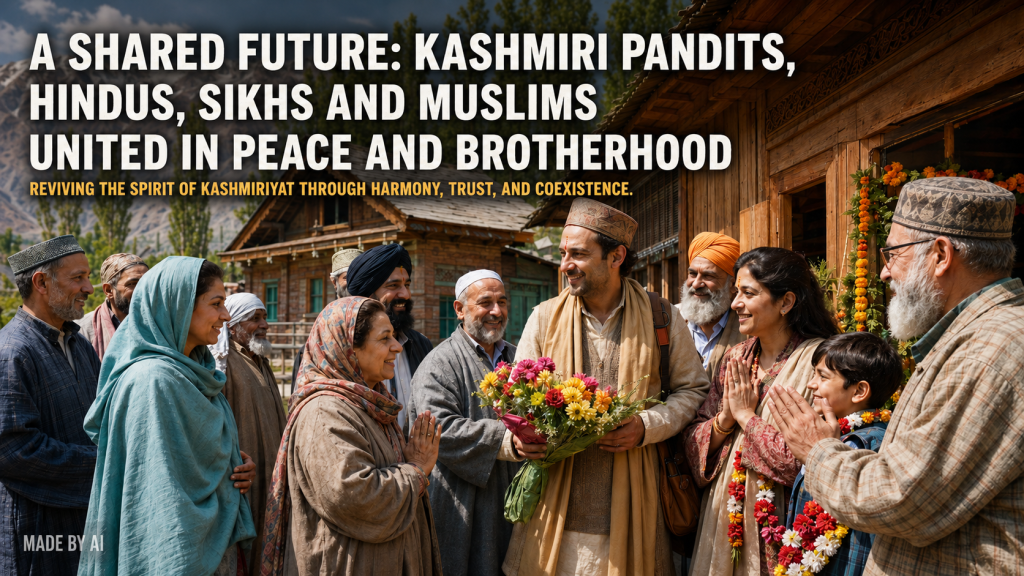
Farooq Abdullah’s recent remarks expressing hope for the return of Kashmiri Pandits to the Valley have once again highlighted an important aspect of Kashmir’s social fabric—the deep-rooted tradition of coexistence among its diverse communities. His statement reflects a vision of reconciliation, brotherhood, and collective progress, emphasizing that Kashmir’s future lies in rebuilding trust and strengthening the bonds that have historically connected its people. At a time when narratives of division often dominate public discourse, such messages serve as reminders of the Valley’s long-standing culture of mutual respect and shared heritage.
For centuries, Kashmir has been known for its unique tradition of communal harmony, often described as the spirit of Kashmiriyat. This ethos evolved through the contributions of saints, scholars, and spiritual leaders who promoted tolerance, compassion, and inclusivity. Kashmiri Pandits, Muslims, Sikhs, and other communities lived side by side, sharing not only neighborhoods and marketplaces but also cultural traditions, languages, festivals, and social values. Their interactions created a rich and vibrant society where diversity was viewed as a source of strength rather than division.
The history of Kashmir is filled with examples of inter-community cooperation and friendship. Families from different faiths participated in one another’s celebrations and stood together during times of hardship. Religious shrines and places of worship often became symbols of shared respect, attracting visitors from various communities. This tradition of coexistence fostered a sense of belonging that transcended religious identities and reinforced the idea that Kashmir belongs equally to all its people.
The displacement of Kashmiri Pandits during the turbulent years of militancy remains one of the most painful chapters in the region’s history. It resulted in the separation of families, the loss of ancestral homes, and emotional wounds that continue to be felt across generations. Yet, despite these challenges, the desire for reconciliation and reunion has remained alive among many Kashmiris. Across the Valley, there is a growing recognition that the return of Kashmiri Pandits is not merely about physical resettlement but about restoring an integral part of Kashmir’s cultural and social identity.
Today, there are encouraging signs that many people aspire to rebuild the bonds that once united their communities. Voices from different sections of society increasingly emphasize dialogue, understanding, and inclusiveness. The hope expressed by leaders and citizens alike reflects a shared belief that the future of Kashmir should be shaped by cooperation rather than conflict. The return of displaced families is often viewed as a step toward healing historical wounds and reaffirming the Valley’s pluralistic character.
Kashmiri Muslims, Pandits, and Sikhs share a common heritage that extends far beyond religious affiliations. They have contributed collectively to the region’s literature, art, education, spirituality, and cultural traditions. Their stories are interwoven with the history of Kashmir itself. Preserving this heritage requires recognizing the contributions of every community and ensuring that future generations grow up with an understanding of their shared past.
The Sikh community has also played a significant role in the social and cultural life of Jammu and Kashmir. Known for their spirit of service and resilience, Sikhs have contributed to education, agriculture, trade, and community welfare across the region. Their presence further enriches Kashmir’s multicultural identity and reinforces the message that diversity remains one of the Valley’s greatest strengths.
The path toward lasting peace and harmony depends on creating an environment where every community feels safe, respected, and valued. Building confidence requires sustained efforts from institutions, civil society, community leaders, and ordinary citizens. It involves fostering opportunities for interaction, encouraging dialogue, and promoting narratives that highlight shared aspirations rather than differences. Such efforts can help strengthen social cohesion and nurture a sense of collective responsibility for the future.
Kashmir’s younger generation has a particularly important role to play in this process. Many young people are increasingly focused on education, development, entrepreneurship, and building a better future. By embracing the principles of mutual respect and coexistence, they can help shape a society that moves beyond the divisions of the past and creates new opportunities for unity and progress. Their aspirations reflect a broader desire for stability, prosperity, and peace.
Farooq Abdullah’s statement resonates because it speaks to a vision that many Kashmiris share—a future where Kashmiri Pandits, Hindus, Sikhs, and Muslims live together in harmony, just as they did for generations. It reflects the belief that reconciliation is possible when communities choose dialogue over distrust and understanding over division. Such messages contribute to strengthening the narrative of peaceful coexistence and remind people that Kashmir’s true identity is rooted in inclusiveness, compassion, and shared humanity.
As Kashmir continues its journey toward peace and development, the ideals of brotherhood and unity remain more relevant than ever. The return of displaced communities, the preservation of shared cultural heritage, and the promotion of mutual respect can together help build a stronger and more inclusive society. The Valley’s history demonstrates that its people are capable of living together despite differences, and its future can be shaped by the same spirit. In that vision, Kashmiri Pandits, Hindus, Sikhs, and Muslims are not separate communities living alongside one another—they are equal stakeholders in a common future, united by their love for Kashmir and their hope for lasting peace and prosperity.


