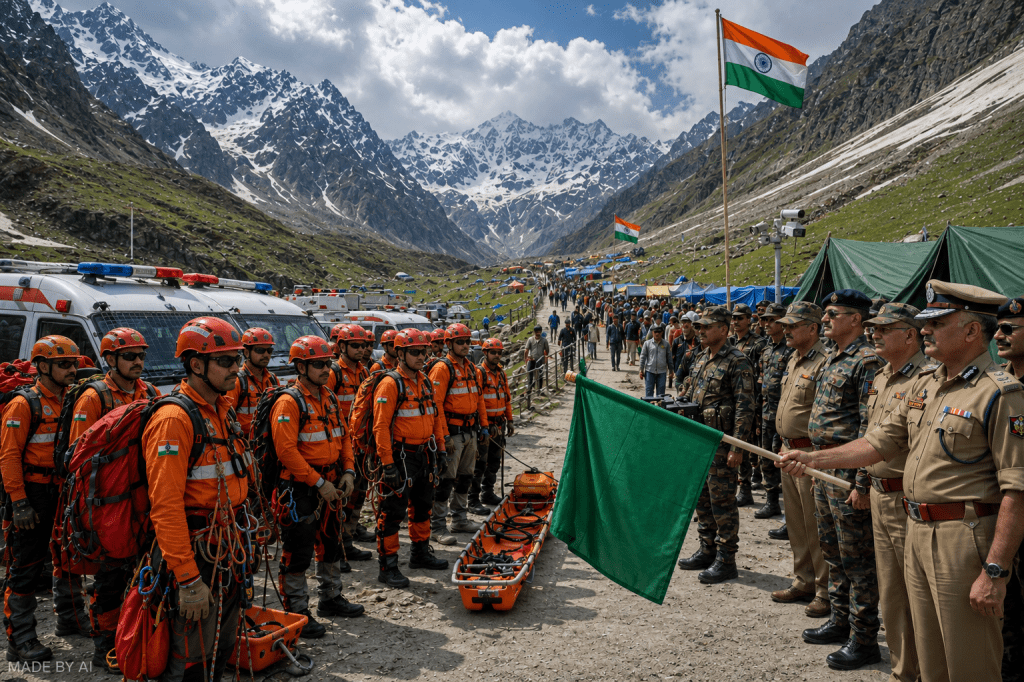
As preparations gather momentum for the annual Shri Amarnath Yatra 2026 authorities in Jammu and Kashmir have intensified efforts to ensure the safety and security of thousands of pilgrims expected to undertake the sacred journey. In a significant step toward strengthening emergency response capabilities Director General of Police (DGP) Nalin Prabhat flagged off 45 specialised Mountain Rescue Teams (MRTs) in Srinagar while the Indian Army conducted an extensive review of security arrangements along the pilgrimage routes.
The Shri Amarnath Yatra is one of the most revered religious pilgrimages in India attracting devotees from across the country and abroad. Every year pilgrims travel through challenging mountain terrain to reach the holy cave shrine situated at an altitude of over 12,000 feet in the Himalayas. The difficult geography unpredictable weather conditions and increasing number of pilgrims make safety and disaster preparedness a top priority for authorities.
To address these challenges the Jammu and Kashmir Police in coordination with disaster response agencies and the Indian Army have deployed specialised rescue personnel at critical points along both the traditional Pahalgam route and the shorter Baltal route. These teams are trained to respond swiftly during emergencies including landslides cloudbursts accidents and sudden weather-related incidents.
The 45 Mountain Rescue Teams have been strategically positioned at vulnerable locations along the pilgrimage corridor. Their presence is expected to significantly improve response times during emergencies and provide immediate assistance to stranded or injured pilgrims. Equipped with rescue gear communication equipment and medical support these teams will remain operational throughout the duration of the Yatra.
Speaking during the flag-off ceremony DGP highlighted the importance of preparedness in view of the growing risks associated with mountain travel. He noted that extreme weather events such as cloudbursts and heavy rainfall have become more frequent in recent years making rescue personnel an essential component of the Yatra management framework. He emphasized that the safety of pilgrims remains the highest priority for all agencies involved in the operation.
Apart from rescue preparedness security arrangements have also been significantly strengthened. The Indian Army in coordination with the Jammu and Kashmir Police Central Armed Police Forces and civil administration has undertaken a comprehensive review of security measures along the entire route. Senior military officers assessed deployment plans surveillance systems and communication networks to ensure seamless coordination among all agencies.
Security personnel have been deployed at key locations including transit camps base camps and high-altitude stretches of the pilgrimage route. Advanced monitoring systems regular patrols and area domination exercises are being carried out to maintain a secure environment. The objective is to provide pilgrims with a safe and peaceful atmosphere while ensuring that any potential threat is addressed proactively.
The Army continues to play a vital role in supporting the Yatra every year. Besides maintaining security troops provide medical assistance logistical support route maintenance and emergency evacuation services. In difficult terrain where weather conditions can change rapidly Army personnel often become the first responders during crises. Their contribution has been widely appreciated by pilgrims and local communities alike.
Civil administration departments have also stepped up preparations by improving infrastructure and public services. Temporary shelters medical camps sanitation facilities drinking water points and information centres are being established along the route. Healthcare teams equipped with emergency medicines and life-saving equipment will remain available around the clock to assist pilgrims facing health-related issues.
Weather monitoring has emerged as another important aspect of Yatra planning. Authorities are using modern forecasting systems to track changing weather conditions and issue timely advisories. Pilgrims are being encouraged to follow official guidelines carry essential supplies and remain informed about weather updates before undertaking the journey.
Local residents and volunteers have also joined efforts to make the pilgrimage successful. Community participation has long been a defining feature of the Amarnath Yatra with local people extending hospitality and assistance to visiting devotees. Their cooperation strengthens the overall support system and contributes to the smooth conduct of the pilgrimage.
The deployment of specialised rescue teams and the review of security arrangements reflect a coordinated approach aimed at ensuring a safe and well-managed Yatra. By combining advanced preparedness measures with strong inter-agency cooperation authorities are working to minimize risks and enhance the overall experience of pilgrims.
As the commencement of Shri Amarnath Yatra 2026 draws near confidence is growing that comprehensive security coverage effective disaster response mechanisms and dedicated service by the Army police and civil administration will help ensure the successful completion of this sacred journey. For thousands of devotees preparing to undertake the pilgrimage these arrangements offer reassurance that their spiritual quest will be supported by a robust framework of safety care and protection.


