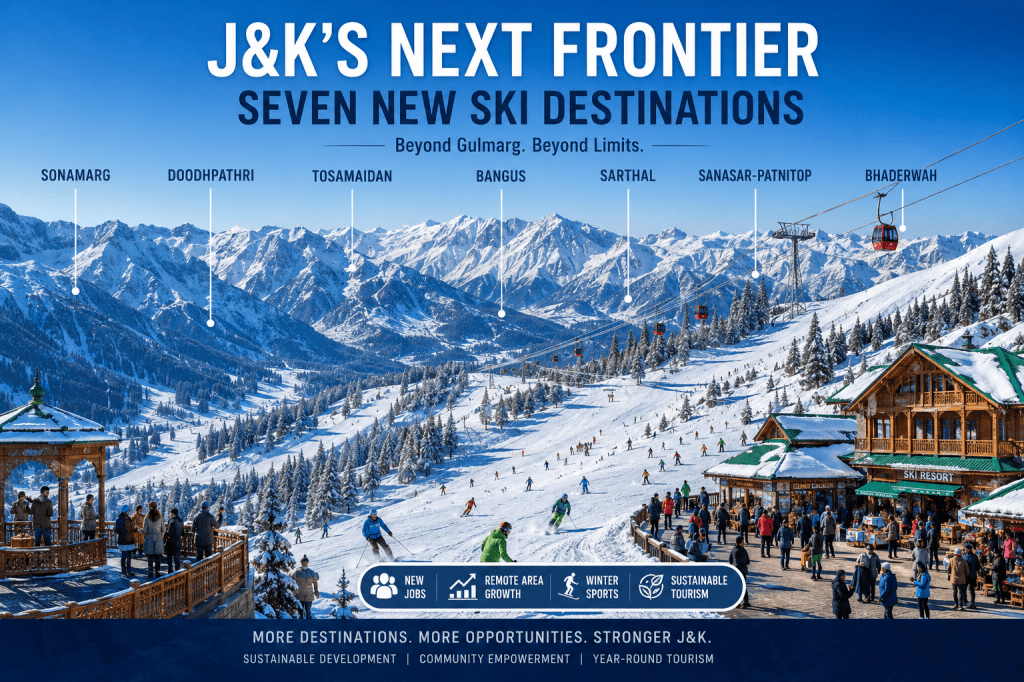
The Union Territory of Jammu and Kashmir is preparing for a major expansion of its winter tourism sector with plans to develop seven new ski destinations beyond the internationally known resort of Gulmarg. This initiative reflects the government’s broader vision of diversifying tourism opportunities across the region while promoting economic growth in remote and underserved areas. By identifying new locations for winter sports and adventure tourism the administration aims to strengthen Jammu and Kashmir’s position as one of India’s leading winter tourism destinations.
For decades Gulmarg has remained the centerpiece of winter tourism in Jammu and Kashmir attracting thousands of domestic and international visitors each year. Its world-class skiing facilities breathtaking landscapes and modern infrastructure have made it a preferred destination for adventure enthusiasts. However the increasing popularity of Gulmarg has also brought challenges such as overcrowding pressure on local resources and limited opportunities for other regions to benefit from tourism-related development.
To address these concerns authorities have identified seven potential locations for the development of new ski destinations. These include Sonamarg Doodhpathri Tosamaidan Bangus Sarthal Sanasar-Patnitop and Bhaderwah. Each of these locations possesses unique geographical features natural beauty and climatic conditions that make them suitable for winter sports and recreational activities.
The development process is being supported by feasibility studies being conducted by the Cable Car Corporation. These studies are aimed at assessing the suitability of each location for ski infrastructure and tourism facilities. Experts are evaluating factors such as snowfall patterns terrain accessibility environmental sustainability and the potential for economic benefits. The findings will help determine the most effective strategies for transforming these sites into attractive winter tourism destinations.
One of the key objectives of the initiative is to generate employment opportunities for local communities. Tourism has long been recognized as a major contributor to economic development in Jammu and Kashmir. The establishment of new ski destinations is expected to create jobs in sectors such as hospitality transportation adventure sports guiding and local handicrafts. Increased tourist footfall can also provide a significant boost to small businesses including restaurants guest houses and retail establishments.
The initiative is particularly important for remote regions that have historically received limited tourism investment. By expanding tourism infrastructure beyond traditional destinations the government seeks to ensure more balanced regional development. Communities located near the proposed ski sites could experience improved connectivity enhanced public services and greater economic participation. Such developments have the potential to improve living standards and reduce migration from rural areas in search of employment.
Environmental sustainability is another important aspect of the proposed expansion. Authorities are expected to adopt responsible development practices that minimize ecological impact while preserving the natural beauty of these locations. Sustainable tourism models can help protect fragile mountain ecosystems while allowing visitors to enjoy outdoor recreation activities. Careful planning and environmental assessments will be essential to ensuring long-term success.
The diversification of tourism offerings is likely to enhance Jammu and Kashmir’s appeal among a broader range of travelers. While Gulmarg will continue to attract skiing enthusiasts the new destinations can offer varied experiences including snowboarding trekking nature exploration and cultural tourism. This variety can encourage longer visitor stays and increase overall tourism revenue.
Among the proposed locations Sonamarg and Doodhpathri are already well known for their scenic landscapes and tourism potential. Bangus Valley is gaining recognition for its pristine meadows and untouched natural environment. Bhaderwah often referred to as the “Mini Kashmir” of Jammu offers immense possibilities for adventure tourism. Similarly Tosamaidan Sarthal and Sanasar-Patnitop possess significant untapped potential that could be harnessed through planned development and investment.
The move also aligns with broader efforts to position Jammu and Kashmir as a year-round tourism destination. While summer tourism remains strong winter tourism presents an opportunity to attract visitors during a traditionally quieter season. The creation of multiple ski destinations can help distribute tourist traffic more evenly across the region and throughout the year.
As feasibility studies progress stakeholders remain optimistic about the transformative impact of the project. The development of seven new ski destinations has the potential to redefine winter tourism in Jammu and Kashmir by creating new opportunities for economic growth employment generation and regional development. If implemented effectively the initiative could mark a significant milestone in the region’s tourism journey and establish Jammu and Kashmir as the next frontier of winter sports tourism in India.


