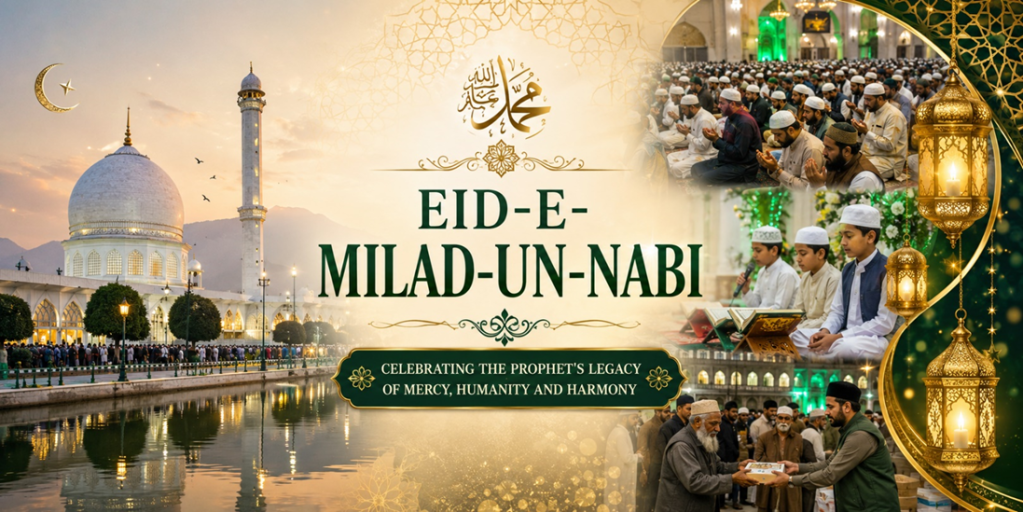
Milad-un-Nabi is also known as Eid-e-Milad-un-Nabi. Every year millions of Muslims around the world celebrate this day to commemorate the birth of Prophet Muhammad (peace and blessings be upon him). It is a time to remember the timeless values of compassion, justice, humility and service to humanity, that the Prophet exemplified in his life, beyond the day and more than a day of festivity. Milad-un-Nabi holds a special place in the hearts of people of Kashmir where faith and spirituality have historically shaped the social fabric. Mosques and shrines are filled with prayers, recitations of the Holy Qur’an, gatherings devoted to the Seerah (life of the Prophet) and acts of charity that are a true reflection of the essence of the occasion. It is a reminder that the day is only possible through the acceptance of the values of kindness, mutual respect and humanity that Prophet Muhammad taught more than fourteen centuries ago for sustainable peace and harmony.
The Prophet Muhammad was born in the holy city of Makkah in the Year of the Elephant, around 570 CE. In an era when society was severely polarised by tribal wars, injustice and inequality, Allah selected him to lead humanity to truth, compassion and righteousness. His message changed communities, urging people to be equal, regardless of wealth, race or status, and setting out principles of justice, honesty and mercy. He is described in the Holy Qur’an as “Rahmat-ul-lil-Alameen” – a mercy for all creation. This description reveals the universal aspect of his mission, which transcended any particular community and emphasised respect, forgiveness, coexistence and care for every human being. His life continues to inspire billions of people around the world, not only by religious teachings, but by his remarkable example of moral character and selfless service.
One of the greatest lessons from the life of Prophet Muhammad (peace be upon him) is that good character is manifested by true faith. He taught that helping the poor, respecting parents, caring for neighbours, protecting the rights of women and children, speaking the truth and fulfilling promises are the essential qualities of a believer. He urged people to seek knowledge, to promote justice, and to resolve conflicts through wisdom and patience rather than hatred and violence. His compassion was for all, including the weak, the orphaned, travellers, the elderly and even animals. He constantly reminded his followers that the strongest person is not the one who overpowers others, but the one who controls anger and forgives when possible. These teachings remain extremely relevant in today’s world where societies continue to grapple with issues of intolerance, misinformation and division. His message reminds us that peace begins with individual character and that lasting social harmony can only be built on justice, empathy and mutual respect.
In Kashmir, Milad-un-Nabi is observed with great devotion and spiritual fervour. The Hazratbal shrine in Srinagar is a revered place and attracts thousands of devotees offering prayers and taking part in religious programs. Mosques in town after town and village after village hold Qur’an recitations, Seerah conferences, Naat recitals and talks on the life and teachings of the Holy Prophet. Homes and religious places are decorated and charitable activities such as distribution of food and helping the underprivileged and supporting those in need become an important part of the celebrations. Families gather in prayer and communities strengthen bonds of brotherhood with acts of kindness and generosity. The occasion is also a manifestation of the rich spiritual heritage of Kashmir, where respect for elders, hospitality, compassion and service to society have been cherished values since times immemorial. For many young people, Milad-un-Nabi is a time to reconnect with these traditions and understand that true devotion isn’t just about celebration, but in emulating the Prophet’s exemplary character in daily life.
The message of Milad-un-Nabi is very relevant for the present world. In an age where conflict, intolerance and social divisions continue to plague many societies, the teachings of the Prophet Muhammad point to a way forward based on dialogue, understanding and peaceful coexistence. He spurs youth to seek knowledge with honour and direction through his advocacy for education and challenges communities to uphold the dignity and rights of all people with his tenets of justice. His advice about telling the truth, not slandering and respecting others is more relevant than ever in this age of social media and instant communication. These values provide a strong moral foundation for building a brighter future for generations in Kashmir who aspire to progress, stability and harmony. They call on citizens to replace hatred with understanding, selfishness with service, and division with unity.
Thus, Milad-un-Nabi is not only a religious celebration, but it is also a celebration of universal values that continue to guide mankind from generation to generation. It is a reminder that honour is the honour of service, of compassion for those in need, of living with honesty and humility. As the Valley moves on the path of peace, development and social harmony, the timeless teachings of Prophet Muhammad remains a potent source of inspiration for people of all ages. The real tribute to the Prophet is not just in celebrating his birthday, but in reflecting his noble character in our words, deeds and relationships. By accepting his timeless message of mercy, justice, compassion and unity, each and every individual can do his or her part in building a more peaceful, inclusive and harmonious society.


