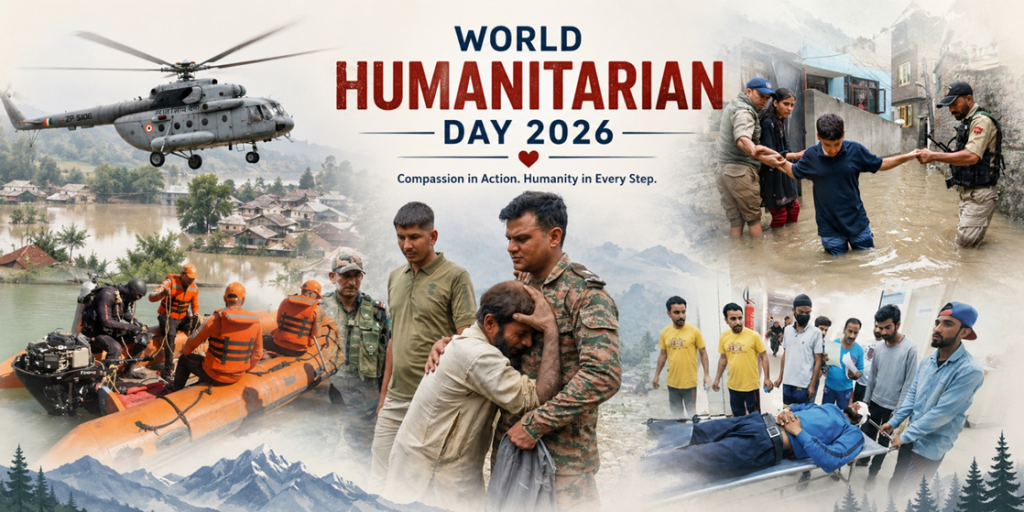
Every year on 19 August, the world comes together to observe World Humanitarian Day, a global occasion dedicated to recognising the courage, compassion and unwavering commitment of humanitarian workers who serve communities affected by conflict, natural disasters, health emergencies and other humanitarian crises. While many national and international observances celebrate historical milestones or cultural achievements, World Humanitarian Day honours something even more fundamental, the universal value of humanity itself. It reminds us that irrespective of nationality, religion, language or geography, every human life carries equal dignity and deserves protection during times of hardship. The day pays tribute not only to professional aid workers but also to doctors, nurses, rescue personnel, volunteers, community leaders and ordinary citizens whose selfless actions bring hope where despair threatens to prevail. In a world increasingly challenged by climate change, disasters and humanitarian emergencies, this observance has become more relevant than ever, inspiring governments, institutions and individuals to strengthen their commitment towards protecting lives and supporting vulnerable communities.
The origins of World Humanitarian Day lie in one of the darkest moments in the history of global humanitarian service. On 19 August 2003, the United Nations headquarters in Baghdad, Iraq, was struck by a devastating bomb attack that claimed the lives of 22 humanitarian workers, including Sérgio Vieira de Mello, one of the UN’s most respected diplomats and humanitarian leaders. The tragedy shocked the international community and underscored the immense risks faced by aid workers who willingly serve in dangerous environments to assist people affected by conflict and crisis. In recognition of their sacrifice and the indispensable role played by humanitarian personnel across the globe, the United Nations General Assembly formally designated 19 August as World Humanitarian Day in 2008. Since then, the day has evolved into a worldwide campaign celebrating courage, compassion and solidarity, while drawing attention to millions of people who continue to depend on humanitarian assistance for survival. More importantly, it serves as a reminder that humanitarian work extends beyond emergency relief. It is about restoring dignity, protecting lives and helping communities recover with hope and resilience.
Few regions illustrate the importance of humanitarian action as vividly as Jammu and Kashmir. Renowned across the world for its snow-covered mountains, crystal-clear lakes, lush meadows and timeless cultural heritage, Kashmir is equally defined by its challenging geography and unpredictable climate. Towering mountain ranges, deep valleys and remote habitations make everyday life difficult for thousands of people living in far-flung areas. During winter, heavy snowfall frequently blocks roads and isolates entire villages from essential services. Avalanches, landslides, flash floods and cloudbursts remain recurring threats while the region’s rugged terrain often complicates rescue operations and emergency medical assistance. For many communities, humanitarian support is not an occasional intervention but an essential lifeline that bridges the gap between isolation and safety. Every emergency highlights the importance of preparedness, coordination and rapid response, demonstrating that resilience depends not only on infrastructure but also on the willingness of institutions and communities to stand together during moments of crisis.
Humanitarian service in Kashmir goes far beyond the traditional understanding of disaster relief. It encompasses every effort made to preserve life, reduce suffering and help communities recover from adversity. It includes rescuing stranded families from floodwaters, evacuating critically ill patients from snowbound villages, delivering medicines to remote habitations, restoring road connectivity after landslides, providing emergency healthcare through medical camps and ensuring that essential supplies reach communities cut off by severe weather. Humanitarian action also involves supporting children whose education is disrupted by disasters, helping vulnerable families rebuild their homes and livelihoods and creating awareness about disaster preparedness to minimise future risks. At its heart lies a simple yet profound principle that every person deserves assistance in times of need, irrespective of social, economic or geographical differences. In Kashmir, where nature often tests human endurance, humanitarian service has become an enduring expression of compassion, resilience and collective responsibility.
The Valley has witnessed several humanitarian challenges that have tested the resilience of both institutions and ordinary citizens. Among them, the 2014 Kashmir floods remain one of the most devastating natural disasters in the region’s recent history. Days of incessant rainfall caused rivers and streams to overflow, inundating vast areas of Srinagar and several districts across the Valley. Thousands of families were displaced, homes and businesses were submerged, hospitals and schools suffered extensive damage and vital communication networks collapsed. Yet, amid widespread devastation emerged extraordinary stories of courage and compassion. Rescue teams navigated flooded neighbourhoods in boats to evacuate stranded families, helicopters airlifted elderly people, children and patients requiring urgent medical care, while relief camps provided food, shelter, medicines and essential supplies to those who had lost everything. Equally inspiring was the response from local communities where neighbours rescued neighbours, volunteers distributed relief material, young people organised food drives and countless citizens opened their homes to families seeking refuge. The floods demonstrated that effective humanitarian response depends not merely on resources but on the ability of institutions and communities to work together with determination and empathy.
The lessons learned from the 2014 floods have significantly influenced disaster preparedness and humanitarian response across Jammu and Kashmir. Over the years, greater emphasis has been placed on strengthening coordination among emergency services, improving early warning mechanisms, enhancing communication systems and expanding disaster management capabilities. Awareness programmes conducted in educational institutions and communities have encouraged people to understand emergency procedures while advances in technology have enabled quicker dissemination of weather alerts and rescue information. Despite these improvements, Kashmir continues to face recurring humanitarian challenges every winter and during periods of extreme weather. Remote villages still experience temporary isolation due to heavy snowfall, mountainous roads remain vulnerable to landslides and emergency healthcare in inaccessible areas continues to demand innovative solutions and rapid mobilisation. These realities make humanitarian preparedness an ongoing responsibility rather than a seasonal exercise. They also reinforce an important truth: in Kashmir, humanitarian action is not simply about responding to disasters after they occur, it is about building resilience before they happen and ensuring that every community has the confidence that help will arrive when it is needed most.
Among the institutions that have consistently stood at the forefront of humanitarian assistance in Jammu and Kashmir, the Indian Army has played a particularly significant role. While its primary responsibility is to safeguard the nation’s borders and ensure national security, the Army has, over decades, become an indispensable humanitarian responder in region’s most challenging circumstances. Operating in one of the world’s most demanding terrains, soldiers are often the first to reach remote locations affected by avalanches, landslides, heavy snowfall and flash floods where conventional rescue agencies may require additional time to mobilise. Whether evacuating stranded civilians, rescuing tourists trapped in snow-covered mountain passes, transporting critically ill patients from isolated villages or restoring road connectivity after severe weather, Army personnel have repeatedly demonstrated that service extends beyond military duties. Their engineering units help clear blocked roads and repair damaged infrastructure while specialised rescue teams undertake operations in high-altitude areas where extreme weather and difficult terrain make every mission exceptionally challenging. Equipped with logistical capabilities, communication networks and years of experience in mountain operations, the Indian Army has become a reassuring presence for thousands of people living in remote parts of Kashmir where timely assistance can often mean the difference between life and death.
Beyond emergency rescue operations, the humanitarian contribution of the Indian Army has also been reflected through numerous community outreach initiatives aimed at improving the quality of life in remote and underserved regions. Under various civic action and welfare programmes, the Army has organised medical and veterinary camps, facilitated healthcare services in villages with limited medical infrastructure and supported educational initiatives for children living in border and far-flung areas. Awareness campaigns on hygiene, health and disaster preparedness have helped strengthen community resilience while skill development programmes and youth engagement activities have created opportunities for young people to acquire knowledge and confidence. During periods of harsh winter, Army units have frequently assisted local administrations in restoring connectivity, supplying essential commodities and supporting emergency evacuations. Such efforts highlight an important dimension of humanitarian service that protecting lives also involves creating conditions in which communities can recover, rebuild and move forward with dignity. These initiatives have reinforced the understanding that humanitarian action is not confined to moments of disaster but also includes sustained engagement that improves people’s lives long after an emergency has passed.
The humanitarian ecosystem of Kashmir, however, is built upon the coordinated efforts of numerous institutions working together with a shared objective of safeguarding human life. The National Disaster Response Force (NDRF) has emerged as one of India’s premier disaster management agencies, equipped with specialised rescue teams trained to respond to floods, earthquakes, landslides, building collapses and other emergencies. Its personnel regularly conduct search-and-rescue operations, provide technical assistance during disasters and train local communities in disaster preparedness. Complementing these efforts is the State Disaster Response Force (SDRF) whose familiarity with Kashmir’s terrain enables rapid deployment during emergencies across the Union Territory. Whether responding to flash floods, rescuing people trapped in swollen rivers or assisting during snow-related incidents, SDRF teams have repeatedly demonstrated professionalism and courage under demanding conditions. The close coordination between the NDRF, SDRF and district administrations has significantly strengthened the region’s disaster response capacity, ensuring that humanitarian assistance reaches affected communities quickly and efficiently.
The Jammu and Kashmir Police also play an indispensable humanitarian role that often extends far beyond conventional law enforcement. During road accidents on mountainous highways, floods, landslides, snowstorms and other emergencies, police personnel are frequently among the first responders to reach the affected location. They assist in evacuating civilians, regulating traffic to facilitate rescue operations, coordinating with emergency services and maintaining public order during situations of uncertainty. Their familiarity with local communities enables them to mobilise resources quickly and provide immediate assistance while specialised rescue agencies are deployed. Alongside the police, the Health and Medical Education Department continues to serve as the backbone of humanitarian healthcare across the region. Doctors, nurses, paramedics and ambulance personnel often work under difficult circumstances to provide emergency treatment, stabilise critically injured patients and organise medical camps in areas where access to healthcare remains limited. During disease outbreaks, seasonal emergencies and natural disasters, healthcare workers have displayed remarkable commitment by serving tirelessly despite long working hours and difficult conditions. Their efforts remind us that humanitarian service is as much about healing as it is about rescue.
Another institution whose humanitarian contribution deserves special recognition is the Indian Air Force (IAF). Kashmir’s rugged topography often makes air support the fastest and sometimes the only means of reaching isolated communities during emergencies. Through helicopters and transport aircraft, the IAF has carried out numerous medical evacuations, airlifted stranded civilians, delivered food, medicines and relief supplies to snowbound regions and supported rescue operations during floods and natural disasters. During severe weather events, when roads become impassable and communication links are disrupted, aerial assistance has repeatedly proven critical in saving lives and ensuring continuity of relief operations. Similarly, the Jammu and Kashmir Fire and Emergency Services have expanded their role far beyond firefighting, responding to building collapses, accident rescues, flood emergencies and urban disasters with professionalism and dedication. Together, these organisations strengthen the humanitarian response framework by ensuring that specialised assistance remains available across a wide range of emergencies.
While institutional capacity is essential, humanitarian response in Kashmir is equally strengthened by the extraordinary contribution of civil society organisations, charitable institutions and ordinary citizens. The Indian Red Cross Society, local non-governmental organisations, youth clubs, social welfare groups and volunteer networks have consistently complemented official relief efforts by organising blood donation camps, distributing food, blankets and medicines, supporting displaced families and assisting in rehabilitation activities. During emergencies, community volunteers often become the first line of support, helping rescue stranded neighbours, preparing community kitchens, arranging temporary shelters and collecting relief material for vulnerable families. Students, teachers, religious organisations and local residents have repeatedly demonstrated that compassion can mobilise communities as effectively as any formal institution. The willingness of ordinary people to step forward without expecting recognition reflects the deepest meaning of humanitarian service. It is this partnership between dedicated institutions and compassionate citizens that has enabled Kashmir to confront repeated challenges with resilience, solidarity and hope.
The true measure of humanitarian service is not found only in large-scale disaster response but also in the countless acts of courage performed every day, often away from the public eye. In Kashmir, such examples have become a recurring part of life. Every winter, when heavy snowfall cuts off remote villages in Gurez, Karnah, Machil, Tangdhar and other high-altitude areas, rescue teams brave freezing temperatures to restore road connectivity and deliver essential supplies. Helicopters are deployed to evacuate critically ill patients when roads become impassable while emergency medical teams travel long distances to ensure that those living in isolated regions receive timely treatment. During the annual Shri Amarnath Ji Yatra, thousands of security personnel, medical teams, disaster response units and volunteers work together to provide healthcare, rescue assistance and logistical support to pilgrims navigating one of the country’s most demanding mountain routes. Their preparedness extends beyond ensuring a smooth pilgrimage; they remain ready to respond to sudden weather changes, landslides and medical emergencies that can arise at any moment. Likewise, during the COVID-19 pandemic, humanitarian service assumed an entirely new dimension as doctors, nurses, ambulance drivers, sanitation workers, police personnel, volunteers and members of the armed forces worked relentlessly to maintain essential services, transport medical supplies, establish awareness campaigns and assist vulnerable communities. These examples demonstrate that humanitarian action is not defined by a single event but by an enduring commitment to protecting lives whenever and wherever help is required.
Looking ahead, humanitarian preparedness in Kashmir will become increasingly important as climate change continues to influence the fragile Himalayan ecosystem. Scientists have observed changing weather patterns, erratic rainfall, glacial retreat and a growing frequency of extreme weather events that may increase the risk of floods, cloudbursts, landslides and avalanches. Such challenges demand a proactive approach that combines modern technology, scientific planning and community participation. Strengthening early warning systems, expanding disaster-resilient infrastructure, improving emergency healthcare in remote areas and enhancing communication networks must remain key priorities. Equally important is investing in public awareness so that citizens understand disaster preparedness, first aid and emergency response procedures before crises occur. Educational institutions, local administrations, research organisations and civil society all have an important role in building a culture of preparedness. The integration of satellite-based weather forecasting, drone technology, digital mapping and real-time communication can further improve rescue operations and minimise loss of life. However, even the most advanced technology cannot replace the value of human compassion. Effective humanitarian response ultimately depends on trust, cooperation and the willingness of people to help one another during moments of adversity.
World Humanitarian Day therefore serves as more than an annual observance. It is a powerful reminder that humanity flourishes when individuals and institutions place the welfare of others above personal comfort or recognition. In Jammu and Kashmir, this spirit is reflected in the unwavering dedication of the Indian Army, Indian Air Force, National Disaster Response Force, State Disaster Response Force, Jammu and Kashmir Police, Fire and Emergency Services, Health and Medical Education Department, civil administration, humanitarian organisations, volunteers and countless ordinary citizens who continue to respond whenever lives are threatened. Their collective efforts illustrate that humanitarian service is not confined to one profession, one uniform or one organisation; it is a shared responsibility that unites people through compassion, courage and a commitment to human dignity. Every rescued child, every evacuated patient, every family reunited after a disaster and every village reconnected after days of isolation stands as a testament to the strength of this collective spirit.
As the world observes World Humanitarian Day 2026, Kashmir offers a compelling example of resilience born from cooperation. The Valley’s history has shown that while disasters may test the endurance of its people, they have also revealed an extraordinary capacity for solidarity and selfless service. From uniformed personnel risking their lives in treacherous terrain to healthcare professionals working through sleepless nights, from disaster response teams navigating flooded streets to local volunteers sharing food, shelter and hope with complete strangers, every humanitarian effort reinforces a timeless truth that the greatest strength of any society lies in its humanity. Challenges will continue to emerge whether from nature or changing global realities but as long as compassion remains stronger than fear and service remains greater than self-interest, Kashmir will continue to overcome adversity with dignity and determination. On this World Humanitarian Day, the greatest tribute we can pay to humanitarian workers is not merely to acknowledge their sacrifices but to embrace their values by building communities where empathy, cooperation and service remain at the heart of progress. For in the end, the noblest achievement of any society is not measured by its monuments or its wealth’s but by the compassion it extends to those who need it most.


