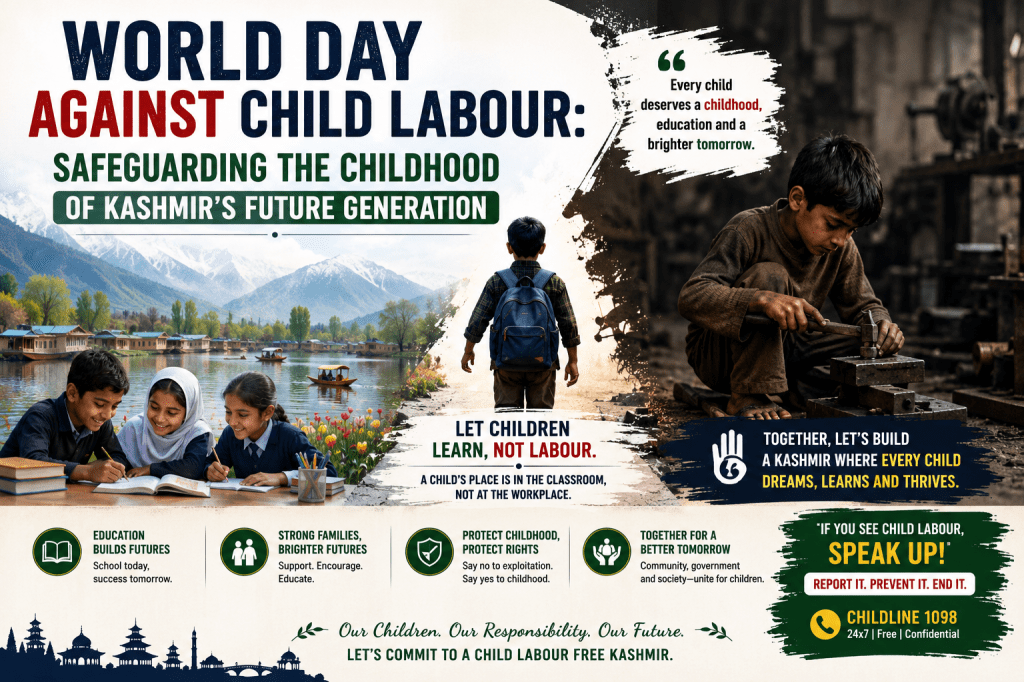
Every year on 12 June, the world observes the World Day Against Child Labour to raise awareness about the millions of children who are deprived of their childhood and forced into work at an age when they should be learning, playing and growing. The day serves as a reminder that every child has the right to education, protection and opportunities that allow them to reach their full potential. While significant progress has been made across the globe in reducing child labour, the challenge continues to persist in many regions, including parts of Jammu and Kashmir where economic and social circumstances often place children in vulnerable situations.
Child labour is not simply about children helping their families with household responsibilities. It refers to work that deprives children of their childhood, interferes with their education and negatively affects their physical, mental or emotional development. When children are compelled to spend long hours earning a livelihood instead of attending school, they lose valuable opportunities that are essential for building a better future.
Kashmir has long been known for its rich cultural heritage, breathtaking landscapes, and resilient people. However, like many developing regions, it also faces socio-economic challenges that can contribute to child labour. Financial hardships, unemployment and limited economic opportunities sometimes force families to rely on additional sources of income. In such situations, children may be pushed into informal work environments to support their households.
In some areas, children can occasionally be seen assisting in roadside shops, workshops, eateries, agricultural activities or small family-run businesses. While not all such work falls under the category of child labour, concerns arise when these activities prevent children from attending school regularly or expose them to unsafe and exploitative conditions. The problem is often hidden and underreported, making it difficult to assess its true extent.
Education remains one of the strongest tools for breaking the cycle of poverty and preventing child labour. Over the years, Jammu and Kashmir has witnessed considerable improvements in educational infrastructure, literacy initiatives and school enrollment. Yet, challenges such as economic instability, family responsibilities and occasional disruptions in schooling can still affect children’s access to uninterrupted education. Every child who drops out of school becomes more vulnerable to entering the workforce prematurely, limiting their future prospects.
The consequences of child labour extend far beyond the individual child. When children are denied education and skill development opportunities, society loses valuable human capital. A child who spends his or her formative years working instead of learning is less likely to secure stable employment in adulthood. This perpetuates a cycle of poverty that can continue across generations. For a region like Kashmir, where the aspirations of young people play a crucial role in social and economic development, protecting childhood is an investment in long-term progress.
Child labour also has serious implications for physical and mental well-being. Long working hours, unsafe environments and excessive responsibilities can place immense pressure on children. They may suffer from health problems, emotional stress and a loss of self-confidence. Most importantly, they miss out on the joys and experiences that define a healthy childhood. Every child deserves the chance to dream, explore talents, build friendships and receive quality education without the burden of adult responsibilities.
Efforts to combat child labour require the collective participation of government institutions, schools, civil society organisations, community leaders and families. Various welfare schemes, educational programmes and awareness campaigns have been introduced to encourage school attendance and support economically weaker families. However, laws and policies alone cannot eliminate the problem. Community awareness and social responsibility are equally important in identifying vulnerable children and ensuring that they receive the support they need.
Parents and guardians must be encouraged to view education as the most valuable investment in their children’s future. Schools should continue creating inclusive and supportive learning environments that motivate children to stay enrolled. Local communities can play a vital role by reporting instances of exploitation and supporting initiatives aimed at child welfare and education.
On this World Day Against Child Labour, the message is clear: no child should have to sacrifice education, safety or happiness for survival. The future of Kashmir lies in its young generation and every effort must be made to protect their rights and nurture their potential. By ensuring that children are in classrooms rather than workplaces, we can build a stronger, more prosperous and more compassionate society. Childhood is a precious phase of life that should be filled with learning, hope and opportunity—not labour. Protecting it is not only a moral responsibility but also a commitment to the future of Kashmir.


