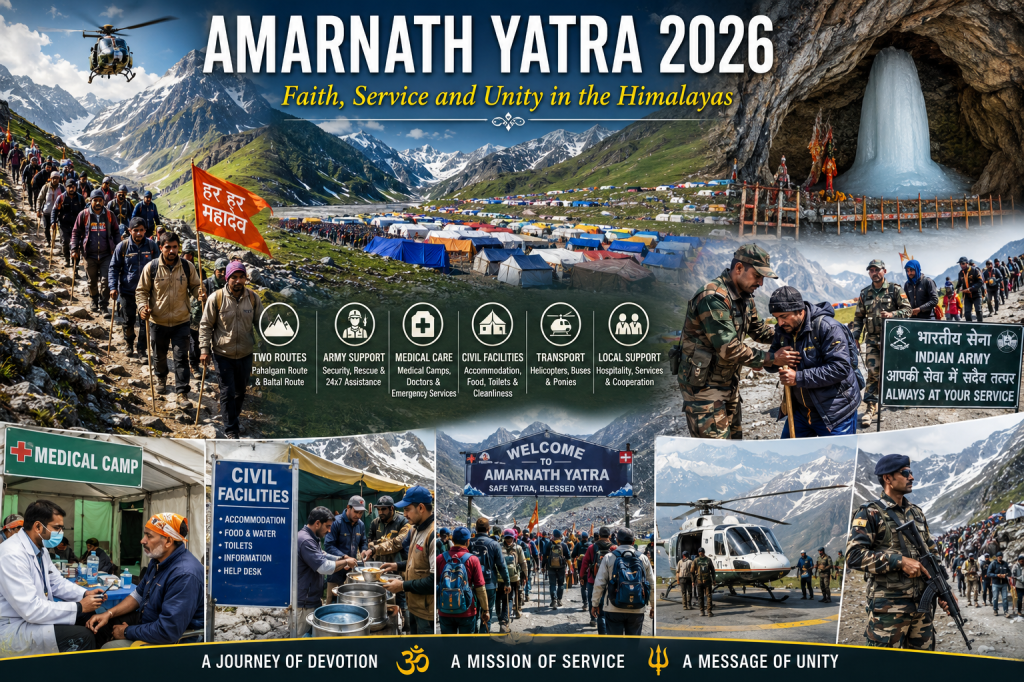
The Amarnath Yatra https://jksasb.nic.in/ is one of the most revered pilgrimages in India attracting lakhs of devotees every year to the sacred Amarnath Cave Shrine nestled in the Himalayas of Jammu and Kashmir. The annual pilgrimage is a remarkable blend of faith devotion resilience and collective service. In 2026 the yatra continues to symbolize spiritual unity while showcasing the extensive support provided by the Indian Army security forces civil administration and local communities.
The holy Amarnath Cave situated at an altitude of about 3,888 metres houses the naturally formed ice Shivling which is considered a manifestation of Lord Shiva. Pilgrims from every corner of the country undertake this challenging journey seeking spiritual blessings and inner peace.
Main Routes of the Amarnath Yatra
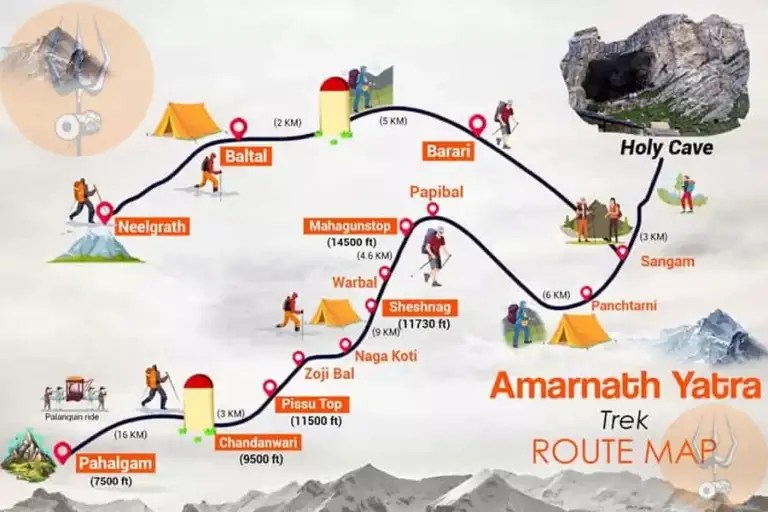
Devotees can reach the holy cave through two traditional routes.
Pahalgam Route
The Pahalgam route is the traditional and longer route covering approximately 48 kilometres. Pilgrims begin their journey from Nunwan Base Camp near Pahalgam and proceed through Chandanwari Pissu Top Sheshnag Mahagunas Pass Panchtarni and finally reach the holy cave.
This route is preferred by many devotees because it allows gradual acclimatization to high altitudes. The scenic beauty of lush meadows snow-covered peaks crystal-clear streams and alpine lakes makes the journey spiritually uplifting and visually breathtaking.
Baltal Route
The Baltal route is shorter covering approximately 14 kilometres from Baltal to the holy cave. Although steeper and more physically demanding it enables pilgrims to complete the journey in a shorter period. Many devotees choose this route due to time constraints.
The Baltal route is well managed with security arrangements medical facilities and emergency services ensuring the safety of pilgrims throughout the trek.
Security Arrangements by the Indian Army and Security Forces
The successful conduct of the Amarnath Yatra depends significantly on the dedicated efforts of the Indian Army Central Armed Police Forces Jammu and Kashmir Police and other security agencies.
The Indian Army plays a vital role in securing the pilgrimage routes. Troops are deployed along vulnerable stretches to ensure the safety of pilgrims. Continuous surveillance is maintained through observation posts patrols and advanced monitoring systems.
Road opening parties are deployed every day before the movement of pilgrims to sanitize the routes and eliminate potential threats. Security personnel remain vigilant around the clock safeguarding camps transit points and sensitive locations.
The Army also assists in rescue operations during adverse weather conditions. In case of landslides flash floods snowfall or medical emergencies soldiers work tirelessly to evacuate stranded pilgrims and provide immediate assistance.
Communication networks established by security agencies ensure quick coordination among various departments helping authorities respond effectively to any situation.
Facilities Provided by Civil Administration
The Jammu and Kashmir administration undertakes extensive preparations months before the commencement of the yatra. A range of facilities is provided to ensure a safe and comfortable pilgrimage experience.
Accommodation facilities are available at major base camps including Nunwan and Baltal. Temporary shelters and tents are set up along the routes allowing pilgrims to rest during their journey.
Medical camps staffed by doctors nurses and paramedics are established at various locations. Ambulances emergency response teams and oxygen facilities are kept ready to handle health-related emergencies particularly those caused by high altitude conditions.
Clean drinking water and sanitation facilities are provided throughout the pilgrimage routes. Authorities deploy sanitation workers to maintain hygiene at camps and trekking points.
Helicopter services are also available for devotees who may be unable to undertake the entire trek on foot. These services help elderly pilgrims and those with health concerns reach the shrine more conveniently.
Traffic management systems and transport services facilitate the smooth movement of pilgrims from Jammu to the base camps. Registration centres information kiosks and help desks assist devotees throughout their journey.
Contribution of Local Communities and Volunteers
The spirit of service during the Amarnath Yatra is reflected in the wholehearted participation of local residents and volunteers. Numerous langars provide free meals tea refreshments and basic necessities to pilgrims.
Volunteers assist elderly devotees by carrying luggage offering guidance and extending support whenever required. Local pony operators porters and service providers play an important role in helping pilgrims navigate difficult terrain.
The hospitality shown by local communities strengthens the bond between visitors and residents making the yatra a true symbol of harmony and cooperation.
A Journey Beyond Pilgrimage
The Amarnath Yatra is much more than a religious journey. It represents faith perseverance unity and collective responsibility. The coordinated efforts of the Indian Army security forces civil administration healthcare workers volunteers and local communities ensure that millions of devotees can undertake this sacred pilgrimage safely.
As pilgrims traverse the majestic Himalayan landscape they experience not only spiritual fulfillment but also the extraordinary dedication of countless individuals working behind the scenes. Amarnath Yatra 2026 stands as a shining example of devotion supported by service security and human compassion making it one of the most remarkable pilgrimages in the world.


