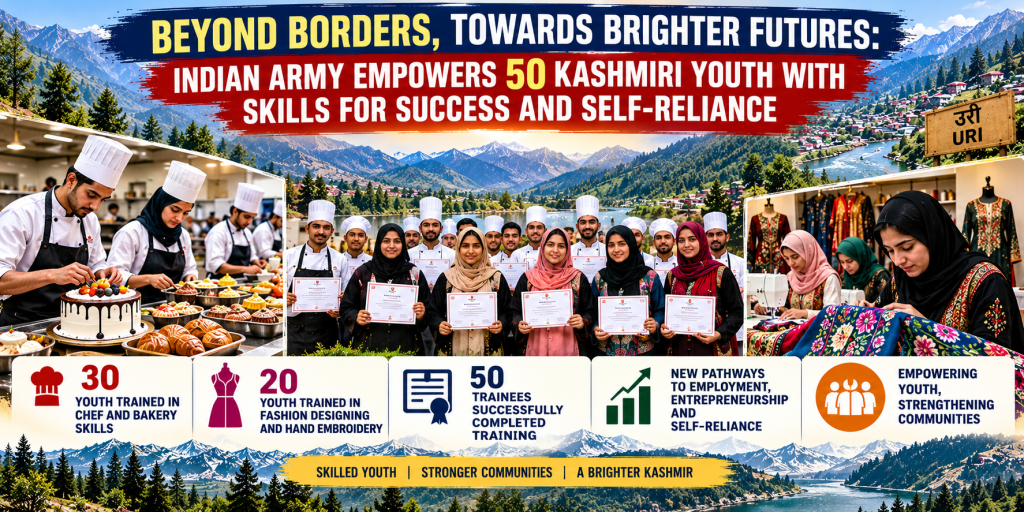
In a significant step towards empowering young people and strengthening economic opportunities in the border regions of Kashmir, the Indian Army organised a skill development convocation ceremony in Uri on October 29, 2026. The initiative, conducted by the Bajrang Battalion under the aegis of the Kalapahar Brigade, celebrated the successful completion of vocational training by 50 local trainees, marking an important milestone in their journey towards employment, entrepreneurship and financial independence.
The programme was supported by the Indian Hotels Company Limited (IHCL) and implemented through REACHA, reflecting a collaborative effort to provide practical skills and sustainable livelihood opportunities to communities living in remote and border areas of Jammu and Kashmir.
Under the initiative, 30 trainees successfully completed specialised training in chef and bakery skills, while another 20 received training in fashion designing and hand embroidery. These vocational courses were designed to equip participants with market-relevant skills that could help them secure employment, establish small businesses, or explore self-employment opportunities.
The convocation ceremony marked a proud occasion for the trainees, who received certificates recognising their successful completion of the programme. For many participants, the certificates represented more than academic achievement. They symbolised determination, personal growth and renewed confidence in their ability to build a better future.
One of the highlights of the ceremony was an interactive session titled “Voices of Youth,” which provided participants with an opportunity to share their experiences, challenges, aspirations and future plans. The session emphasised the importance of giving young people a platform to express their ambitions and encouraging them to become active contributors to their communities.
Another important component of the event was a presentation by Mission YUVA, which highlighted various government-supported entrepreneurship initiatives, self-employment schemes and financial assistance opportunities available in Jammu and Kashmir. The presentation aimed to help trainees understand how their newly acquired skills could be transformed into viable business ventures.
For the youth of Uri, such initiatives hold particular significance. Geographical challenges, limited industrial infrastructure, and restricted access to specialised vocational institutions can create obstacles to employment in remote border communities. Skill development programmes can help address these challenges by bringing practical training opportunities closer to local residents.
The initiative also placed importance on women’s economic empowerment. Training in fashion designing, embroidery and other vocational activities can create opportunities for women to earn independently while contributing to their families’ financial stability. Such skills can also support home-based enterprises and preserve Kashmir’s rich tradition of craftsmanship.
Beyond individual employment prospects, the programme reflects the potential of cooperation between the Indian Army, private-sector organisations and community development institutions. By combining resources, expertise and local participation, such partnerships can contribute to long-term economic development and community resilience.
The Indian Army’s involvement in the initiative also highlights its broader community welfare activities in border areas, extending beyond its primary responsibility of safeguarding the nation’s frontiers.
Importantly, the successful training of 50 participants represents a foundation for future opportunities rather than a guarantee of immediate employment. Continued mentorship, market access, financial support, and entrepreneurship guidance will remain essential in helping trainees translate their skills into sustainable incomes.
The convocation in Uri sends an encouraging message across Kashmir: talent exists in every village and with appropriate training, guidance and opportunities, young people can shape their own futures.
By investing in skills, encouraging entrepreneurship and promoting women’s participation, initiatives like this can help build a more confident, self-reliant and economically empowered Kashmir—where the aspirations of young people become the foundation of lasting progress.


