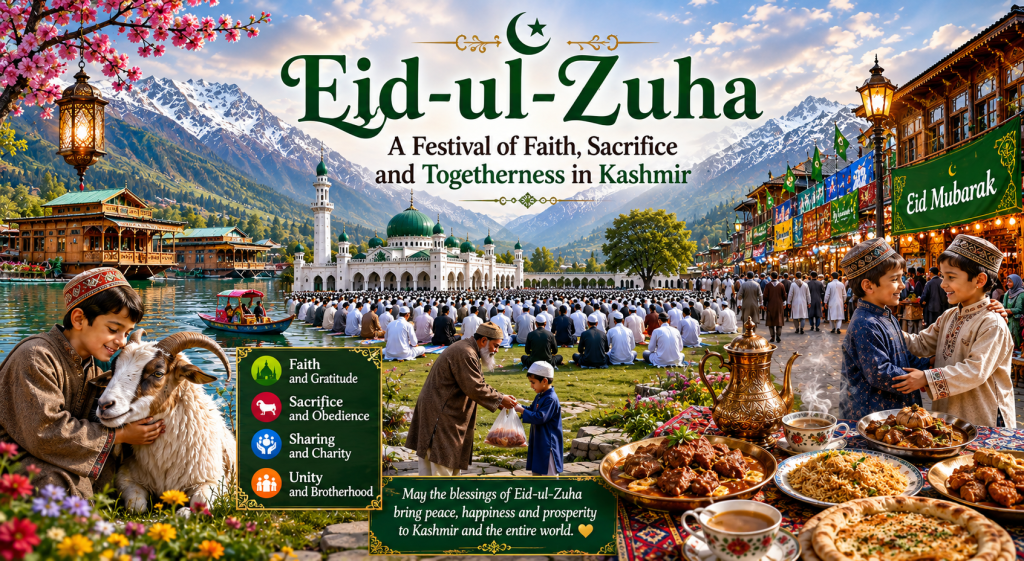
Id-ul-Zuha also known as Id-ul-Adha or Bakrid is one of the most sacred festivals in Islam. The festival reminds Muslims of the spirit of sacrifice obedience and devotion to Almighty Allah. Across the world, Muslims celebrate this occasion with prayers charity and Qurbani. In Kashmir, the festival carries a unique cultural and emotional charm. The beautiful valleys, the spiritual atmosphere of mosques and the warmth of Kashmiri traditions make this Eid deeply special for the people of the region.
The festival commemorates the great sacrifice of Prophet Ibrahim Alaihissalam (A.S.) who was willing to sacrifice his beloved son Prophet Ismail (A.S.) in obedience to Allah’s command. Before the sacrifice could take place Allah replaced Prophet Ismail (A.S.) with a ram. This event became a timeless symbol of faith patience and submission to the will of God. Id-ul-Zuha teaches Muslims that true devotion lies in sacrificing selfish desires pride and greed for the sake of righteousness and humanity.
Days before Eid, the markets of Kashmir become lively and crowded. People visit markets to purchase clothes, bakery items, spices and sacrificial animals. Traditional Kashmiri bakeries known as Kandurs remain busy throughout the day as people buy fresh Kulchas, Baqerkhanis and Sheermals for guests and family gatherings. Areas like Lal Chowk and Downtown Srinagar witness increased activity as shoppers prepare for the festival with great enthusiasm. Homes are cleaned and decorated while children excitedly wait for Eid celebrations.
On the morning of Eid thousands of people gather in mosques and Eidgahs to offer special prayers. Men women and children wear traditional attire including Pherans and Pathani suits. The atmosphere becomes deeply spiritual as people exchange greetings of “Eid Mubarak” and pray for peace prosperity and forgiveness. Major prayer gatherings are often seen at places like Hazratbal Shrine and Eidgah Srinagar where thousands gather with devotion and unity. The sound of prayers and Takbeers echoing through the valleys creates a feeling of peace and brotherhood.
Qurbani remains the central part of Id-ul-Zuha. Families sacrifice animals according to Islamic teachings and distribute the meat among relatives neighbours and poor families. The true essence of Qurbani lies in sharing happiness with others especially those who cannot afford proper meals. In Kashmir, many families ensure that widows orphans and underprivileged people also become part of the celebrations. This spirit of compassion and generosity strengthens social bonds and reminds people of the importance of humanity and kindness.
Food plays an important role during Bakrid celebrations in Kashmir. Families prepare delicious traditional dishes and welcome guests with warmth and hospitality. Famous Kashmiri dishes like Rogan Josh, Yakhni and Gushtaba are commonly served during family gatherings. Guests are often offered cups of aromatic Kahwa which adds to the festive atmosphere. Many households also arrange traditional Wazwan meals where relatives and friends sit together and celebrate the occasion with joy and gratitude.
Beyond religious rituals Id-ul-Zuha also strengthens social and cultural harmony in Kashmir. The festival brings families together and revives relationships among relatives, neighbours and friends. Children receive Eidi from elders and enjoy the cheerful atmosphere of the day. Even in difficult times, the spirit of Eid inspires hope unity and togetherness among the people. The festival reflects the rich cultural identity of Kashmir where faith tradition and hospitality exist side by side.
Id-ul-Zuha is not merely a celebration of sacrifice but also a reminder of compassion humility and devotion to Allah. It teaches people to care for others respect human values and remain grateful for life’s blessings. In Kashmir, the festival beautifully combines religious faith with cultural traditions creating moments of peace, love and unity. May this blessed occasion continue to spread happiness brotherhood and harmony across Kashmir and throughout the world.


