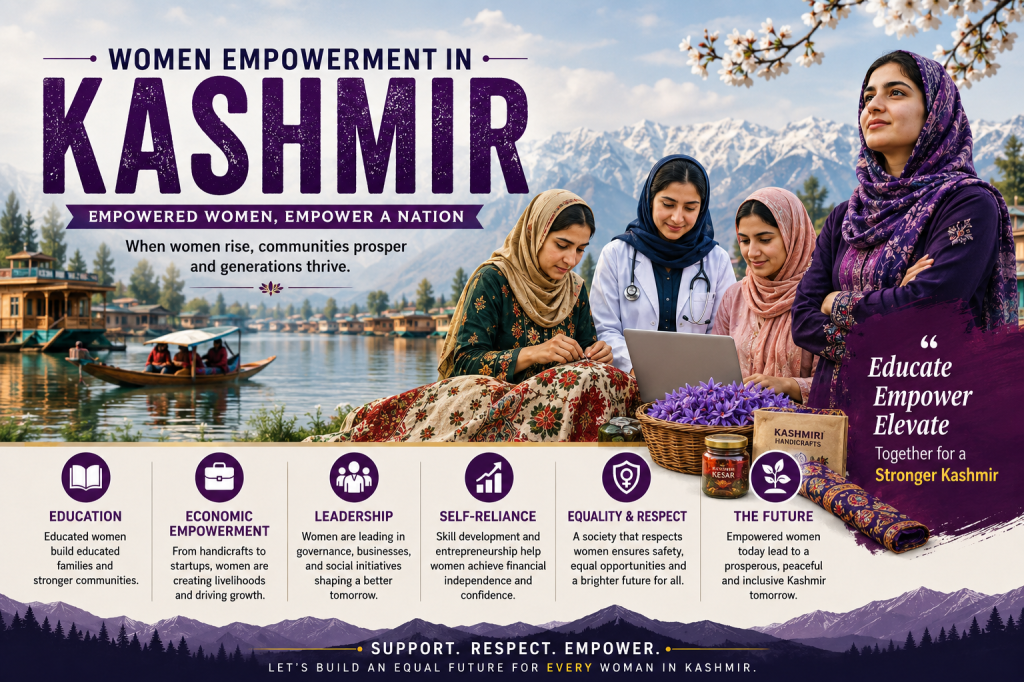
Women empowerment is the process of enabling women to achieve equal rights, opportunities and participation in all aspects of society. It involves providing access to education, economic resources, healthcare, leadership opportunities and decision-making platforms. In Kashmir, women have long played a vital role in preserving culture, supporting families and contributing to the economy. Over the years, significant progress has been made in improving the status of women, allowing them to emerge as leaders, entrepreneurs, educators and professionals. While challenges remain, the journey of women empowerment in Kashmir reflects resilience, determination and hope for a brighter future.
Kashmiri women have traditionally been an integral part of society. For centuries, they have contributed to agriculture, handicrafts, household management and community development. Women played a key role in the production of world-famous Kashmiri handicrafts, including shawls, embroidery and carpet weaving. Despite their contributions, social norms and limited access to education often restricted their participation in decision-making and leadership roles. In the past, opportunities for higher education and professional careers were relatively limited for many women, particularly in rural areas. However, changing social attitudes, increased awareness and government initiatives have gradually improved access to education and employment. Today, Kashmiri women are increasingly visible in various sectors, demonstrating their potential and capabilities.
Education has been one of the most powerful tools for empowering women in Kashmir. Over the past few decades, there has been a notable increase in the number of girls attending schools, colleges and universities. Families now recognize the importance of educating daughters and encouraging them to pursue their aspirations. Educational institutions across Kashmir have enabled young women to enter fields such as medicine, engineering, teaching, law, journalism and information technology. Access to quality education not only enhances career opportunities but also helps women make informed decisions about their lives and communities. Educated women contribute significantly to social development. They are more likely to participate in community initiatives, support the education of future generations and advocate for positive social change. As a result, education continues to serve as the foundation of women empowerment in Kashmir.
Economic empowerment is another crucial aspect of women empowerment. Across Kashmir, many women have successfully established businesses and become entrepreneurs. They are actively involved in sectors such as handicrafts, handloom, embroidery, saffron cultivation, horticulture, food processing and tourism-related enterprises. Self-Help Groups (SHGs) and skill-development programs have created opportunities for women to generate income and achieve financial independence. These initiatives provide training, access to resources and support networks that help women expand their businesses and improve their livelihoods. Financial independence not only improves the quality of life for women and their families but also boosts their confidence and decision-making power. Women entrepreneurs in Kashmir are proving that economic participation can drive both personal growth and regional development.
The participation of women in leadership and governance has gradually increased in Kashmir. Women are now serving in educational institutions, government departments, local governance bodies and various social organizations. Their involvement in decision-making processes helps ensure that diverse perspectives are represented in policies and development programs. Women leaders often act as role models for younger generations, inspiring girls to pursue ambitious goals and break traditional barriers. Their success demonstrates that leadership is not defined by gender but by vision, dedication and competence. As more women take on leadership responsibilities, they contribute to creating inclusive and progressive communities that value equality and mutual respect.
Despite notable progress, several challenges continue to affect women empowerment in Kashmir. Gender stereotypes and traditional expectations still influence opportunities available to women in some communities. Access to employment and professional advancement may remain limited, particularly in remote and rural areas. Many women also face the challenge of balancing family responsibilities with educational and career aspirations. In addition, barriers such as inadequate access to resources, limited digital literacy and social constraints can hinder personal and professional growth. Addressing these challenges requires sustained efforts from families, educational institutions, community organizations and policymakers. Creating supportive environments and promoting awareness about gender equality are essential for ensuring long-term progress.
The future of women empowerment in Kashmir depends on continued investment in education, skill development, entrepreneurship and leadership opportunities. Expanding digital literacy programs, promoting women-led businesses and ensuring equal access to employment can help create a more inclusive society. Communities must encourage girls to pursue their ambitions and participate confidently in social, economic and political life. At the same time, policies that support women’s rights, safety and professional development can further strengthen their position in society. By working together, stakeholders can create an environment where women are empowered to realize their full potential and contribute meaningfully to the region’s growth.
Women empowerment is not only a matter of equality but also a key driver of social and economic development. In Kashmir, women have demonstrated remarkable resilience and determination in overcoming challenges and achieving success across various fields. While significant progress has been made, continued efforts are needed to ensure equal opportunities for all women. An empowered woman strengthens her family, uplifts her community and contributes to the progress of society. By supporting and investing in women, Kashmir can build a more prosperous, inclusive and sustainable future.


