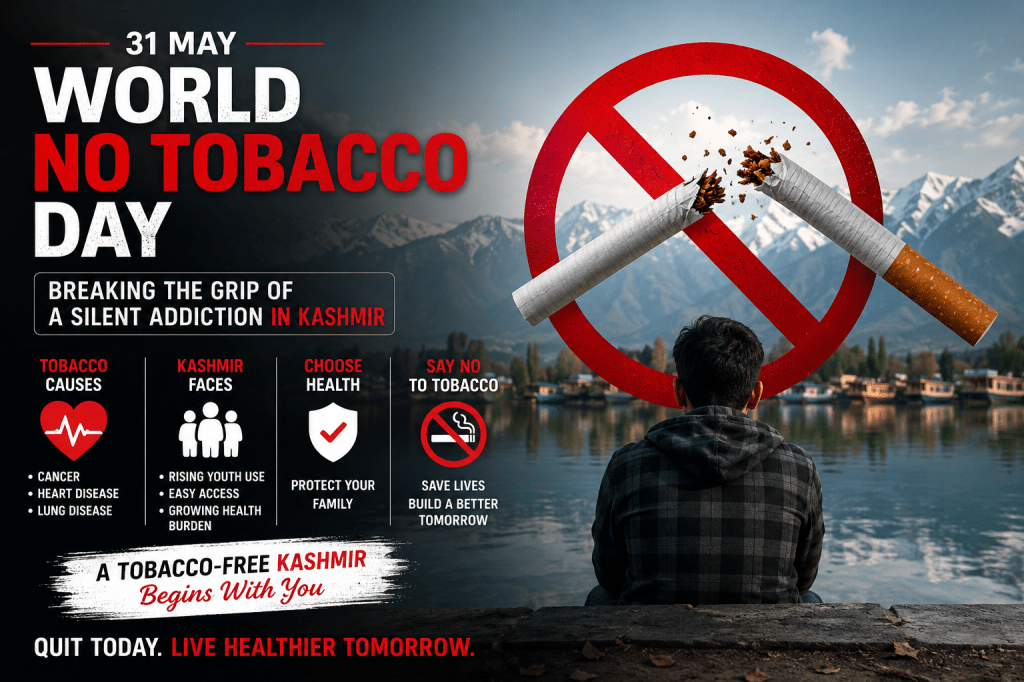
Every year on 31 May, the world observes World No Tobacco Day, an initiative led by the World Health Organization to highlight the dangers of tobacco use and to encourage people to quit. Unlike celebratory occasions, this day carries a sense of urgency. It is not about marking an achievement but confronting a crisis—one that continues to claim millions of lives each year, often silently and preventable. Tobacco, in its various forms, has become one of the leading causes of death worldwide. Its impact is not limited to individual users; it extends to families, communities and entire healthcare systems. In regions like Kashmir, the issue takes on additional layers of complexity, shaped by cultural practices, social factors and limited awareness.
The harmful effects of tobacco are well-documented. It is a major contributor to life-threatening illnesses such as Cancer, Heart Disease and Chronic Obstructive Pulmonary Disease. These conditions not only reduce life expectancy but also significantly diminish quality of life. Despite this knowledge, tobacco consumption remains widespread. Millions of people continue to use tobacco products daily, often underestimating the risks or delaying efforts to quit. The addictive nature of nicotine makes cessation difficult, turning what may begin as a casual habit into a long-term dependency. In many cases, the consequences become visible only after years of use, making tobacco a particularly insidious threat. By the time symptoms appear, significant damage has often already been done.
While cigarettes are the most commonly recognized form of tobacco, they are far from the only one. In India and surrounding regions, tobacco is consumed in various ways, including bidis, hookah and smokeless products such as chewing tobacco and gutka. Smokeless tobacco, in particular, is often perceived as less harmful—a misconception that contributes to its widespread use. In reality, these products carry serious health risks, including oral cancers and gum disease. The diversity of tobacco products makes regulation and awareness more challenging. It also increases accessibility, allowing individuals to choose forms that align with cultural or social norms, further normalizing the habit.
Understanding why people begin using tobacco is essential to addressing the problem. For many, the habit starts during adolescence or early adulthood, influenced by peer pressure, curiosity, or the desire to fit in. Stress and emotional challenges also play a significant role. In high-pressure environments or regions experiencing uncertainty, individuals may turn to tobacco as a coping mechanism. The temporary sense of relief it provides can reinforce the habit, making it harder to break. In some communities, tobacco use is embedded in social practices, making it seem acceptable or even expected. This cultural normalization reduces the perceived urgency of addressing the issue.
In Kashmir, tobacco consumption reflects a combination of traditional practices and modern influences. Smoking, including the use of cigarettes and hookah, remains common, while smokeless tobacco products are also widely available. One of the most concerning trends is the increasing use of tobacco among young people. Easy access, lack of strict enforcement and limited awareness contribute to early initiation. For many, what begins as experimentation quickly evolves into dependency. Educational institutions and families play a critical role in shaping attitudes, yet awareness campaigns often struggle to reach all sections of society. In rural and remote areas, access to information about the dangers of tobacco may be limited, further exacerbating the problem. At the same time, the healthcare system faces the burden of treating tobacco-related illnesses, placing additional strain on already limited resources.
The consequences of tobacco use extend far beyond the individual. Families often bear the emotional and financial burden of illness caused by long-term consumption. Medical expenses, loss of income and caregiving responsibilities can create significant hardship. At a societal level, tobacco use affects productivity and economic growth. Illnesses related to tobacco reduce workforce participation and increase healthcare costs, creating a cycle that impacts development. Children growing up in households where tobacco use is common are also more likely to adopt the habit themselves, perpetuating the cycle across generations.
Even those who do not use tobacco are not immune to its effects. Exposure to second-hand smoke can lead to serious health problems, particularly for children, the elderly and individuals with pre-existing conditions. In enclosed spaces, the concentration of harmful chemicals can be especially high, increasing the risk of respiratory issues and other health complications. For families, this means that one person’s habit can affect the well-being of everyone around them. Raising awareness about these risks is essential to creating environments where non-smokers are protected.
Governments and health organizations have taken several steps to reduce tobacco consumption. These include warning labels on packaging, restrictions on advertising, public smoking bans and awareness campaigns. Educational initiatives aim to inform people about the risks associated with tobacco, while support programs provide resources for those trying to quit. However, the effectiveness of these measures depends on consistent implementation and public engagement. In regions like Kashmir, strengthening these efforts requires a focus on accessibility and cultural relevance. Campaigns must be tailored to local contexts to ensure they resonate with communities.
Quitting tobacco is often easier said than done. Nicotine addiction creates both physical and psychological dependence, making withdrawal a difficult process. Symptoms such as irritability, anxiety and cravings can discourage individuals from continuing their efforts. Support systems play a crucial role in overcoming these challenges. Counseling, medical assistance and community support can significantly improve the chances of success. Encouraging open conversations about addiction and recovery can also help reduce stigma and motivate individuals to seek help.
Addressing the tobacco crisis requires a comprehensive approach. Awareness campaigns must reach people at all levels, from schools and colleges to workplaces and rural communities. Education should focus not only on the risks but also on the benefits of quitting. Community involvement is equally important. Local leaders, educators, and healthcare professionals can play a key role in spreading awareness and encouraging healthier choices. Technology can also be leveraged to support these efforts, providing access to information, counseling and resources for quitting. By combining policy, education and community engagement, it is possible to create an environment where tobacco use is less likely to thrive.
World No Tobacco Day serves as a powerful reminder that the fight against tobacco is far from over. It calls on individuals, communities and governments to take responsibility and work toward a healthier future. In Kashmir, as in the rest of the world, the challenge is not only to reduce tobacco use but to change perceptions and behaviours. This requires sustained effort, empathy and a commitment to protecting public health. Tobacco may be a deeply ingrained habit for many, but it is also a preventable cause of suffering. Choosing to quit—or never to start—is a step toward reclaiming control over one’s health and future. The message of this day is clear: awareness must lead to action. Only then can the grip of this silent addiction be broken, paving the way for healthier individuals, stronger families and more resilient communities.


