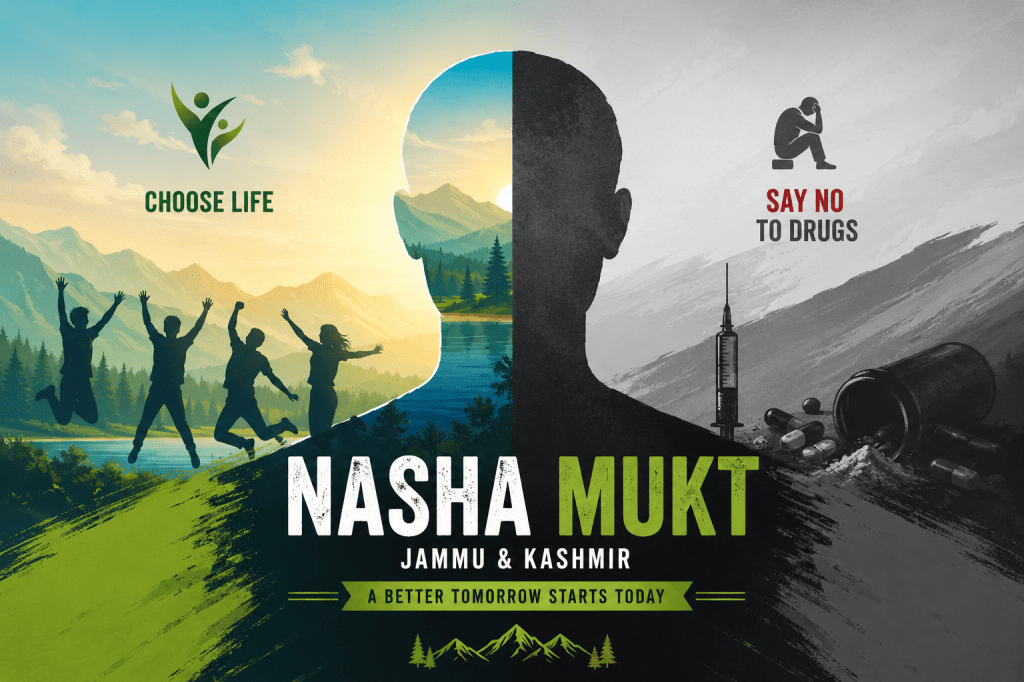
Drug abuse has emerged as one of the most serious social challenges facing communities across the world. Jammu and Kashmir is no exception. In recent years, concerns regarding the increasing use of narcotics among young people have grown significantly, prompting authorities, community leaders, educators and civil society organisations to take coordinated action. Recognising the need for a comprehensive response, the administration launched the Nasha Mukt Jammu & Kashmir Abhiyaan, a campaign aimed at creating awareness, preventing substance abuse, supporting rehabilitation and building a healthier future for the region’s youth.
The growing menace of drug addiction has affected individuals, families and communities across Jammu and Kashmir. Young people, often considered the backbone of society are particularly vulnerable to the dangers of substance abuse. Addiction not only harms physical and mental health but also disrupts education, employment and social relationships. Families suffer emotional and financial distress while communities face rising concerns about crime, social instability and the loss of human potential. The consequences of drug abuse extend far beyond the individual, making it a challenge that requires collective attention and sustained intervention.
In response to this pressing issue, the Nasha Mukt Jammu & Kashmir Abhiyaan was launched with the objective of creating a drug-free society. The campaign adopts a multi-dimensional approach that focuses on prevention, awareness, treatment, rehabilitation and enforcement. Rather than treating addiction solely as a law-and-order issue, the initiative seeks to address its social and psychological dimensions as well. Through coordinated efforts involving government departments, educational institutions, healthcare professionals, law enforcement agencies and community organisations, the campaign aims to tackle the problem from multiple angles.
One of the key pillars of the campaign is public awareness. Various awareness programmes have been organised in schools, colleges, universities and community centres to educate people about the harmful effects of drug abuse. Seminars, workshops, debates, cultural programmes and awareness rallies have been conducted to engage students and encourage healthy lifestyles. These initiatives seek to equip young people with the knowledge and confidence needed to resist peer pressure and make informed decisions. By spreading awareness at an early stage, the campaign hopes to prevent individuals from falling into the trap of addiction.
Community participation has also played a crucial role in the success of the campaign. Parents, teachers, religious leaders, social activists and local representatives have been encouraged to contribute actively to anti-drug efforts. Panchayats and community organisations have organised awareness drives and discussions aimed at promoting social responsibility. Religious institutions have highlighted the importance of moral values, self-discipline and healthy living. Such collective engagement strengthens community resilience and helps create an environment where drug abuse is openly discussed and effectively addressed.
Another important aspect of the Nasha Mukt Jammu & Kashmir Abhiyaan is the strengthening of law enforcement measures. Authorities have intensified efforts to curb drug trafficking networks and prevent the illegal distribution of narcotics. Enhanced surveillance, coordinated operations and strict legal action against drug peddlers have been undertaken to disrupt supply chains. These measures demonstrate the administration’s commitment to reducing the availability of drugs while protecting communities from the harmful influence of organised criminal networks involved in narcotics trafficking.
While prevention and enforcement remain essential, the campaign also recognises the importance of treatment and rehabilitation. Addiction is a complex condition that often requires professional support and long-term care. Counselling services, de-addiction centres and rehabilitation programmes have been strengthened to assist individuals seeking recovery. Medical professionals, counsellors and social workers play a vital role in helping affected individuals rebuild their lives and reintegrate into society. By promoting compassion and support rather than stigma and isolation, the campaign encourages those struggling with addiction to seek help without fear or hesitation.
The impact of the campaign has been visible through increased public awareness and community involvement. Thousands of people have participated in awareness activities across different districts, reflecting growing recognition of the seriousness of the issue. Educational institutions have become active partners in promoting anti-drug messages, while local communities have shown greater willingness to support prevention and rehabilitation efforts. The campaign has also contributed to broader discussions about mental health, youth development and social responsibility, helping to create a more informed and proactive society.
Despite these encouraging developments, significant challenges remain. Drug addiction continues to pose a threat to vulnerable sections of society, particularly young people. Sustained awareness efforts, improved rehabilitation services, stronger community engagement and continued enforcement actions will be necessary to achieve long-term success. Social stigma associated with addiction must also be addressed so that affected individuals feel comfortable seeking treatment and support.
The vision of a drug-free Jammu and Kashmir cannot be achieved by government action alone. It requires the active participation of families, educational institutions, healthcare providers, community leaders and citizens. The Nasha Mukt Jammu & Kashmir Abhiyaan represents an important step towards safeguarding the future of the region’s youth and promoting healthier communities. Through awareness, prevention, rehabilitation and collective responsibility, Jammu and Kashmir can move closer to the goal of becoming a society free from the devastating impact of drug abuse.

 Kashmir RootStock