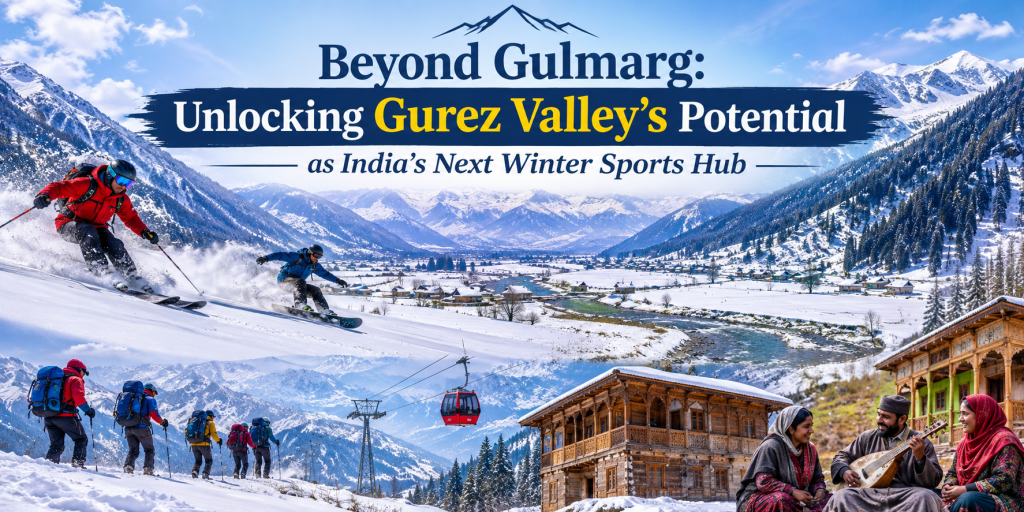
Gurez Valley, nestled in the high reaches of the Bandipora district in Jammu and Kashmir is widely considered one of India’s most pristine and captivating offbeat destinations. Framed by towering Himalayan peaks and carved by the crystal-clear waters of the Kishanganga River, the valley offers breathtaking scenery, serene landscapes and an unmatched sense of tranquillity. Every winter, heavy and consistent snowfall transforms the valley into a vast, glistening white landscape. These conditions make Gurez uniquely suited to a wide range of winter sports, including alpine skiing, snowboarding, backcountry snow trekking, ice climbing and high-altitude mountaineering.
While Gulmarg currently holds the crown as India’s premier winter sports destination, Gurez possesses immense untapped potential to emerge as a major alternative hub for international and domestic adventure seekers. With targeted infrastructure improvements, improved year-round connectivity and environmentally conscious planning, Gurez can establish itself as a cornerstone of adventure tourism in South Asia. The defining advantage of Gurez lies in its exceptional geographical features and ideal winter climate. Position at high altitude, the valley experiences deep, reliable snowfall from December through late March, allowing a thick snowpack to remain on the ground for several consecutive months. The surrounding mountainous terrain offers a diverse topography from steep gradients ideal for advanced ski runs to broad, open, snow-covered fields perfect for novice skiers, snowboarders and cross-country snow trekkers. Furthermore, the crisp mountain air, untouched landscapes and quiet environment offer a peaceful contrast to overcrowded resort towns, creating a world-class environment for wilderness sports enthusiasts.
Gulmarg’s transformation into a globally recognised skiing resort demonstrates the massive economic potential of sports tourism and its immense success has led to tourism during peak months, Empowerment opportunity local hotels, transports, Hawkers, guides, adventure sport Entrepreneurs etc. To unlock Gurez’s full potential, modernising its infrastructure is critical. Currently, the primary access route via the high-altitude Razdan Pass remains frequently blocked by heavy snow and avalanches during peak winter months. Constructing the proposed all-weather Razdan Tunnel is a crucial prerequisite for year-round accessibility. Additionally, establishing winterised accommodation, installing modern ski lifts and cable cars, deploying dedicated medical emergency and search-and-rescue teams, setting up equipment rental hubs and providing high-speed telecommunications are vital to ensure visitor safety and comfort to boost tourism potential of Gurez Valley.
Positioning Gurez as a winter sporting destination can drive local economic growth. Establishing winter sports facilities will create direct and indirect jobs for residents as ski instructors, mountain guides, hospitality staff, drivers, equipment managers and local entrepreneurs. Beyond sports, year-round tourism will stimulate demand for traditional handicrafts, family-run homestays, regional culinary businesses and logistics services, significantly elevating the standard of living across remote mountain villages. Situated near the Line of Control, Gurez holds strategic national importance. Developing sustainable tourism in this frontier region incentivises local populations to remain in their ancestral homes by providing stable year-round economic opportunities. Furthermore, improving civil infrastructure such as all-weather road access, upgraded medical facilities, reliable electricity and dependable telecommunications strengthens border security while integrating remote communities into the nation’s broader economic mainstream. Because Gurez remains largely untouched any commercial development must strictly adhere to sustainable, eco-friendly standards. The Himalayan ecosystem is fragile and susceptible to environmental degradation. Future development planning must incorporate zero-waste management systems, renewable energy reliance (such as solar and micro-hydro power), strict construction standards and carrying- capacity limits to prevent ecological damage.
Preserving the pristine wilderness of the Kishanganga watershed must remain a central priority Gurez is home to the unique Shina-speaking Dard community, an ethnic group with a rich cultural heritage, distinct traditions, traditional music and unique architecture. Integrating cultural tourism with sports initiatives lets visitors experience authentic local traditions, buy regional handicrafts and taste indigenous cuisine. Responsible tourism supports cultural preservation while generating sustainable revenue for indigenous communities.
Despite its natural suitability, developing Gurez presents challenges. Extreme sub-zero temperatures, high avalanche risks, severe winter isolation and a current lack of healthcare and hospitality facilities pose operational hurdles. Additionally, unpredictable weather patterns driven by global climate change require precise slope management and safety protocols. Overcoming these obstacles will require coordinated investments from government agencies and private enterprise. To transition Gurez from a seasonal summer retreat into a winter sports hub, a clear strategy is required. State and central tourism authorities must prioritise transport infrastructure, sponsor winter sports festivals, train local youth as certified instructors and launch targeted promotional campaigns. Public-Private Partnerships can fund ski infrastructure, safety equipment and comfortable accommodations without placing an excessive burden on public resources.
Gurez Valley possesses the natural topography, winter climate and aesthetic appeal necessary to become India’s next premier winter sporting destination. Through strategic infrastructure investment, proactive environmental safeguards and community-led development, Gurez can evolve into a world-class adventure hub. Developing the valley will create local jobs, strengthen border-area communities, protect fragile Himalayan ecosystems and mark a new chapter in tourism growth across Jammu and Kashmir.


