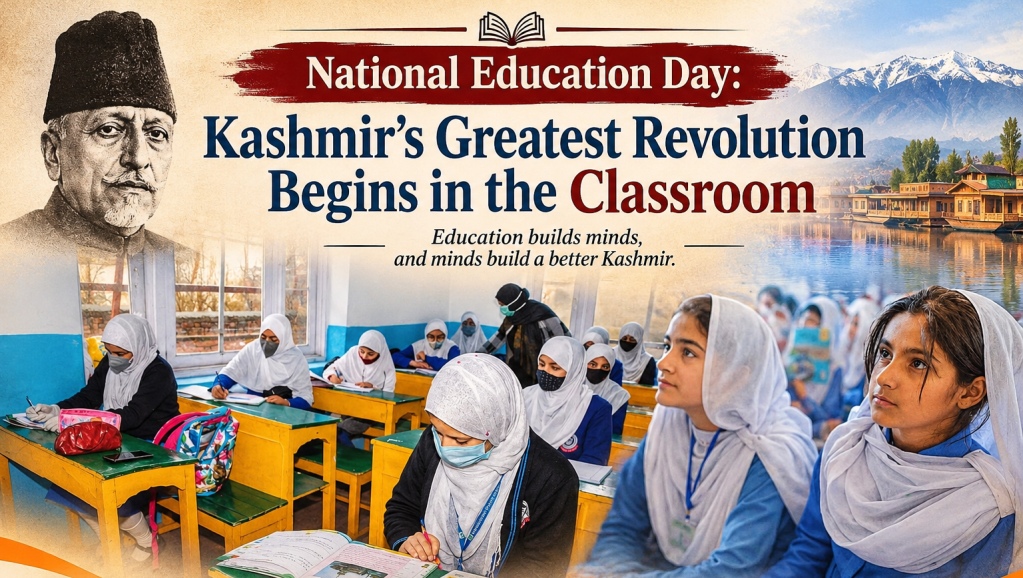
A classroom is more than a place where lessons are taught. It is where aspirations take shape, confidence is nurtured and the foundations of a society are laid. In a region like Kashmir, where generations have looked towards education as a pathway to opportunity and progress, its significance extends far beyond textbooks and examinations. It represents hope, empowerment and the possibility of a better tomorrow.
Observed annually on 11 November to commemorate the birth anniversary of Maulana Abul Kalam Azad, India’s first Education Minister, National Education Day celebrates the transformative power of learning. Azad believed that education was fundamental to building an enlightened, inclusive and progressive nation. His vision remains particularly relevant to Kashmir, where education continues to shape individual aspirations and the region’s broader developmental journey.
Over the decades, Jammu and Kashmir has witnessed considerable expansion of its educational landscape. Schools, colleges, universities and professional institutions have opened new avenues for generations of students. Education, once less accessible to many communities, has gradually become an important part of family aspirations. The growing participation of girls, particularly in higher education and professional fields, reflects a significant shift in social attitudes and opportunities. For many families, educating their children is no longer simply an expectation but an investment in a more secure and dignified future.
In recent years, the educational landscape has also begun adapting to the demands of a rapidly changing world. Modern classrooms, digital learning initiatives, improved school infrastructure and greater emphasis on vocational education are reshaping the learning experience. The National Education Policy (NEP) 2020 has further reinforced the importance of holistic learning, critical thinking, practical skills and multidisciplinary education. These changes offer an opportunity to move beyond the traditional emphasis on examinations and encourage students to explore, question, innovate and develop independent perspectives.
Yet, the real measure of educational progress lies not merely in the number of institutions established but, in the lives, transformed through them. Across Kashmir, education is opening doors for young women to pursue professional careers, enabling students from modest backgrounds to compete in wider arenas and encouraging young people to explore entrepreneurship, technology, research and innovation. Equally important is the role of educational initiatives in remote and border areas, where access to quality learning can have a profound impact on entire communities. Institutions such as Army Goodwill Schools have also contributed to expanding educational opportunities in some of these regions.
However, the journey remains unfinished. Geographic isolation, infrastructure gaps, inconsistent digital connectivity and disparities in the quality of education continue to affect students across Jammu and Kashmir. Concerns surrounding learning outcomes, school retention and the gap between academic qualifications and employment opportunities also deserve sustained attention. Access to education must be matched by access to quality education. Every child, irrespective of where they live or the economic circumstances of their family, deserves an environment that encourages learning and allows potential to flourish.
This is where the responsibility of educational institutions, teachers, policymakers and society becomes crucial. Teachers must be empowered to nurture curiosity rather than merely complete syllabi. Schools must become spaces where creativity, scientific temper, values and practical abilities grow together. Stronger links between education, industry and emerging technologies can also help prepare Kashmir’s youth for opportunities beyond conventional career paths.
As National Education Day is observed, Maulana Azad’s vision offers a timely reminder that the true strength of a society lies in the knowledge and capabilities of its people. Kashmir’s future will not be shaped by infrastructure and economic opportunities alone, but by the minds it educates and the confidence it instils in its younger generations.
The greatest transformation begins when a child is given the opportunity to learn, the freedom to dream and the confidence to shape their own future. Every classroom is not just preparing students for tomorrow. It is helping build a new Kashmir.


